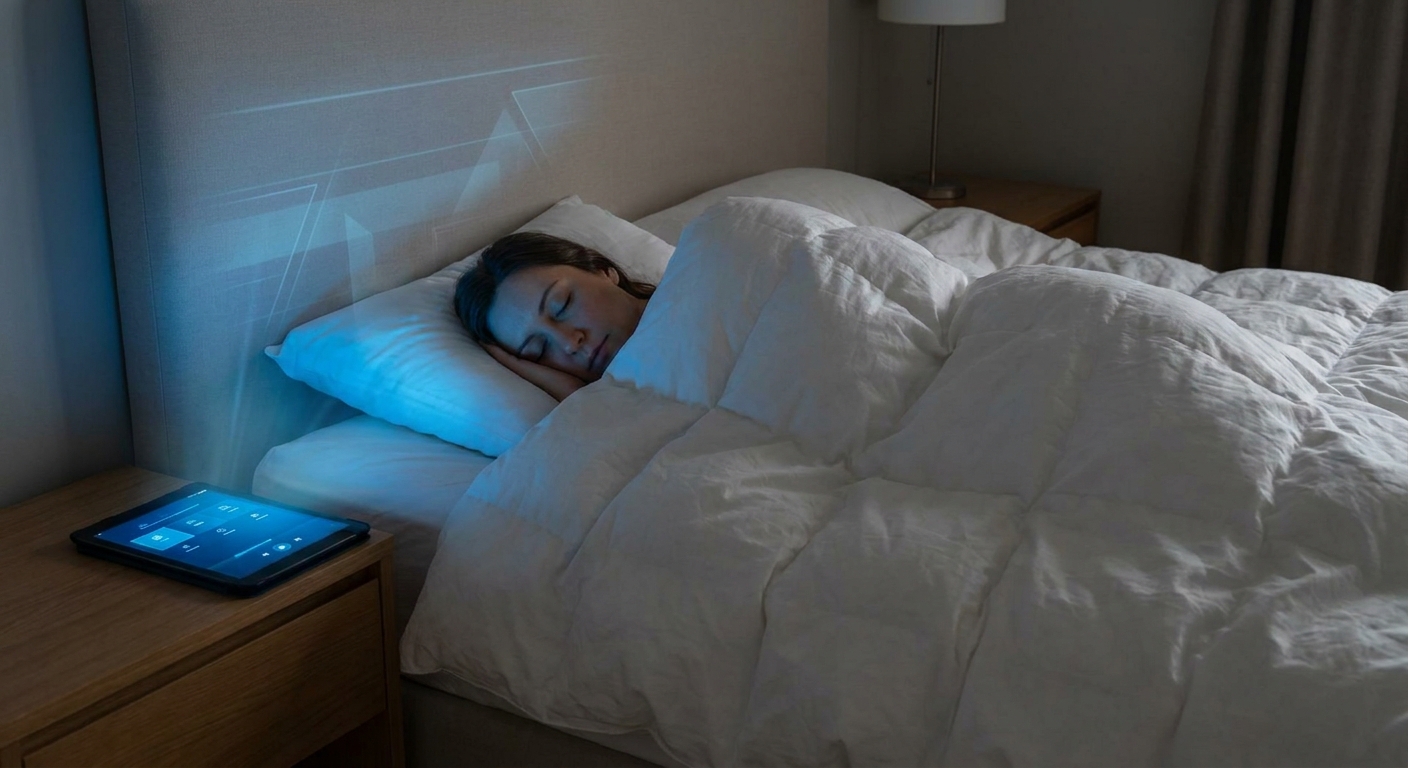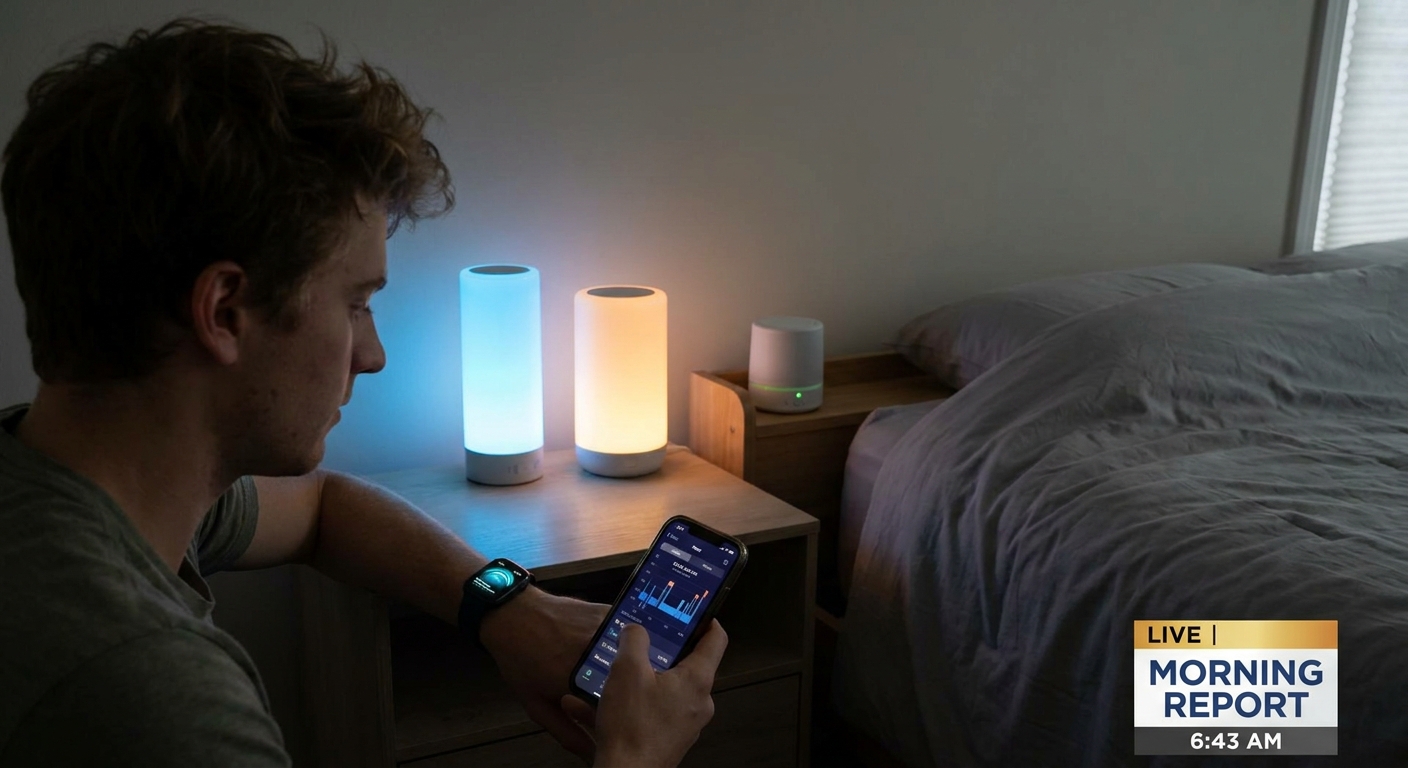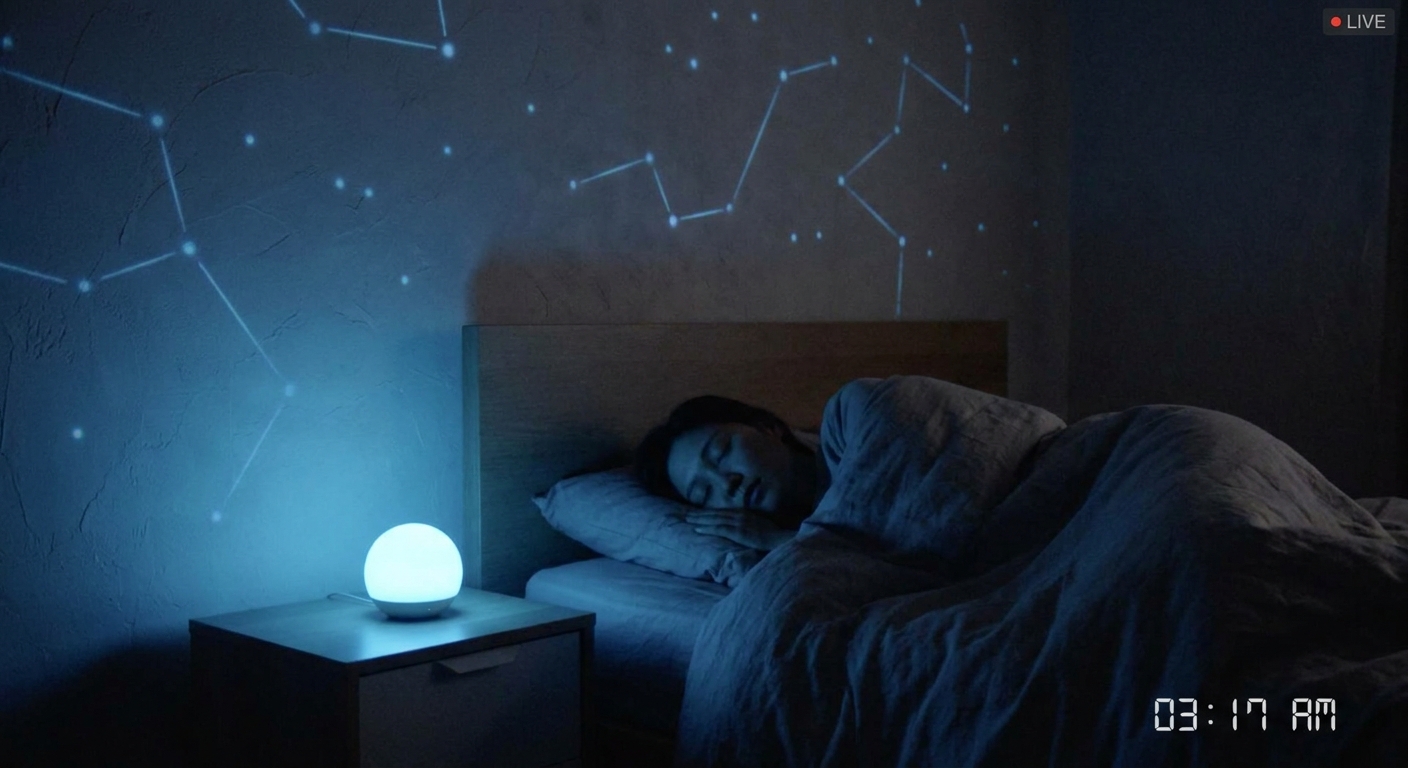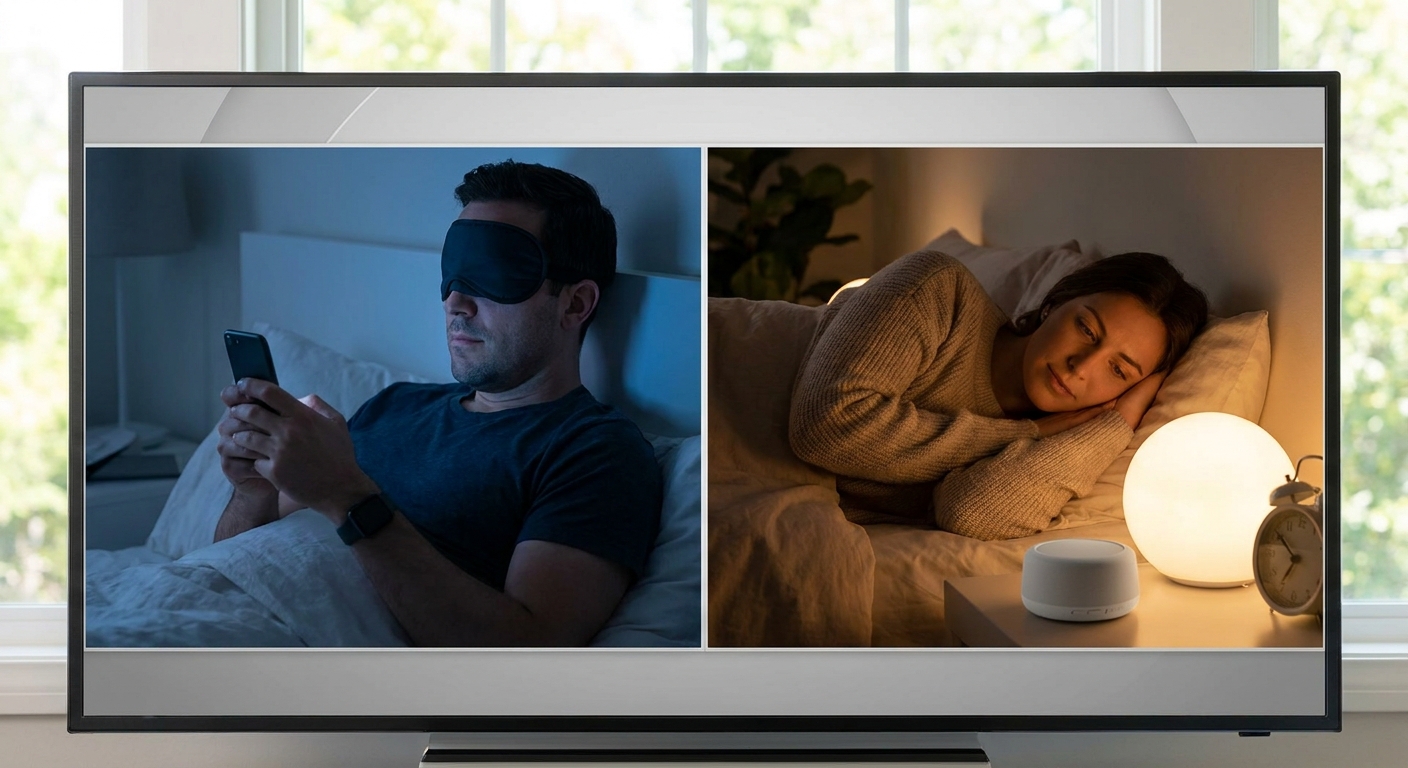
Sleep technology comes in many shapes: rings, watches, mattresses that breathe under you, and quiet boxes on your nightstand. Each shines a light on your sleep from a slightly different angle. Rather than asking, “Which device is best?”, a gentler question is, “Which device best fits my nights?”
Two Paths to the Same Goal: Why the “Best” Sleep Tech Depends on You
In this guide, we’ll compare wearable sleep tech and bedroom-based systems—what they measure, what science says about them, and how different chronotypes and personalities might feel more at home with one or the other.
What Wearables Bring to Your Wrist (or Finger)
Wearables are like small, patient companions that follow you through the day and night.
Typical measurements:
- Sleep duration and timing using movement and heart rate.
- Sleep stages (light, deep, REM) via algorithms combining motion and heart rate variability (HRV).
- Readiness / recovery metrics (resting HR, HRV, activity load).
- Daytime behavior (steps, workouts, sedentary time) that influences sleep.
Accuracy: Close Enough for Patterns
Studies show that popular consumer wearables are fairly good at detecting whether you’re asleep vs awake and estimating total sleep time, but less precise for sleep stages [1]. Still, for most people, the value lies in trends over nights, not exact minute-by-minute labels.
Ideal For
- People who like 24-hour context: how daytime activity, stress, and exercise affect sleep.
- Those who travel frequently and want sleep insights wherever they are.
- Data-curious users who enjoy weekly and monthly summaries.
Possible Drawbacks
- Wearing something at night may feel intrusive or warm.
- Constant access to numbers can tempt over-checking and worry.
- Bright screens or haptics can be alerting if not configured.
What Bedroom-Based Sleep Tech Observes from the Sidelines
Bedroom systems quietly watch the night from a distance, like a lighthouse on the shore.
Common forms:
- Under-mattress sensors that track micro-movements and heartbeats.
- Smart beds with built-in sensors and temperature control.
- Bedside monitors and smart speakers with radar or audio-based sleep tracking.
Typical measurements:
- Time in bed vs time asleep.
- Heart rate and respiratory rate.
- Tossing, turning, and awakenings.
- Snoring or environmental noise (for systems with microphones).
Accuracy: Strong for Stillness and Breathing
Under-mattress pressure sensors and contactless radar systems have shown promising accuracy for sleep/wake detection and respiration rate compared with lab polysomnography [2]. Stage estimation remains approximate, but overall sleep architecture trends can still be informative.
Ideal For
- People who dislike wearing devices, especially at night.
- Sensitive sleepers who are easily disturbed by contact or light.
- Those primarily interested in night-time patterns, not daytime activity.
Possible Drawbacks
- Limited tracking when you travel or sleep away from your usual bed.
- Some systems require consistent bed placement and calibration.
- May feel more like "furniture" data—less integrated with your daytime life.
Side-by-Side: Wearables vs. Bedroom Systems
| Feature/Need | Wearable Devices | Bedroom-Based Systems |
|--------------------------------------|--------------------------------------------|------------------------------------------------|
| Comfort & Intrusiveness | On-body; can bother sensitive users | Completely contactless |
| Travel & Flexibility | Work anywhere you sleep | Generally tied to one bed |
| Daytime Context (activity, stress) | Robust tracking across day and night | Night-only perspective |
| Sleep/Wake & Duration | Good for trends | Good for trends |
| Sleep Staging Precision | Approximate | Approximate |
| Snoring & Noise Detection | Only some (via app audio) | Common in many bedside/under-bed systems |
| Environmental Insights (temp, light) | Limited; often needs extra devices | Some systems track room conditions |
Neither approach is inherently better; they simply listen to different parts of your story.
Matching Tech to Your Chronotype and Temperament
Your internal clock and your emotional style both shape which tech feels soothing rather than stressful.
Morning Larks
You naturally wake early and tire earlier.
Wearables may help you:
- Confirm that your early exercise isn’t cutting into total sleep.
- Track whether late social nights are creating sleep debt.
- Balance recovery from early, intense workouts.
Bedroom systems may support you by:
- Providing a stable monitor of how consistent your early bedtimes really are.
- Observing whether dawn light or early bird noise fragments your last hour of sleep.
Night Owls
You wake and sleep later, often fighting social schedules.
Wearables can:
- Track how gradual light exposure shifts and slowly earlier bedtimes affect your actual sleep onset [[3]](https://pubmed.ncbi.nlm.nih.gov/26035215/).
- Monitor how late-night work or screens influence your heart rate and sleep depth.
Bedroom tech can:
- Help you see if your late bedtime is paired with more awakenings or shallow sleep.
- Track snoring or environmental noise (neighbors, city sounds) that might be disturbing the tail end of your sleep.
Sensitive, Easily Anxious Sleepers
If you tend to worry about numbers or are highly aware of bodily sensations, consider:
- Bedroom systems first. They vanish into the background and often provide simple, less granular summaries.
- If you choose a wearable, minimize notifications, dim screen brightness, and avoid looking at data before mid-morning.
Data Enthusiasts and Biohackers
You may be drawn to wearables with rich dashboards and APIs. A kind reminder: your nervous system needs calm, not constant optimization.
To keep tech supportive:
- Focus on weekly and monthly trends, not nightly fluctuations.
- Combine with calming rituals: meditation, breathwork, or gentle yoga before bed, rather than adding new stimulants.
Practical Bedroom Tweaks Guided by Each Tech Type
If You Use a Wearable
Use your device as a bridge between daytime habits and night-time outcomes.
Try:
Exercise Timing Experiments
- Move intense workouts from late evening to late afternoon. - Watch for trends in sleep onset and HRV [[4]](https://pubmed.ncbi.nlm.nih.gov/28759692/).
Caffeine and Alcohol Journaling
- On your device’s notes or a separate app, mark days with late caffeine or evening alcohol. - Compare with sleep efficiency, awakenings, and HRV.
Light Exposure Logs
- Use daytime features (movement/location) as a rough proxy for outdoor time. - See whether more morning light days correlate with earlier, easier sleep onset.
Then, refine your bedroom:
- Set the room to cool temperatures and optimize bedding when your wearable repeatedly shows elevated heart rate at night [[5]](https://pubmed.ncbi.nlm.nih.gov/1811316/).
- Introduce blackout curtains if your wake times are creeping earlier than desired.
If You Use Bedroom-Based Tech
Let your device be a calm observer of your sleep environment.
Try:
Noise Experiments
- Introduce white or pink noise and note changes in awakenings and total sleep time [[6]](https://pubmed.ncbi.nlm.nih.gov/26150703/). - Track whether reducing traffic or neighbor noise (e.g., with heavier curtains) shows up as smoother sleep.
Light and Temperature Adjustments
- Some systems track room temperature; use this to maintain a cool range (16–19°C / 60–67°F). - Check whether darkening the room at night and brightening it in the morning affects sleep timing.
Bed and Pillow Experiments
- When you change mattresses or pillows, look at several weeks of data to see if awakenings or restlessness decrease.
Gentle Guardrails: Keeping Tech from Dominating Your Nights
Regardless of which type you choose:
- Avoid midnight checking. Let the night be a mystery until morning.
- Respect subjective experience. If you feel rested but your score is lower, give more weight to how your body feels.
- Think in seasons. Look at 4–8 week windows, especially when life is changing (new job, new baby, stress).
The American Academy of Sleep Medicine emphasizes that consumer sleep tech can support awareness but does not diagnose sleep disorders [7]. If your data and your daytime fatigue persistently worry you, reach out to a sleep specialist.
Choosing Your Companion
If you imagine your nights as a shoreline, a wearable walks alongside you all day, noticing the tides that shape your sleep. A bedroom system waits quietly in the dark, watching the waves themselves.
Either can help you:
- Notice when you’re drifting from your natural rhythm.
- See how habits and environments support or strain your rest.
- Make thoughtful, measured changes.
Choose the option that feels like a supportive presence rather than a spotlight. With the right fit, sleep tech becomes less about chasing perfect numbers and more about gently uncovering the conditions under which your body already knows how to rest.