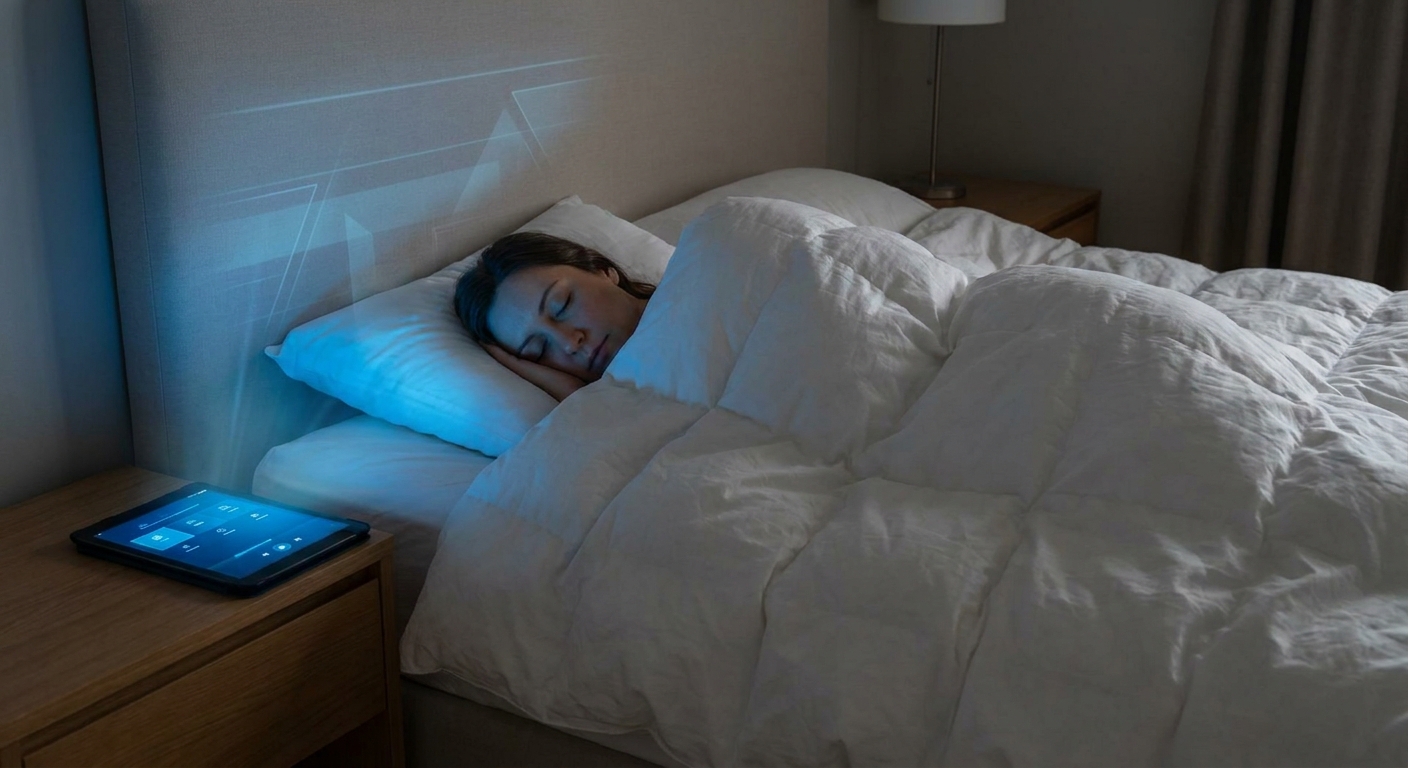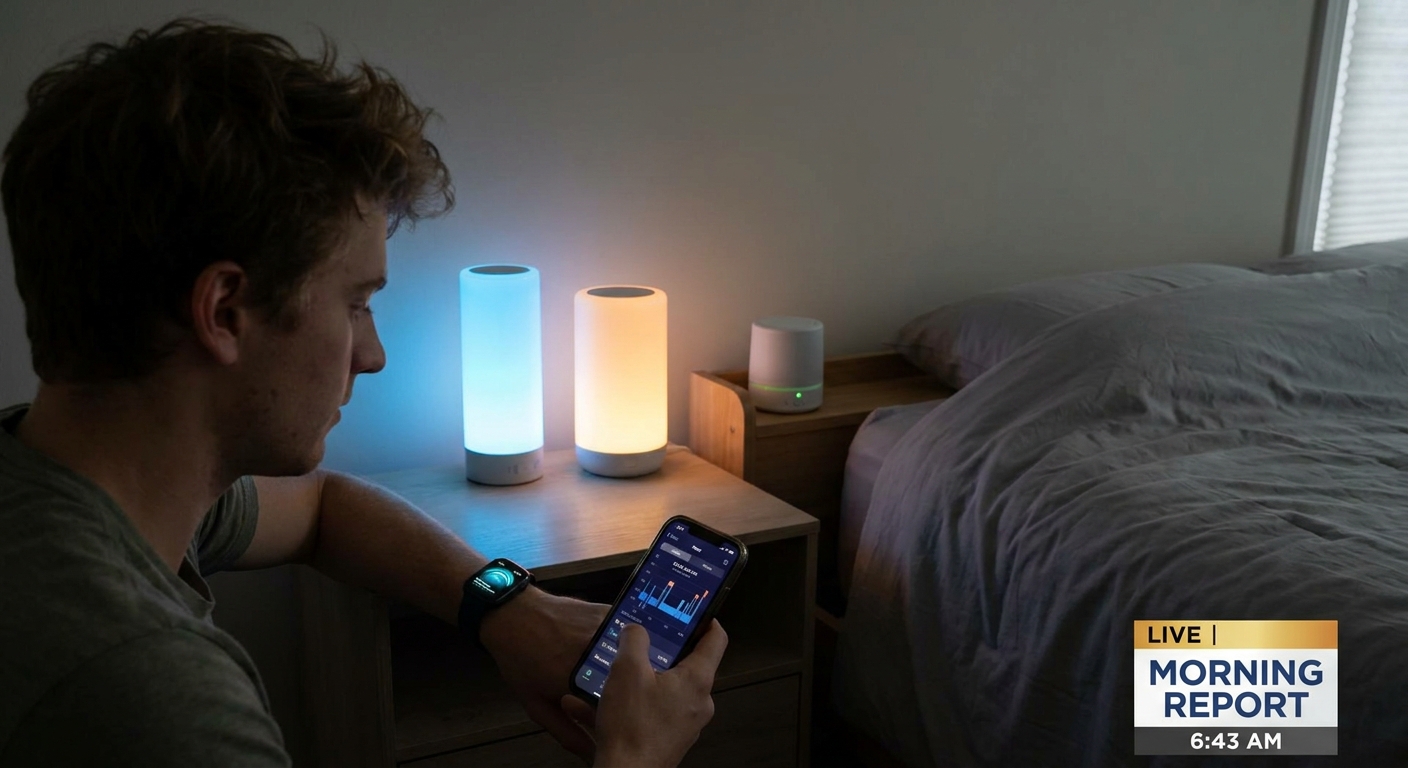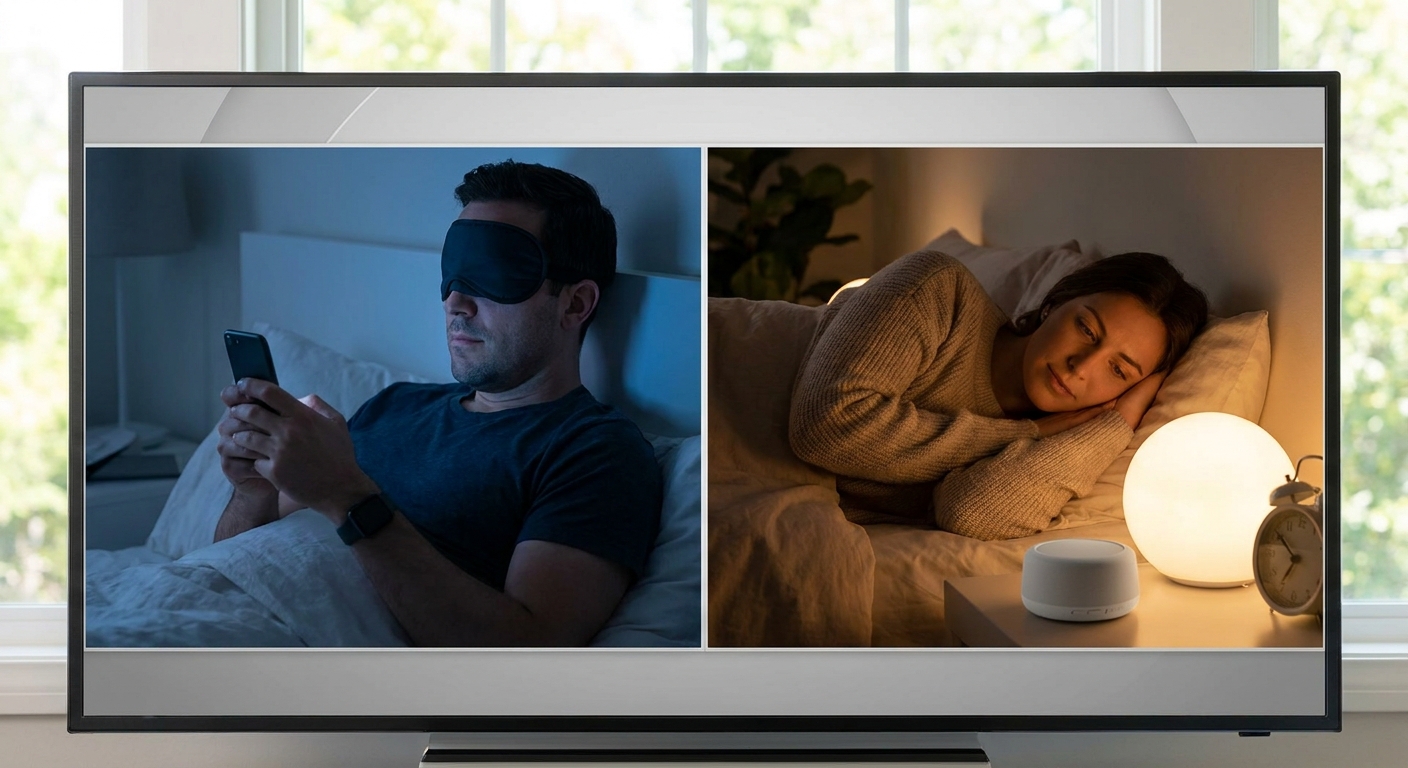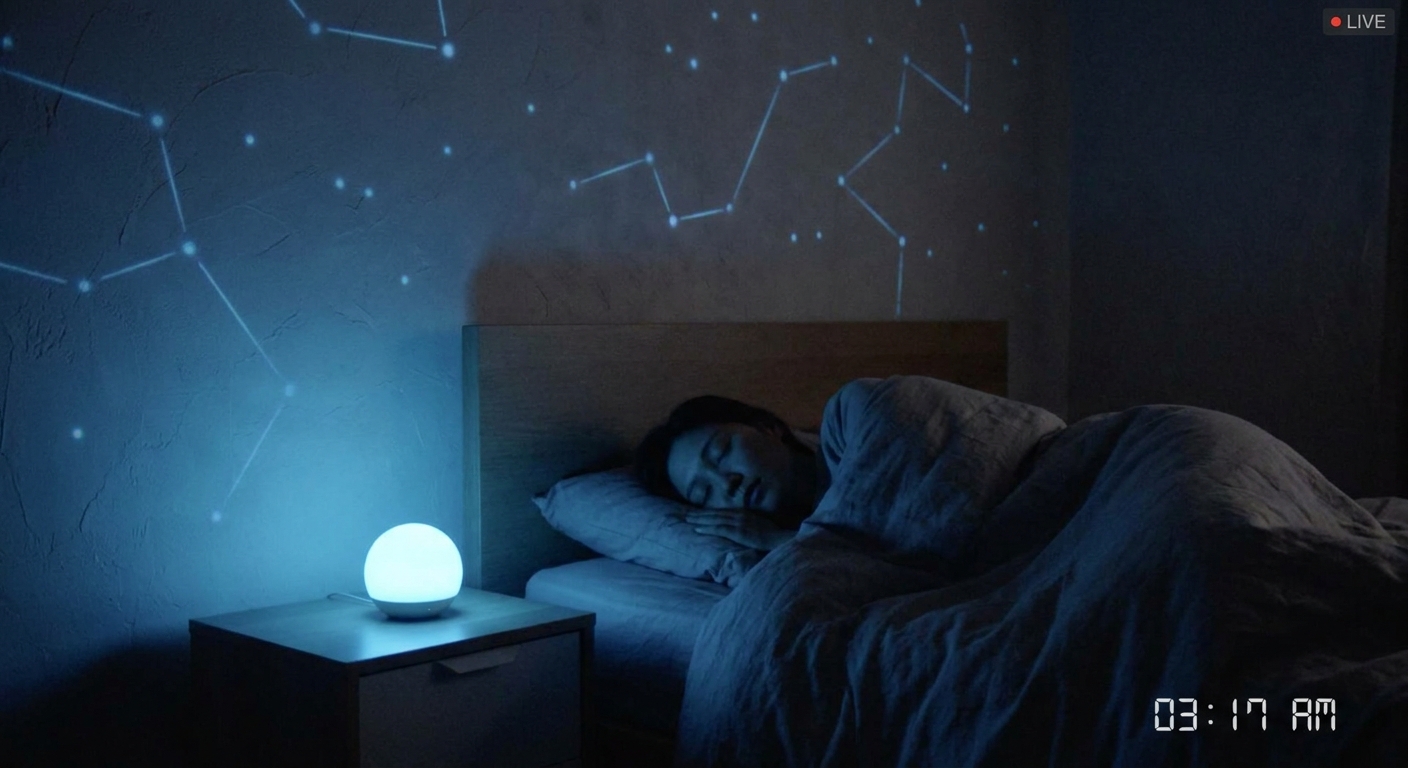
A good night’s sleep is not just something that happens inside your brain; it is something your entire environment gently choreographs. Light, sound, temperature, and even the texture of your bedding all hum together like instruments in a quiet orchestra.
Your Bedroom as a Living Ecosystem
Smart bedroom technology aims to tune these instruments. When chosen and used thoughtfully, it can transform your room from a passive backdrop into an active ally for rest.
This explainer will walk through the main components of a smart bedroom, the science that underpins them, and how to adapt them to your chronotype without turning your sanctuary into a control center.
The Four Pillars of a Smart Sleep Environment
1. Smart Lighting: Guiding Your Inner Sun
Your circadian rhythm is heavily influenced by light. Evening exposure to blue-enriched light suppresses melatonin and pushes sleep later [1].
Smart lighting can help by:
- Gradually dimming and warming light in the hour before bed.
- Simulating sunrise in the morning to support a more natural wake-up.
- Adjusting color temperature throughout the day (cooler in the morning, warmer at night).
Practical bedroom changes:
- Replace bright overhead lights with dimmable smart bulbs in lamps.
- Set an evening "wind-down" scene: low intensity, warm (≤2700K) light starting 60–90 minutes before bed.
- Use a sunrise alarm for gentle morning waking, especially helpful for night owls and in dark winters.
2. Temperature Control: The Night’s Quiet Thermostat
Sleep onset is linked to a drop in core body temperature. A cooler room encourages this cooling and is associated with better sleep continuity [2].
Smart thermostats, heating/cooling pads, and climate-aware mattresses can:
- Keep bedroom temperature in an optimal range (around 16–19°C / 60–67°F for many people).
- Adjust bed temperature by zone, helpful if partners have different preferences.
- Pre-cool the bed before you enter, then gently warm your feet if needed.
Practical bedroom changes:
- Use breathable materials (cotton, linen, Tencel) for sheets and pajamas.
- Program your thermostat or smart AC to lower temperature an hour before bed.
- If you get hot at night, consider a cooling mattress pad and observe whether awakenings decrease over 2–3 weeks.
3. Sound Management: Designing a Softer Soundtrack
Noise can fragment sleep, even if you don’t fully wake or remember it. Studies link nocturnal noise to more micro-arousals and lighter sleep [3].
Smart sound tools include:
- White noise or pink noise machines that create consistent, soothing sound.
- Smart speakers programmed for calming audio or meditation.
- Apps that track snoring or external noises and present gentle summaries.
Practical bedroom changes:
- Place a white or pink noise device between your bed and common noise sources (street, hallway).
- Choose steady, non-lyrical sound to avoid mental engagement.
- Consider heavier curtains or rugs to soften echo and outside noise.
4. Sleep Surfaces and Sensors: The Ground Beneath Your Dreams
Smart mattresses and under-mattress sensors track movements, heart rate, and breathing patterns, often without contact.
Research indicates that ballistocardiography-based systems can estimate sleep/wake patterns and respiration with reasonable accuracy compared to lab studies [4].
These tools can:
- Highlight patterns of restlessness or frequent awakenings.
- Provide early clues about snoring or possible breathing irregularities.
- Guide mattress and pillow choices over time.
Practical bedroom changes:
- If you wake stiff or sore, use tracked restlessness as an extra nudge to evaluate your mattress age and firmness.
- Note whether new bedding corresponds to changes in night-time movement or awakenings.
Chronotype-Specific Smart Bedroom Strategies
Your chronotype—morning lark, night owl, or in-between—shapes how you should tune your bedroom.
Morning Larks: Protecting Your Early Rhythm
If you naturally wake early and fade early:
Smart lighting:
- Use cooler, brighter light soon after waking to reinforce your morning rhythm.
- Trigger warmer, dimmer lights earlier in the evening, perhaps starting 2 hours before your usual bedtime.
Temperature:
- Set your smart thermostat to gradually cool the bedroom in the early evening, supporting your natural earlier sleep onset.
Sound:
- Use gentle alarms synced with a sunrise lamp, avoiding jarring wake-ups that can leave you groggy.
Sensors:
- Watch for signs that overextending your evenings (social events, late work) reduces sleep duration and increases awakenings.
Night Owls: Using the Room to Gently Tilt the Clock
If your body prefers late nights and late mornings:
Smart lighting:
- Use bright, blue-enriched light or a light therapy lamp shortly after your chosen wake time to nudge your clock earlier [[5]](https://pubmed.ncbi.nlm.nih.gov/26035215/).
- Dimming and warming should start later, but still at least 60–90 minutes before target bedtime.
Temperature:
- Schedule cooling to begin closer to your intended (not current) bedtime to cue your body toward earlier sleepiness.
Sound:
- Avoid stimulating content in the bedroom late at night; program smart speakers for calmer playlists after a certain time.
Sensors:
- Track whether your sleep becomes more consolidated as you gradually advance light and temperature cues earlier.
Intermediate Types: Stabilizing the Middle Ground
If you fall somewhere in between:
Smart lighting:
- Aim for consistent timing: similar sunset dimming and sunrise brightness every day, including weekends.
Temperature:
- Keep overnight temperature stable and avoid big shifts that might fragment sleep.
Sound:
- Use sound masking if your sleep overlaps with noisy household members with earlier or later schedules.
Sensors:
- Look for the time window where you both fall asleep efficiently and wake feeling clear; then teach your room to support that schedule.
Gently Integrating Tech Without Overwhelming the Space
It is possible for a bedroom to become over-instrumented—more blinking lights than soft shadows.
To keep the atmosphere calm:
- Choose discreet devices. Favor soft indicator lights or the option to turn displays fully off at night.
- Hide cords and hubs to preserve a sense of simplicity.
- Group adjustments. Use routines or scenes (e.g., “Goodnight”) that simultaneously dim lights, cool the room, and start white noise, rather than tapping multiple apps.
Your bedroom should still feel like a nest, not a cockpit.
Evidence-Based Habits That Smart Bedrooms Can Support
Smart tools work best when they scaffold proven sleep practices rather than replace them.
Consistent Sleep-Wake Schedule
Regular timing anchors your circadian rhythm and is associated with better sleep quality and mood [[6]](https://pubmed.ncbi.nlm.nih.gov/23616653/). - Use smart alarms and lighting to maintain similar wake times across the week.
Wind-Down Routine
Gradual, predictable routines signal the nervous system that wakefulness is ending. - Automate light dimming and calming audio as part of your pre-sleep ritual.
Screen and Stimulation Reduction
Reducing evening light and cognitive stimulation eases sleep onset [[1]](https://pubmed.ncbi.nlm.nih.gov/25535358/). - Use app timers and smart plugs to gently limit late-night screen use from the bedroom.
Optimized Temperature and Noise
Cool, quiet environments reduce night-time awakenings [[2]](https://pubmed.ncbi.nlm.nih.gov/1811316/; [[3]](https://pubmed.ncbi.nlm.nih.gov/26150703/)). - Program thermostats or bed cooling and run consistent, soothing noise where needed.
When Smart Bedrooms Point to Deeper Issues
Smart sensors may quietly reveal patterns worth bringing to a clinician:
- Frequent loud snoring, gasping sounds, or suspected breathing pauses.
- Regular awakenings with pounding heart or panic.
- Persistent unrefreshing sleep despite 7–9 hours in bed.
Consumer tech cannot diagnose conditions like sleep apnea or insomnia, but it can provide helpful context. If you notice concerning trends, consider showing data summaries to a sleep specialist [7].
Letting the Room Hold You
When a bedroom becomes truly restful, it almost feels alive—responding to sunset and sunrise, to your warmth and stillness. Smart technology, thoughtfully used, simply gives that room a few extra senses: to notice light, sound, and temperature and gently adjust them in your favor.
You do not need every gadget. A single smart lamp, a white noise machine, or an under-mattress sensor may be enough to begin. Start where your biggest friction lies—light that is too harsh, heat that wakes you, or noise that jars you—and let one piece of technology, like a quiet caretaker, tend that one element.
Over time, as you align your environment with the science of sleep and the rhythm of your own chronotype, your bedroom can become less a place you go to fight for rest and more a calm harbor your body recognizes instantly—a space that, each night, is already leaning toward sleep before you even close your eyes.