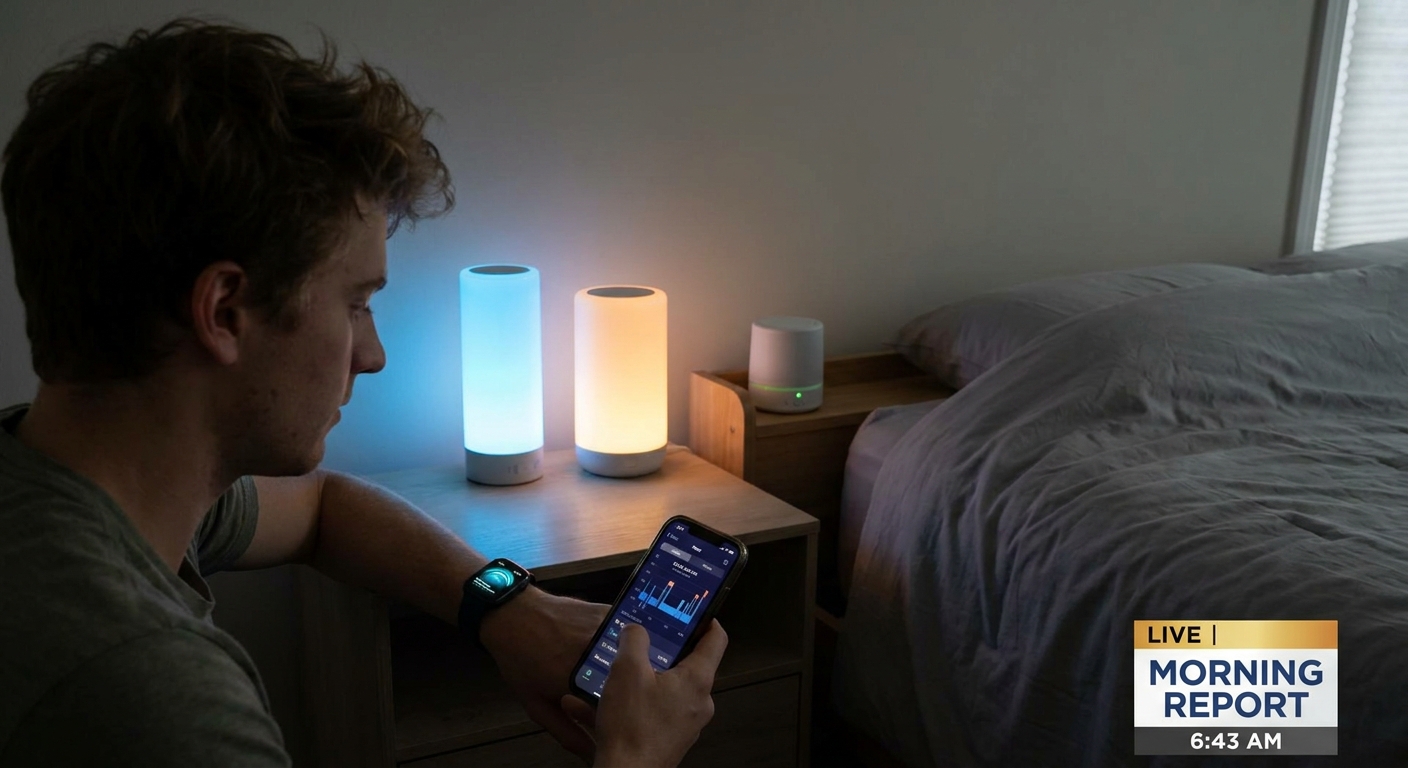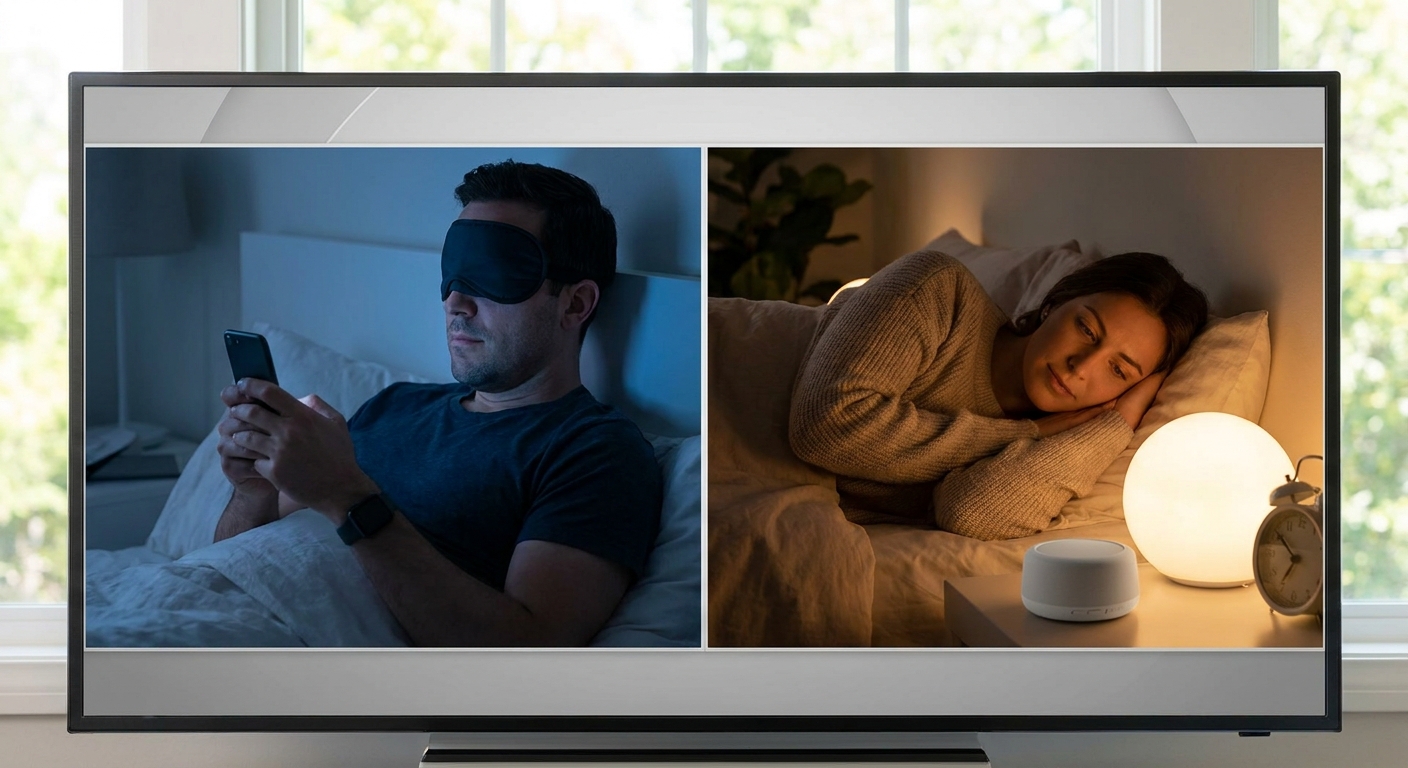
Sleep technology is often marketed with flashing dashboards, streaks, and scores. Yet good sleep feels more like a lake at dawn than a leaderboard. Used well, sleep tech can be less of a gadget arms race and more of a soft lantern, illuminating patterns you can’t see on your own.
Why Sleep Tech Belongs in a Calmer Bedroom, Not a Busier One
In this guide, we’ll explore how modern sleep tech works, what research actually supports, and how to pair devices with simple, peaceful changes in your bedroom. Think of it as inviting a quiet, observant friend into your nights—not a drill sergeant.
What Sleep Tech Actually Measures (And Why It Matters)
Most consumer sleep devices fall into three categories:
Wearables (watches, rings, bands)
Use movement, heart rate, and sometimes skin temperature to estimate: - Sleep duration and timing - Sleep stages (light, deep, REM – estimates, not clinical diagnoses) - Heart rate variability (HRV) and resting heart rate
Bedside or Under-Mattress Sensors
Rely on ballistocardiography (tiny movements caused by your heartbeat and breathing) to measure: - Time in bed vs asleep - Night-time awakenings - Breathing rate, heart rate, some even snoring
Smartphone Apps
Use microphone and accelerometer to track: - Sound (snoring, talking, environmental noise) - Movement patterns across the night
Studies comparing wearables to gold-standard lab measures (polysomnography) show that devices are typically reasonably accurate at tracking total sleep time and wake vs sleep, but less accurate at differentiating sleep stages [1]. That means you can trust trends—when you sleep, how long, how disturbed—not the fine-grained staging.
Used gently, this can help you see:
- "I sleep less on Sunday nights than I thought."
- "Every time I stay on my phone after 11 pm, my sleep gets lighter."
- "Those extra coffees really do echo into my night."
Turning Data into Calm: A Softer Way to Use Sleep Scores
Sleep tech can easily become another metric to obsess over—ironically making sleep worse. There’s even a term, orthosomnia, for people who become anxious about optimizing sleep tracker data [2].
To keep your nights gentle:
- Treat each night as one frame in a longer movie. Look at weekly and monthly trends, not single-night “failures.”
- Ignore tiny changes. A few minutes difference is just biological noise.
- Use scores as prompts, not verdicts. Ask, “What might have influenced tonight?” instead of “What’s wrong with me?”
- Avoid checking in the middle of the night. Glancing at your score at 3 am is like checking your exam result midway through the test.
Let the device be a quiet notepad, not a commentator.
Gentle, Tech-Supported Bedroom Changes
Think of sleep tech as the detective, and your bedroom as the patient. Here are evidence-based adjustments you can make and then observe with your device over 2–4 weeks.
1. Soften the Light Landscape
Blue-enriched light in the evening delays melatonin and pushes sleep later [3].
Practical changes:
- Use warm (≤2700K) bulbs in lamps.
- Dim lights 1–2 hours before bed.
- Turn on night mode / warm color filters on screens after sunset.
- Consider smart bulbs with automated evening dimming.
Track: Does your device show a shift toward slightly earlier sleep onset after 1–2 weeks?
2. Cool the Air, Warm the Body
The body initiates sleep by lowering core temperature. A cool room (about 16–19°C / 60–67°F) supports this [4].
Practical changes:
- Use breathable bedding (cotton, linen, Tencel).
- Run a fan or adjust the thermostat lower at night.
- Try a warm shower or bath 60–90 minutes before bed; as you cool afterward, sleepiness increases [[5]](https://pubmed.ncbi.nlm.nih.gov/31104167/).
Tech tie-in: Some smart mattresses and pads allow scheduled cooling. Many users see fewer awakenings when overheating is reduced.
3. Quiet the Soundscape
Noise—even if you don’t remember waking—can fragment sleep and reduce deep sleep [6].
Practical changes:
- Use white or pink noise machines to mask irregular sounds.
- Choose heavier curtains or soft furnishings to absorb sound.
- If snoring is an issue, track it via apps or bed sensors and consider medical evaluation for sleep apnea.
Watch your tracker: Does deep sleep or time awake in the night change when you introduce consistent background sound?
4. Simplify the Bed
Your bed should cue only two things: sleep and intimacy. Tech belongs at the edges, not in the covers.
- Avoid falling asleep hugging your phone or smartwatch.
- Try using a bedside hub or under-mattress sensor if wearing something to sleep feels intrusive.
- Keep chargers away from the head of the bed to reduce the temptation to scroll.
Chronotype-Specific: Let Tech Help You Live Closer to Your Internal Clock
We are not all built for sunrise productivity. Your chronotype—your natural timing preference—has a biological basis linked to genetics and circadian rhythm [7].
Sleep tech can estimate your natural rhythm by tracking:
- When you fall asleep and wake up on free days (no alarms).
- Changes in HRV and resting heart rate when you sleep “off-pattern.”
If You’re a Morning Lark
You feel best sleeping and waking early.
Use tech to:
- Spot evening social jetlag (late weekend nights) and its impact on next-day readiness scores.
- Experiment moving bedtime earlier by 15–20 minutes when scores and subjective sleepiness suggest you’re pushing too late.
Bedroom nudges:
- Bright light exposure shortly after waking—consider a smart light alarm that brightens gradually.
- Keep evenings calm and dim; avoid mentally heavy work at night.
If You’re a Night Owl
Your body prefers later sleep and wake times.
Use tech to:
- Track patterns across weeks to find your true earliest sustainable bedtime—the latest time you can fall asleep without long tossing and turning.
- Slowly shift your schedule 15 minutes earlier every few days, guided by how quickly you fall asleep.
Bedroom nudges:
- Use bright light boxes or smart lights in the morning to anchor your clock earlier [[8]](https://pubmed.ncbi.nlm.nih.gov/23505389/).
- Set apps to restrict stimulating content in late evening—your brain is tempted, but your clock pays the price.
If You’re In-Between
You’re flexible—but also vulnerable to being pulled in many directions.
Use tech to:
- Notice your natural anchor points: times when you wake spontaneously and feel good.
- Keep these anchors steady even on weekends; your device can alert you when your wake time drifts too far.
Gentle Guardrails: When to Question, When to Trust
Sleep tech is a lantern, not a medical scanner. Rely on it for:
- Trend spotting: chronic late bedtimes, short sleep, frequent awakenings.
- Behavior feedback: how caffeine, alcohol, late meals, or exercise timing affect your nights.
But turn to a professional if you notice, with or without tech:
- Loud snoring, gasping, or choking during sleep.
- Repeated pauses in breathing (often picked up by snore/breath apps).
- Persistent unrefreshing sleep despite >7 hours in bed.
- Parasomnias (sleepwalking, acting out dreams) detected by audio or motion devices.
These warrant a conversation with a sleep physician and possibly a proper sleep study.
A Calmer Relationship with Your Devices
You can invite sleep tech into your life the way you’d invite a quiet guest to your home:
- Give it a place (a bedside table, a ring, a watch).
- Ask it specific questions ("Does my weekend schedule throw off my sleep?").
- Listen to patterns, not every word.
The goal isn’t a perfect score; it’s a body and mind that feel more rested across many mornings. Let the numbers be constellations—guiding lights, not rigid maps.
In a world of bright screens and loud demands, sleep tech can help you carve out a gentler rhythm. You bring the intention, the routine, and the softening of your bedroom. The devices simply hold up a mirror—so, night after night, you can learn to rest more in tune with the quiet wisdom of your own biology.