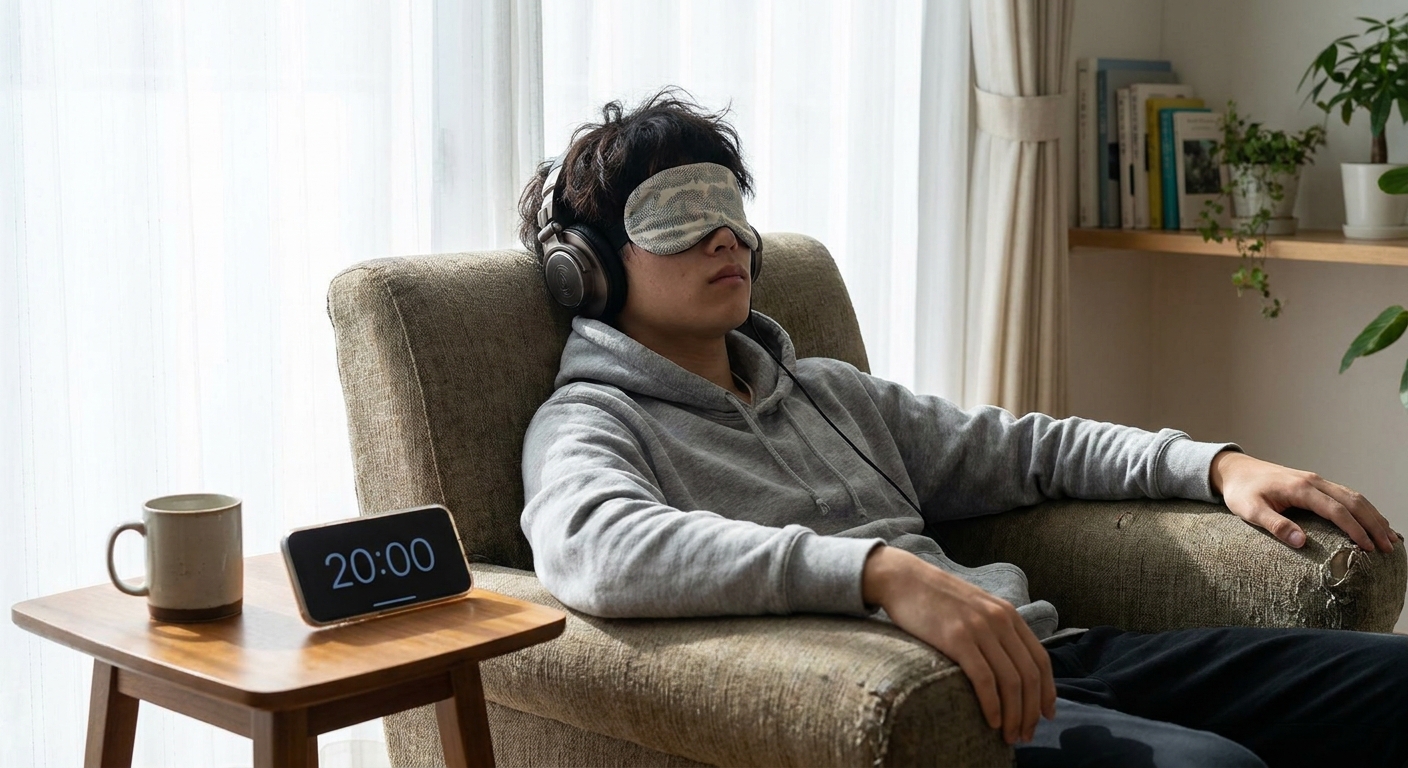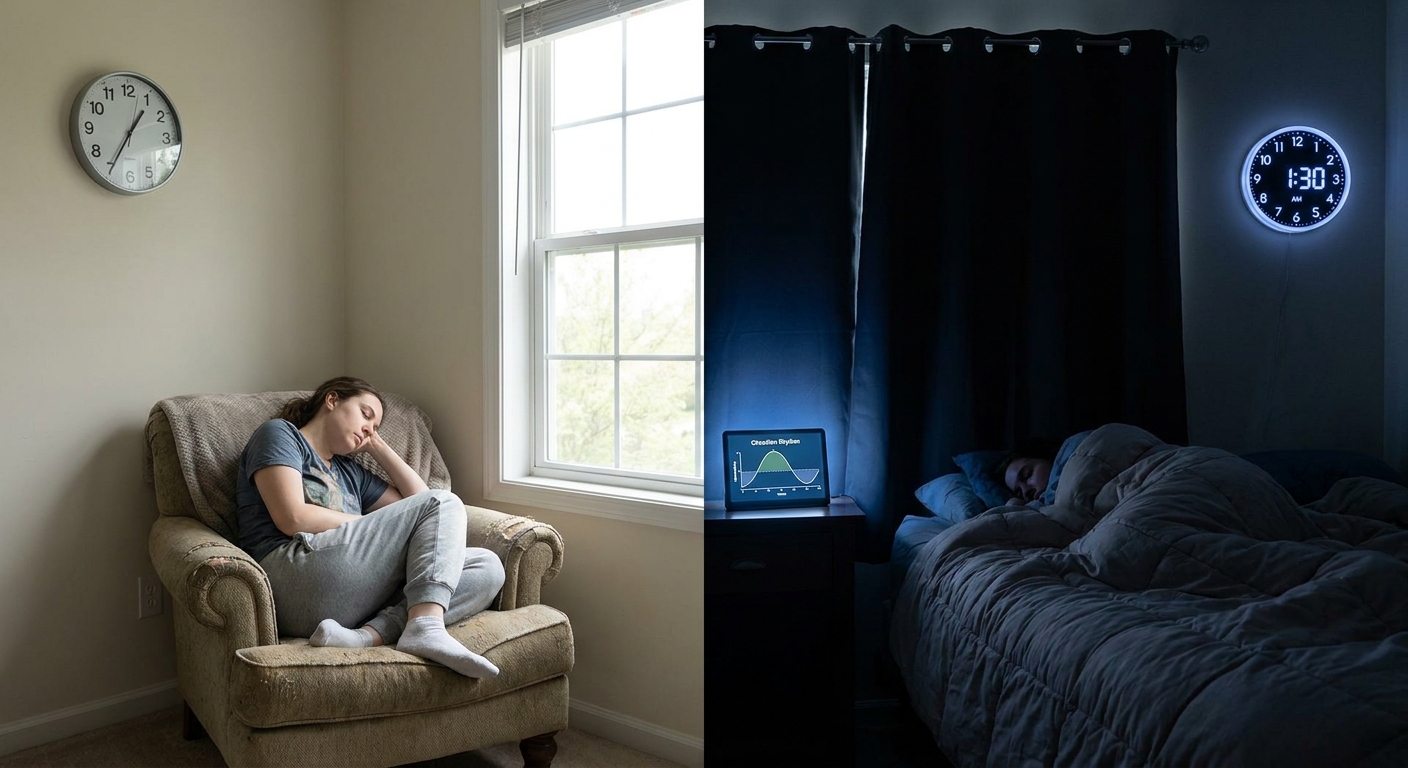
Think of a nap as a soft comma in the sentence of your day—a brief pause that lets your mind take a breath before continuing. Far from laziness, a well-timed nap can improve attention, mood, and even cardiovascular health.
Understanding the Gentle Pause
In modern sleep research, naps are studied as "supplementary sleep" that can partially repay short-term sleep debt and enhance performance when used thoughtfully. The key is matching nap length, timing, and environment to your biology.
What Happens in Your Brain During a Nap?
Even short naps move you through distinct stages of non–rapid eye movement (NREM) sleep.
The Stages of a Short Nap
Most brief naps (10–30 minutes) enter the lighter stages of NREM:
- N1 (light drowsy sleep): Your muscles relax, thoughts drift. This is the border between wake and sleep.
- N2 (light stable sleep): Brain-wave patterns slow and become more organized. Heart rate and body temperature dip slightly.
Longer naps (40–90 minutes) may lead into slow-wave sleep (N3) and sometimes REM sleep, which are deeper stages involved in physical and cognitive restoration.
Why This Matters
- Entering N2 is often enough for clearer thinking and better reaction time.
- Entering N3 and then waking up mid-way can produce "sleep inertia"—that heavy, groggy feeling.
- Completing a full sleep cycle (about 90 minutes) can provide deeper restoration but is harder to fit into a busy day.
Multiple studies show that short naps (10–20 minutes) can boost alertness and performance almost immediately after waking, with minimal inertia.[^1][^2]
Evidence-Based Benefits of Napping
1. Sharper Focus and Memory
- A 10–20 minute nap has been shown to improve alertness and sustained attention for several hours afterward.[^1]
- Naps can enhance declarative memory (facts and information) and procedural memory (skills and tasks).[^3]
2. Emotional Reset
Naps can calm the emotional centers of the brain—particularly the amygdala—helping you feel more patient and less reactive.
- Afternoon naps have been linked with improved mood and reduced subjective stress.[^4]
3. Heart and Metabolic Health
Short, regular naps in some populations have been associated with lower blood pressure and improved cardiovascular markers, particularly during stressful periods.[^5]
Finding Your Ideal Nap Length
Think of nap length as choosing how deep into the sea of sleep you’re willing to dive.
The 10–20 Minute "Surface Dip"
Best for: quick refreshment, workdays, students.
- Stays mainly in N1 and N2 sleep.
- Minimizes grogginess.
- Ideal when you have limited time or need to perform soon after.
The 30–45 Minute "Middle Depth"
Best for: some memory consolidation, when you don’t mind a bit of grogginess.
- Greater chance of entering N3.
- Can provide more powerful restoration, but you may feel heavy-headed for 20–30 minutes afterward.
The 90 Minute "Full Sleep Cycle"
Best for: shift workers, severe sleep debt, creative work.
- Moves through light, deep, and often REM sleep.
- Minimizes sleep inertia if you wake near the end of a full cycle.
- Harder to schedule; can interfere with nighttime sleep if mistimed.
When to Nap: Aligning with Your Chronotype
Your chronotype is your natural timing preference—your inner clock’s favorite rhythm.
Morning Larks
You tend to wake early and feel most alert before noon.
- Ideal nap window: ~12:30–2:00 p.m.
- Best length: 10–25 minutes.
- Avoid naps after 3:00 p.m. to protect your early bedtime.
Classic Hummingbirds (Intermediate Types)
You fall somewhere between lark and owl.
- Ideal nap window: ~1:00–3:00 p.m.
- Best length: 10–30 minutes on workdays; 60–90 minutes if catching up on weekends.
Night Owls
You naturally feel more awake in the evening and prefer later bedtimes.
- Ideal nap window: ~2:00–4:00 p.m.
- Best length: 15–25 minutes on weekdays.
- If your bedtime regularly drifts too late, keep naps short and consistent.
Designing a Nap-Friendly Bedroom
Your bedroom can become a quiet harbor for daytime rest with a few gentle adjustments.
1. Light: Dim the Day
- Use blackout curtains or an eye mask to reduce light, which suppresses melatonin.
- If total darkness feels disorienting, allow a faint, indirect light—like dusk in your room.
2. Sound: Muffle the World
- Earplugs or white noise may help block traffic, neighbors, or daytime bustle.
- Low-volume nature sounds (rain, soft wind) can create a predictable sonic backdrop.
3. Temperature: A Cool Cocoon
- Slightly cooler than daytime comfort—around 18–21°C (65–70°F)—supports sleep onset.
- A light blanket or throw gives your body a cue of safety and stillness.
4. Clutter: Calm Your Visual Field
- Clear your immediate visual field near the bed—stacks of work or laundry can be mentally noisy.
- A simple lamp, a small plant, or a soft-textured pillow can create a sense of sanctuary.
How to Nap Without Ruining Night Sleep
Naps are most healing when they serve your 24-hour sleep pattern, not compete with it.
- Guard your bedtime: Avoid naps within 6–7 hours of when you plan to sleep at night.
- Set an alarm: Especially for 10–20 minute naps, so they don’t drift into a full cycle.
- Use a wind-down ritual: A few deep breaths, gentle stretches, or a brief body scan can help you cross from doing into resting.
- Accept imperfection: Even lying quietly in a darkened room can be restorative if you don’t fully fall asleep.
Gentle Nap Routines for Different Lives
For Busy Professionals
- Aim for a 15–20 minute nap between meetings or over lunch.
- Keep a soft eye mask and foldable blanket at work or in your car (parked safely, seat reclined).
- Pair your nap with a small cup of coffee just before lying down—the "coffee nap"—so caffeine kicks in as you wake.[^6]
For Parents and Caregivers
- Nap when your child naps, even if it’s just 10–15 minutes.
- Loosen expectations—this is a season; micro-rests matter.
- Darken the room as much as possible, even mid-afternoon; your body will follow cues over time.
For Shift Workers
- Consider a 90-minute nap before a night shift to build a buffer.
- Short 20-minute naps during long shifts (if permissible) can dramatically improve alertness and reduce errors.[^7]
Listening to Your Own Sleep Language
Research offers helpful averages, but your body speaks in signals unique to you:
- Notice when you naturally “dip” in energy most days.
- Track how you feel after different nap lengths for 1–2 weeks.
- Adjust timing, length, and environment incrementally, like tuning an instrument.
If you consistently need long daily naps or feel exhausted despite plenty of sleep, it may be a sign to speak with a healthcare provider about conditions like sleep apnea, insomnia, or depression.
A Closing Thought
Naps are not a sign of weakness; they are the nervous system’s way of asking for a moment to re-center. When you offer yourself this gentle pause—a short journey into the quieter layers of consciousness—you’re not stepping away from life, but stepping back just enough to see it more clearly.
Like letting a snow globe settle, a well-timed nap allows the storm inside your mind to drift slowly to the bottom, so the scene becomes visible again.
[^1]: Brooks, A., & Lack, L. (2006). A brief afternoon nap following nocturnal sleep restriction: Which nap duration is most recuperative? Sleep, 29(6), 831–840.
[^2]: Takahashi, M. (2003). The role of prescribed napping in sleep medicine. Sleep Medicine Reviews, 7(3), 227–235.
[^3]: Mednick, S. et al. (2003). Sleep-dependent learning: A nap is as good as a night. Nature Neuroscience, 6, 697–698.
[^4]: Faraut, B. et al. (2011). Napping reverses the salivary interleukin-6 and urinary norepinephrine changes induced by sleep restriction. Journal of Clinical Endocrinology & Metabolism, 96(3), E614–E618.
[^5]: Naska, A. et al. (2007). Siesta in healthy adults and coronary mortality in the general population. Archives of Internal Medicine, 167(3), 296–301.
[^6]: Hayashi, M., Watanabe, M., & Hori, T. (2003). The effects of a 20-min nap in the mid-afternoon on mood, performance and EEG activity. Clinical Neurophysiology, 114(12), 2268–2278.
[^7]: Ruggiero, J. S., & Redeker, N. S. (2014). Effects of napping on sleepiness and sleep-related performance deficits in night-shift workers. Biological Research for Nursing, 16(2), 134–142.