A perfect nap is not measured in minutes alone; it’s measured in how refreshed and grounded you feel afterward. Sleep science offers a sturdy framework, but your own rhythms fill in the details. Think of this guide as a pattern you can tailor to your life.
Why a "Perfect" Nap Is About Fit, Not Perfection
We’ll move step by step—from timing and duration to bedroom tweaks and chronotype-specific routines—so you can create a nap practice that feels like a gentle reset, not a random crash.
Step 1: Clarify Your Nap Goal
Before setting a timer, ask: What do I want this nap to do?
Common goals include:
- Quick alertness boost (afternoon meeting, exam, commute)
- Emotional softening (you feel irritable, overwhelmed, tearful)
- Deeper recovery (after a short night or jet lag)
Your goal will shape your nap length and timing.
If Your Goal Is Quick Alertness
Aim for a 10–20 minute nap, which studies show can improve attention, reaction time, and mood without heavy grogginess.[^1]
If Your Goal Is Deeper Recovery
A 60–90 minute nap may be helpful, especially after substantial sleep loss, because it can include slow-wave and REM sleep, both valuable for cognitive and physical restoration.[^2]
Step 2: Choose the Best Nap Length
You’re working with your brain’s sleep architecture. Here are three evidence-informed templates:
- 10–15 minutes: Fast refresh; minimal sleep inertia.
- 20–30 minutes: Stronger benefits to memory and performance, but a bit more risk of grogginess.[^3]
- 90 minutes: A full sleep cycle; best reserved for days of true sleep debt or shift work.
Most people do well starting with 15–20 minutes.
> Tip: If you consistently wake up groggy from 30–45 minute naps, shorten them to 20 minutes or extend to a full 90.
Step 3: Time Your Nap With Your Chronotype
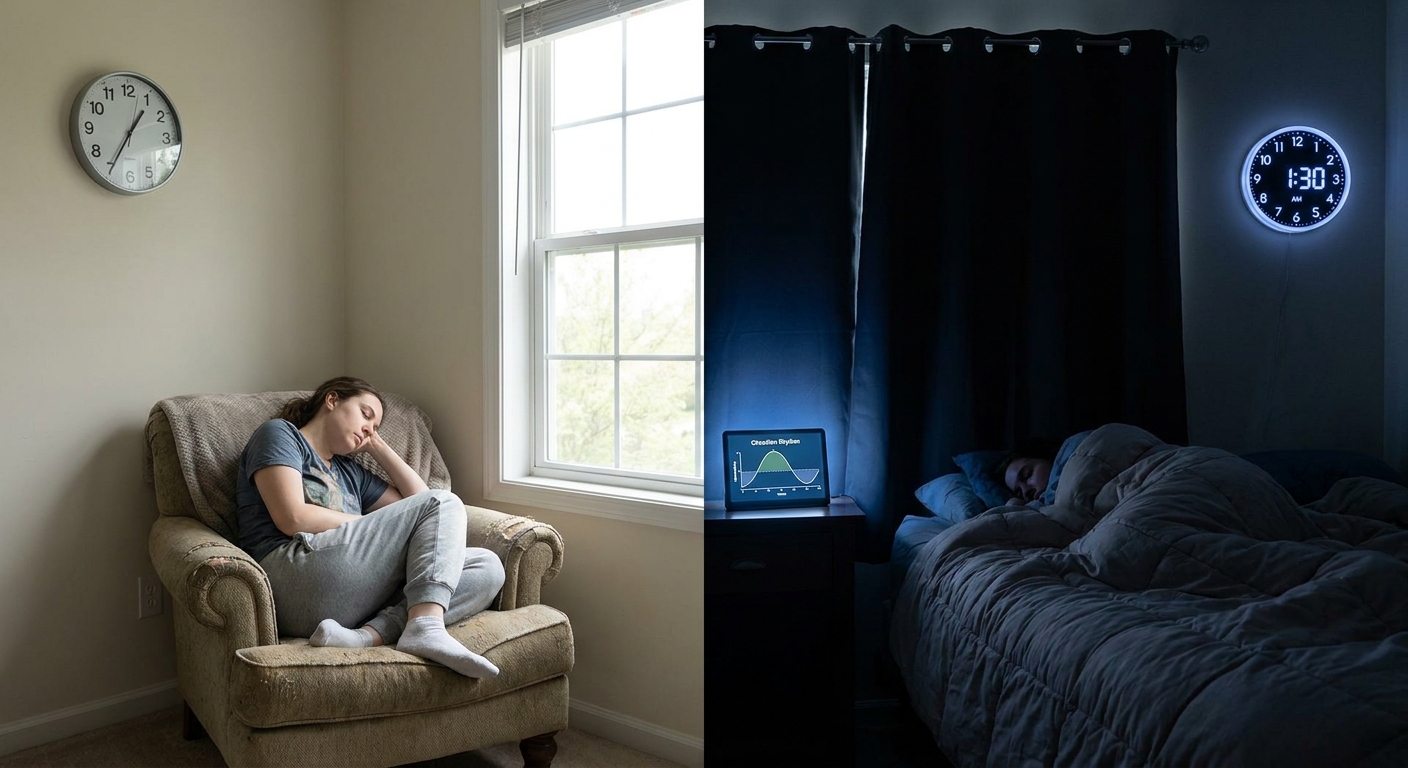
Your inner clock, anchored by your suprachiasmatic nucleus, makes you more nap-prone at certain hours—usually during the post-lunch dip in circadian alertness.[^4]
Morning Larks
- Feel sharp early, sleepy earlier in the evening.
- Nap window: 12:00–2:00 p.m.
- Recommendation: 10–20 minutes. Avoid naps after 2:30 p.m. to protect your early bedtime.
Intermediate Types
- Most common chronotype.
- Nap window: 1:00–3:00 p.m.
- Recommendation: 15–25 minutes on weekdays; 60–90 minutes if catching up on weekends or after travel.
Night Owls
- Alert in late afternoon/evening; slow to start in the morning.
- Nap window: 2:00–4:00 p.m.
- Recommendation: 15–25 minutes. Later or longer naps can nudge your bedtime even later.
If you’re not sure of your chronotype, loosely track when your energy dips for 1–2 weeks without an alarm clock and heavy caffeine. That pattern is your starting clue.
Step 4: Prepare Your Bedroom for Daytime Sleep
A good nap environment whispers, "You’re safe to let go now."
Light
- Use blackout curtains or an eye mask to mimic night.
- If full darkness feels jarring midday, aim for soft dimness—close blinds, leave one low lamp.
Sound
- White noise machines, fans, or nature-sound apps can smooth out unpredictable noises.
- If you live in a noisy area, foam earplugs plus soft background noise often work better together than either alone.
Temperature
- A cooler room helps your body slip into sleep; aim for 18–21°C (65–70°F).
- Use a light blanket or throw to create a contained, cocooned feeling.
Scent and Texture
- Gentle, non-irritating scents (like mild lavender) can become part of your brain’s “nap cue,” though the evidence is modest.[^5]
- Soft bedding and a favorite pillow can act as tactile cues of safety.
Step 5: Create a Short Wind‑Down Ritual
You do not need a long ritual—a 2–5 minute transition is enough to tell your nervous system that it can downshift.
Try this simple sequence:
- Dim lights and silence non-essential notifications.
- Lie down comfortably on your back or side.
- Three slow breaths: Inhale for 4, pause 2, exhale for 6.
- Briefly scan your body from head to toes, softening your jaw, shoulders, and belly.
These small signals help counteract the "I must fall asleep now" pressure that often keeps people awake.
Step 6: Use an Alarm—Gently
Set an alarm for your chosen nap length plus 5 minutes of “fall-asleep window.” For example:
- If aiming for 20 minutes of sleep, set the alarm for 25 minutes.
Use a gentle sound that starts quietly and builds, instead of a harsh buzzer. Waking gradually lowers the shock to your system and helps you feel more refreshed.
Step 7: Protect Your Night Sleep
Naps and night sleep can peacefully coexist when you:
- Keep most naps earlier than 6–7 hours before bedtime.
- Use shorter naps (10–20 minutes) if you struggle with insomnia.
- Avoid “emergency naps” on the couch at 6 p.m.; opt for a consistent nap window instead.
Insomnia guidelines generally recommend skipping naps during initial treatment phases, as they can reduce your sleep drive at night.[^6] If you have chronic difficulty sleeping, consider consulting a clinician before building a nap habit.
Quick Bedroom Tweaks for Better Naps
Here are small, practical changes that can make daytime sleep easier:
- Install adhesive blackout film on windows if curtains are impractical.
- Use a white noise app on an old phone dedicated to sound.
- Keep a "nap basket" by the bed: eye mask, earplugs, light blanket, and lip balm.
- If your mattress is very firm, add a thin mattress topper to improve comfort during short sleeps.
After the Nap: Re‑Entry Matters
How you wake can influence how beneficial the nap feels.
- Sit up slowly and take 2–3 steady breaths.
- Expose yourself to light—open curtains, step near a window, or go briefly outside.
- Move your body for 2–5 minutes: shoulder rolls, gentle stretching, or a brief walk.
- Drink some water to ease the transition.
This short re-entry routine helps clear residual grogginess and signals your brain it’s time to be alert again.
Chronotype‑Specific Nap Routines
Morning Lark Micro‑Nap
- Time: 12:30 p.m.
- Length: 15 minutes (20-minute timer).
- Ritual: Close laptop → dim blinds → 3 deep breaths → 15-minute nap → 3-minute stretch and sunlight.
Intermediate "Focus Reboot" Nap
- Time: 1:30–2:00 p.m.
- Length: 20 minutes.
- Ritual: Herbal tea (non-caffeinated) 20 minutes before → nap → drink water and take a 5-minute walk afterward.
Night Owl Stabilizing Nap
- Time: 3:00 p.m.
- Length: 15–20 minutes.
- Ritual: Put phone on "Do Not Disturb" → eye mask + earplugs → nap → light exposure and brief movement.
Encouragement for Imperfect Nappers
Sometimes you’ll lie down, close your eyes, and stay awake the whole time. That doesn’t mean you’ve failed.
Even quiet wakeful rest in a darkened room reduces sympathetic nervous system activity and can improve later performance and mood.[^7] Think of nap time as "down-regulation practice" rather than a pass/fail test of whether you sleep.
Over time, as your body learns that these short rests are safe and predictable, falling asleep often becomes easier.
Final Thoughts
Designing the perfect power nap is less about strict rules and more about steady, gentle experiments—adjusting length, timing, and environment until they harmonize with your inner rhythm.
Approach it like tending a small garden of rest inside your day: consistent attention, small tweaks, and a generous dose of patience will gradually coax more ease, clarity, and calm into your waking hours.
[^1]: Brooks, A., & Lack, L. (2006). A brief afternoon nap following nocturnal sleep restriction: Which nap duration is most recuperative? Sleep, 29(6), 831–840.
[^2]: Dinges, D. F. et al. (1997). Cumulative sleepiness, mood disturbance, and psychomotor vigilance performance decrements during a week of sleep restricted to 4–5 hours per night. Sleep, 20(4), 267–277.
[^3]: Milner, C. E., & Cote, K. A. (2009). Benefits of napping in healthy adults: Impact of nap length, time of day, age, and experience with napping. Journal of Sleep Research, 18(2), 272–281.
[^4]: Czeisler, C. A. et al. (1999). Stability, precision, and near-24-hour period of the human circadian pacemaker. Science, 284(5423), 2177–2181.
[^5]: Goel, N. et al. (2005). Olfactory cues and sleep: A review. Sleep Medicine Reviews, 9(5), 381–393.
[^6]: Qaseem, A. et al. (2016). Management of chronic insomnia disorder in adults. Annals of Internal Medicine, 165(2), 125–133.
[^7]: Wamsley, E. J. (2019). Memory consolidation in wake and sleep. Current Opinion in Neurobiology, 59, 131–139.