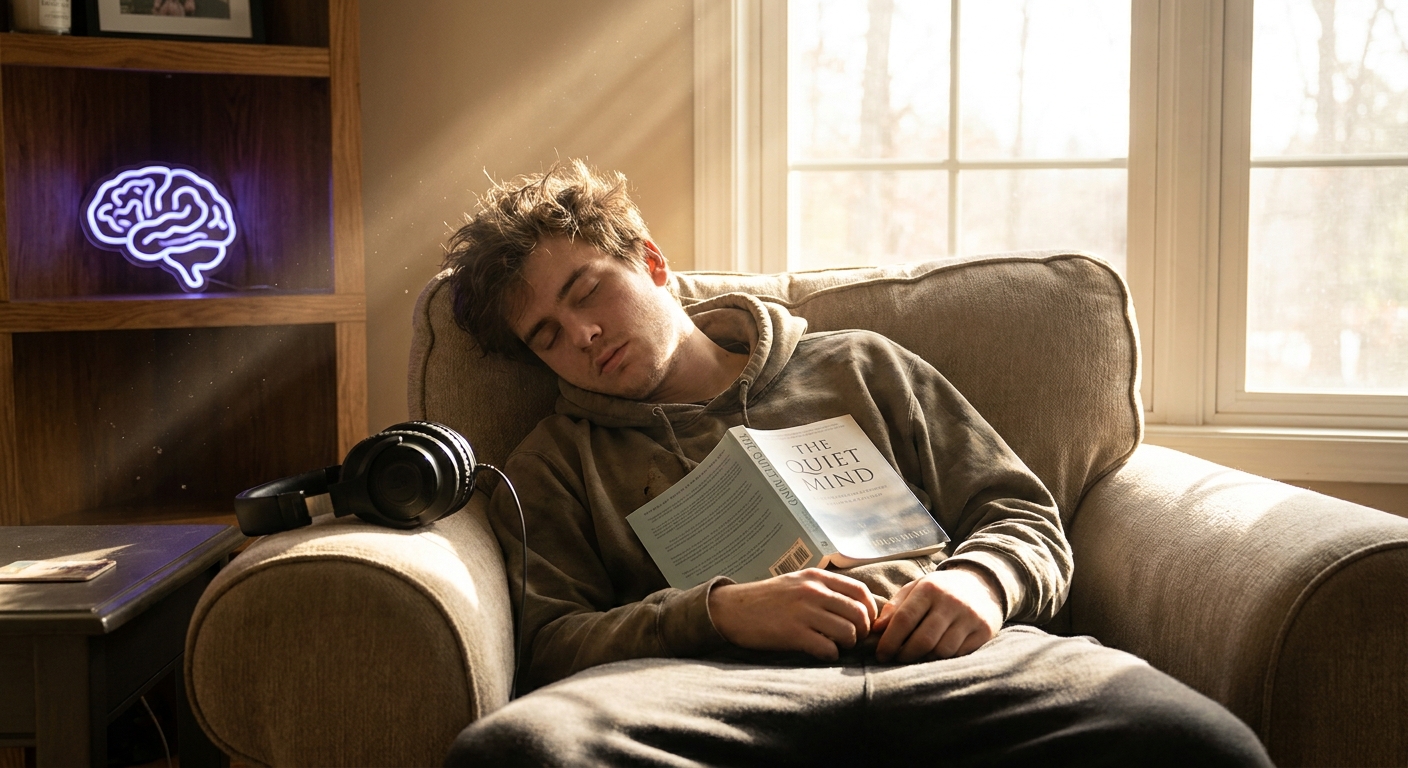
Many afternoons feel like walking through gentle mud—each step a little heavier, each thought a little slower. Instead of pushing harder, you can use naps as a humane, science-backed way to restore clarity.
Turning Your Afternoon Slump into a Soft Landing
Think of these nine habits as small levers. Each one helps transform your midday from a sharp crash to a soft landing and quiet lift-off.
1. Honor the Natural Afternoon Dip
Your alertness naturally dips in the early afternoon, even when you’ve slept well.[^1] This lull is partly driven by your circadian rhythm and partly by rising sleep pressure as the day progresses.
Rather than fighting this with caffeine alone, consider a nap as a way to gently ride the wave.
- For most people, the sweet spot is 1:00–3:00 p.m.
- Larks lean earlier (12:00–2:00 p.m.), owls a bit later (2:00–4:00 p.m.).
2. Define a Clear Nap "Container"
Naps feel safer and more restorative when they have boundaries.
- Decide in advance: Today I’m aiming for 15 minutes.
- Set an alarm and a stop time, even for long naps.
This container helps prevent the creeping, unplanned 90-minute couch collapse that can leave you groggy and wide awake at midnight.
3. Choose Your Ideal Nap Length
Use research as a starting template:[^2]
- 10–15 minutes: Minimal inertia, fast mood and alertness boost.
- 20–25 minutes: Stronger performance benefits, slightly more inertia risk.
- 90 minutes: One full sleep cycle, best for heavy sleep debt.
Start with 15–20 minutes and adjust by 5 minutes at a time based on how you feel.
4. Shape Your Space, Even If It’s Just a Corner
You don’t need a perfect bedroom to nap well. A few adjustments can turn almost any space into a small rest cave.
At Home
- Darkness: Close curtains or blinds; keep an eye mask on your nightstand.
- Sound: Use a fan, white noise machine, or soft ambient playlist.
- Comfort: A small throw blanket signals "this is rest time" to your body.
At Work or School
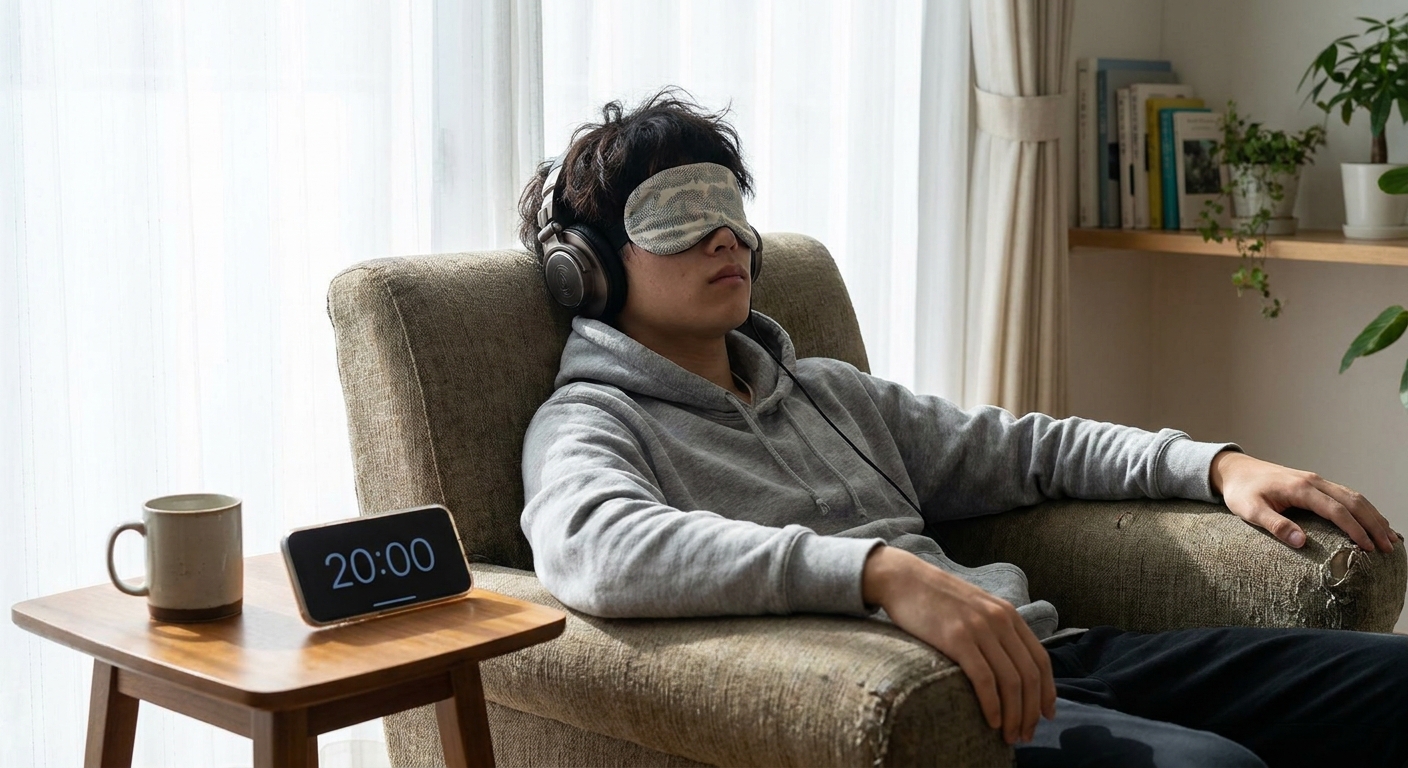
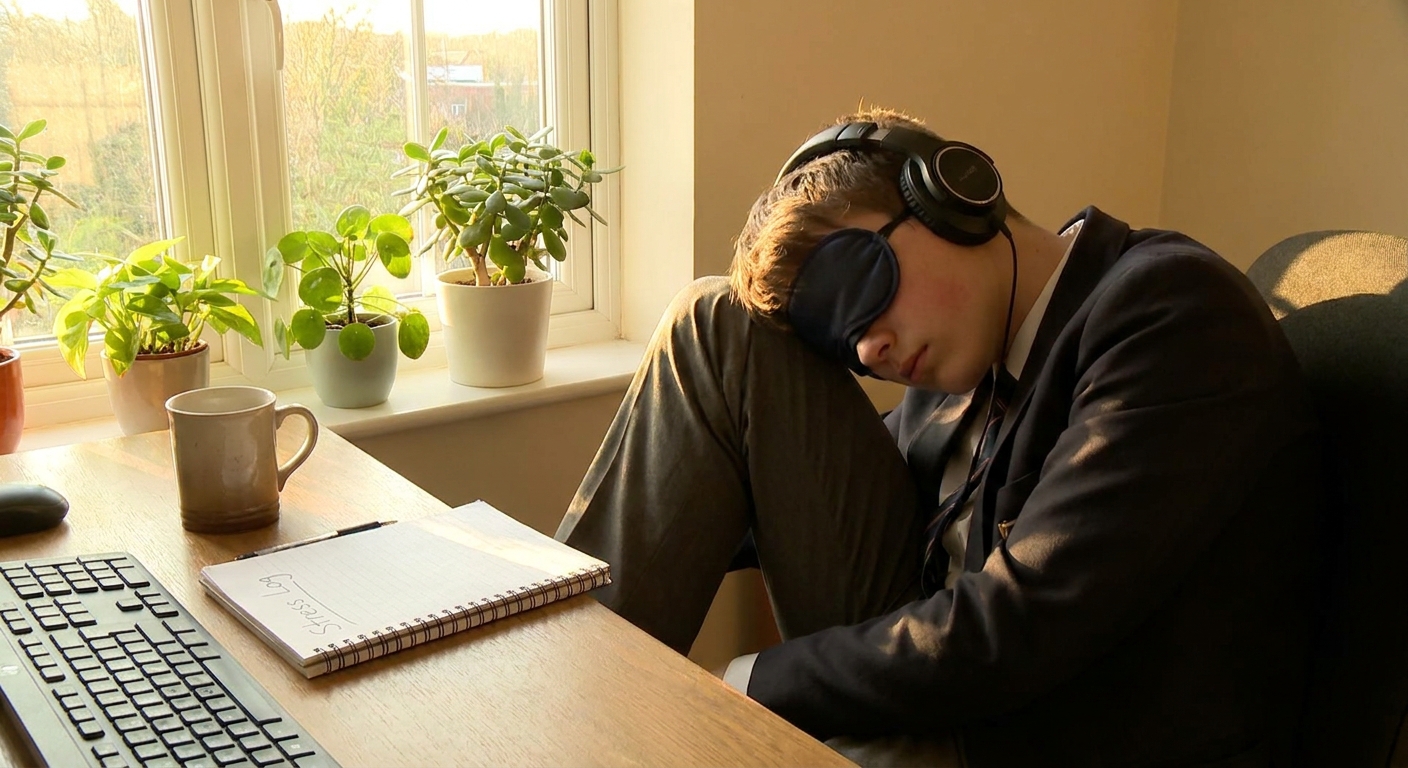
- Eye mask or scarf over eyes to dim overhead lights.
- Noise-canceling headphones with white noise or soft instrumental music.
- If lying down isn’t possible, a reclined chair with head support is enough.
Your brain learns to associate these cues with rest, making it easier to drop into sleep over time.
5. Pair Your Nap with Light and Movement
Naps work best when they’re part of a full 24-hour rhythm, not a lone island.
- Before your nap: Keep lights moderate or dim, and limit intense exercise.
- After your nap: Step into bright light (ideally daylight) and move for 3–5 minutes.
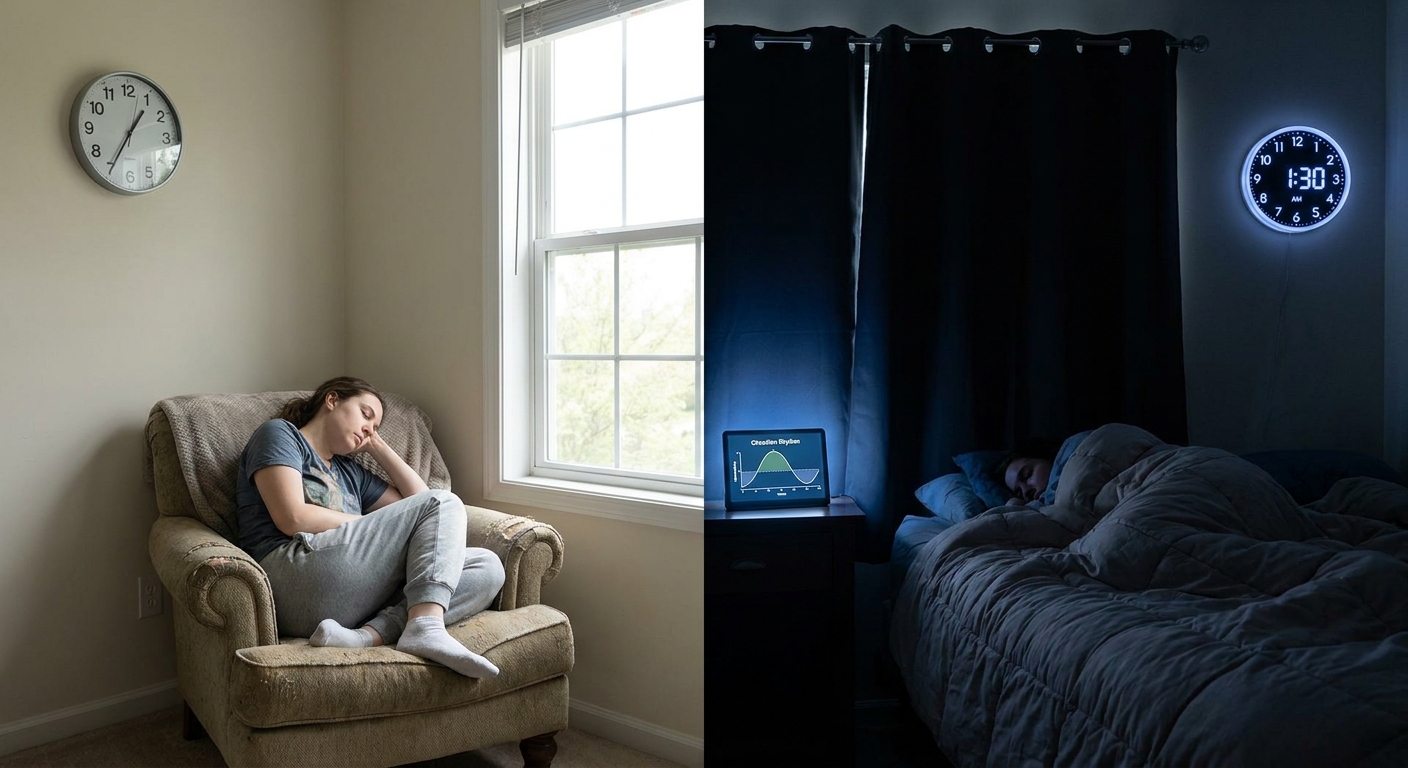
This pairing keeps your circadian clock anchored: darkness and stillness for rest; brightness and motion for wakefulness.[^3]
6. Nap Differently by Chronotype
Morning Larks: The Gentle Reset
- Window: 12:00–2:00 p.m.
- Length: 10–20 minutes.
- Bedroom tweaks: Earlier in the day may mean more light—use blackout curtains or an eye mask.
Keep naps short; you already gather sleep pressure early in the evening.
Intermediate Types: The Midday Reboot
- Window: 1:00–3:00 p.m.
- Length: 15–25 minutes; occasionally 60–90 minutes on high-demand days.
- Bedroom tweaks: Keep the room consistent: same pillow, similar light level, recurring soundscape.
Consistency trains your nervous system to recognize, "This is when we rest briefly and return."
Night Owls: The Stabilizer
- Window: 2:00–4:00 p.m.
- Length: 10–20 minutes.
- Bedroom tweaks: Fight the temptation to nap later than 4:00 p.m.; use an alarm and bright light afterward.
Owls may feel especially drawn to evening naps. Try gently redirecting that urge to an earlier, shorter rest.
7. Use a Mini Ritual to Let Go of the Day
If you hop straight from email to pillow, your mind may keep typing even with your eyes closed. A two-minute ritual creates a bridge.
Try this sequence:
- Pause screens and silence non-urgent notifications.
- Sit on the edge of the bed or chair; place both feet on the floor.
- Take three slow breaths, slightly longer on the exhale.
- Tell yourself, softly, "For the next 20 minutes, my only job is to rest."
Self-compassion reduces the arousal that keeps us from dropping into light sleep.[^4]
8. Reframe "Failed" Naps as Quiet Recovery
Not every nap attempt will lead to sleep. That doesn’t mean it failed.
Resting in a dark, comfortable space with your eyes closed can still:
- Lower heart rate and stress hormones.
- Improve your ability to focus later.
- Give your mind a break from constant input.[^5]
Instead of judging the nap by "Did I sleep?", gently ask, "Do I feel even a little softer, a little slower in a good way?" Many people notice a calmer nervous system even without fully sleeping.
9. Protect the Edges: When to Avoid Napping
Naps are powerful tools, but there are times to use them cautiously or not at all.
Consider limiting or skipping naps if:
- You have chronic insomnia and are working on consolidating night sleep.[^6]
- You find it consistently hard to fall asleep at bedtime on days you nap.
- You frequently need long daily naps despite getting adequate night sleep—this may warrant a medical evaluation.
For most healthy adults, thoughtfully timed short naps are not harmful and can be deeply helpful. If in doubt, start with occasional, early-afternoon, 10–15 minute naps and track how your night sleep responds.
Gentle Encouragement as You Experiment
Learning to nap well is like learning a new instrument: at first it feels clumsy, but with repetition, your hands find the notes almost on their own.
Try making a small pact with yourself: "For the next two weeks, I’ll give myself one intentional nap opportunity on days I feel the slump." Keep a simple log:
- Time of nap
- Length
- How you felt on waking (0–10 scale)
- How you slept that night
Patterns will emerge, like constellations slowly becoming recognizable. Follow the ones that lead you to clearer afternoons and softer evenings.
Your afternoon doesn’t have to be a battle through fog. With a few well-chosen habits, it can become a gentle valley in your day—a shaded place where you set down your burdens for a short while, then rise a little lighter.
[^1]: Monk, T. H. et al. (1997). The post-lunch dip in performance. Chronobiology International, 14(2), 157–171.
[^2]: Milner, C. E., & Cote, K. A. (2009). Benefits of napping in healthy adults. Journal of Sleep Research, 18(2), 272–281.
[^3]: Cajochen, C. (2007). Alerting effects of light. Sleep Medicine Reviews, 11(6), 453–464.
[^4]: Ong, J. C. et al. (2012). A randomized controlled trial of mindfulness meditation for chronic insomnia. Sleep, 35(5), 653–666.
[^5]: Wamsley, E. J. (2019). Memory consolidation in wake and sleep. Current Opinion in Neurobiology, 59, 131–139.
[^6]: Qaseem, A. et al. (2016). Management of chronic insomnia disorder in adults. Annals of Internal Medicine, 165(2), 125–133.