Advice about sleep floats through conversations and social media like mist: never nap, always get eight hours, blue light is the only problem, waking at night means you’re broken. Some of it holds truth; much of it doesn’t.
Clearing the Fog Around Sleep
Sleep hygiene is not built on folklore. It comes from decades of research into how light, temperature, behavior, and timing affect our circadian rhythms and sleep architecture.[^1] When we clear away myths, the habits that truly matter become easier to see—and easier to keep.
Let’s walk through some common sleep myths and compare them with what science actually suggests, including how your chronotype and bedroom environment fit into the picture.
Myth 1: “Everyone needs exactly eight hours of sleep.”
Reality: Sleep need varies, and quality matters as much as quantity.
Large studies suggest that 7–9 hours of sleep per night is optimal for most healthy adults, with some individual variation.[^2] Some function best on 7 hours; others feel well only with closer to 9.
What matters is:
- How you feel during the day (alert vs. foggy).
- Whether you rely on caffeine just to function.
- How often you doze unintentionally (meetings, TV, trains).
Chronic short sleep (often defined as fewer than 6 hours regularly) is associated with increased risk for cardiovascular disease, metabolic issues, depression, and accidents.[^3]
Sleep hygiene implication: Aim for a consistent sleep window that gives you enough time in bed, then fine-tune by listening to your daytime functioning.
Chronotype note: Evening types may need later bedtimes to naturally get sufficient sleep when schedules allow; morning types may prefer earlier windows.
Myth 2: “If you can’t sleep, stay in bed and keep trying.”
Reality: Lying awake in bed can train your brain to associate bed with wakefulness.
It feels intuitive to stay in bed and fight for sleep, but research-backed insomnia treatments recommend the opposite. Stimulus control therapy, a key part of cognitive-behavioral therapy for insomnia (CBT-I), teaches you to get out of bed if you’re unable to sleep.[^4]
The guideline:
- If you’re awake and frustrated for about 20–30 minutes, get up.
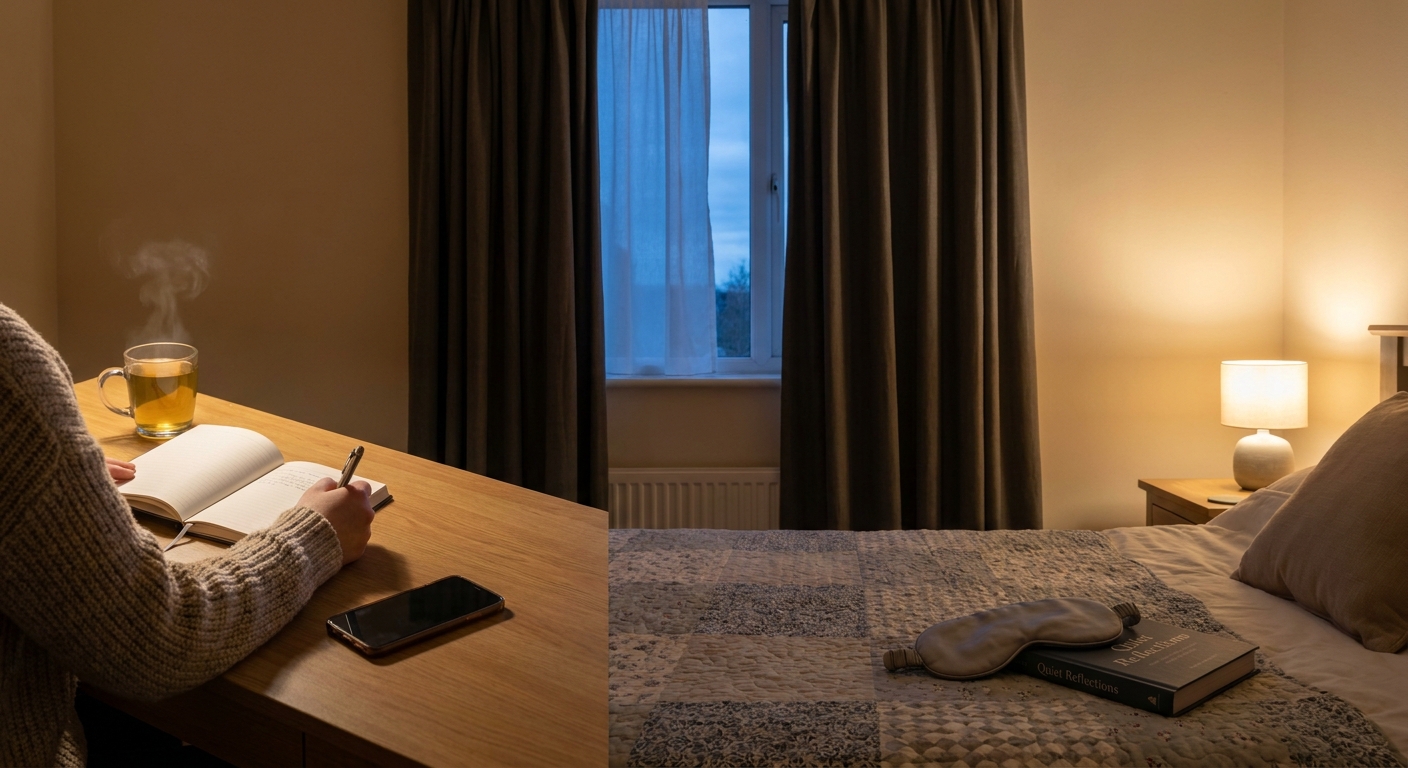
- Go to a dimly lit, quiet space and do something calm (reading, gentle stretching, listening to soothing audio).
- Return to bed only when you feel sleepier.
Over time, this re-establishes a strong connection between bed = sleep, not bed = worry.
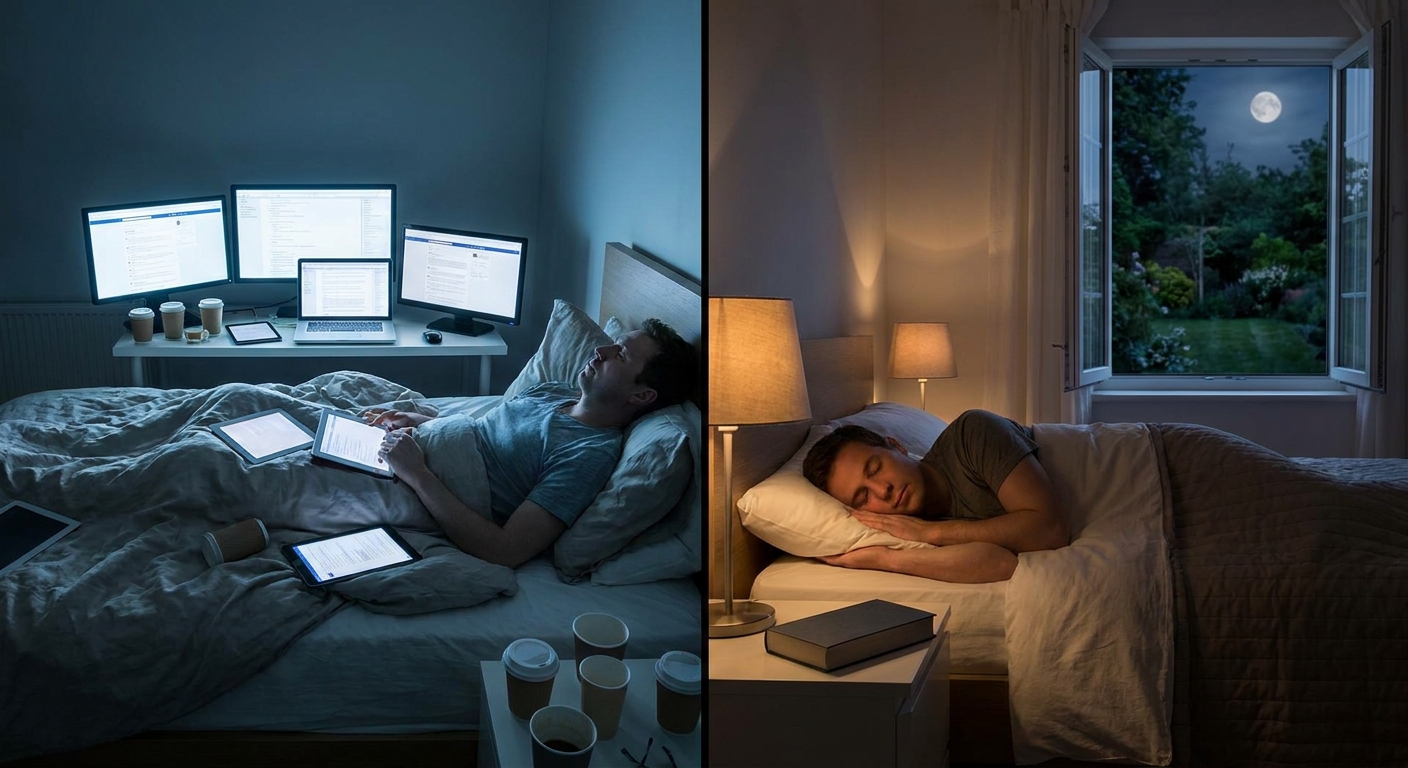
Sleep hygiene implication: Your bed should be reserved for sleep and intimacy, not for checking email, doomscrolling, or extended worrying.
Myth 3: “Waking up at night means you’re a bad sleeper.”
Reality: Brief night awakenings are normal; it’s prolonged wakefulness that’s problematic.
Sleep naturally cycles through stages every 90–110 minutes, and brief awakenings often occur at these transitions.[^5] Many people don’t remember them. Problems arise when you stay awake for long stretches and feel distressed.
What helps:
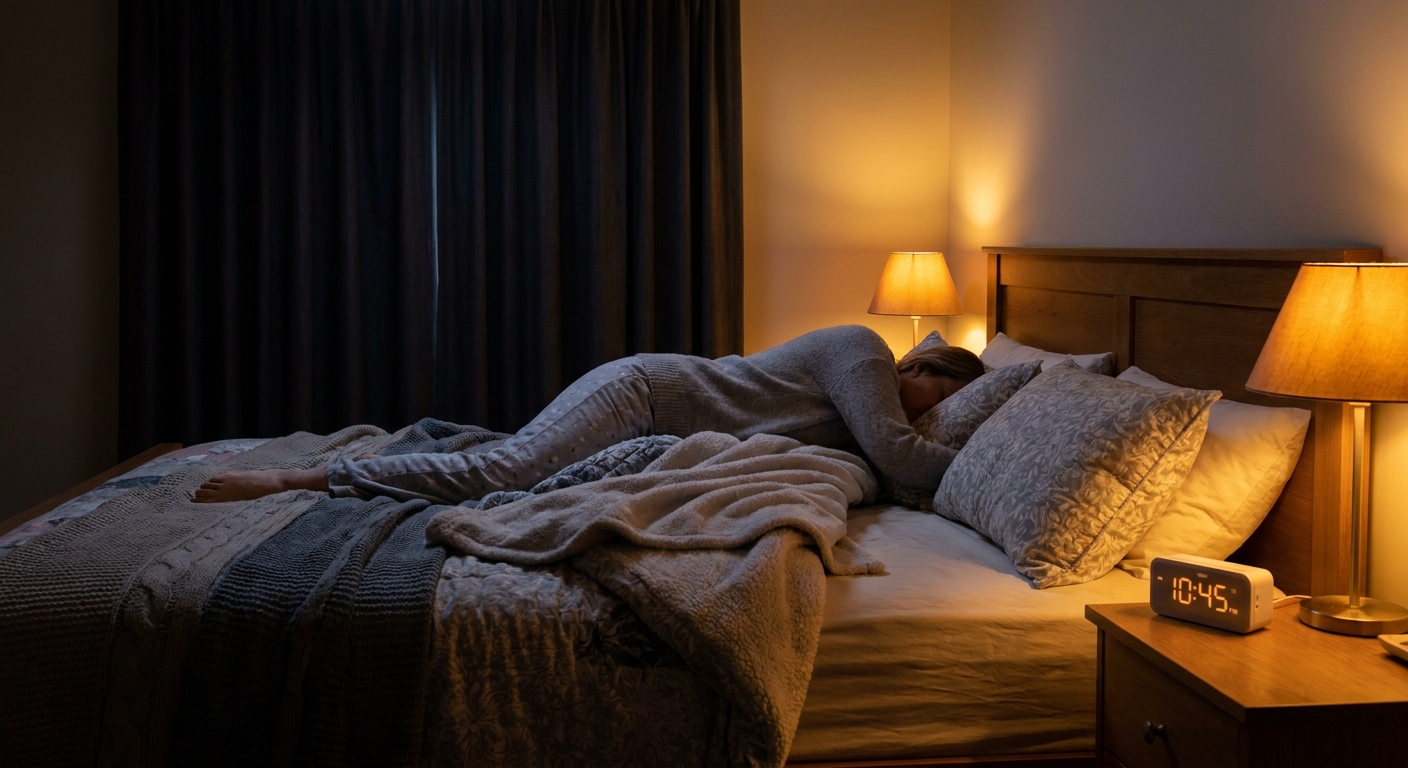
- Accept brief awakenings as normal; avoid looking at the clock unless necessary.
- If you feel your body revving up with worry, apply the 20–30 minute get-out-of-bed rule.
- Keep the bedroom cool, dark, and quiet so that returning to sleep is easier.
Chronotype nuance: Night owls may be more likely to experience delayed sleep onset rather than frequent awakenings; focusing on earlier light exposure and consistent wake times is particularly helpful for them.
Myth 4: “Blue light is the only bedtime enemy.”
Reality: Blue light is important, but timing, brightness, and content all matter.
Blue-enriched light, especially in the evening, suppresses melatonin and shifts your circadian rhythm later.[^6] That’s why screens are often targeted in sleep advice.
But two other factors are just as critical:
- Emotional and cognitive arousal: Fast-paced shows, news, social media arguments, or work can keep your mind racing.
- Timing and brightness: A dim, warm-toned screen briefly checked earlier in the evening is less disruptive than a bright screen inches from your face right before bed.
Sleep hygiene implication:
- Start dimming lights 1–2 hours before bed.
- Use night mode or blue-light filters on devices.
- Reserve the last 30–60 minutes for low-stimulation activities.
Bedroom tweak: Keep chargers outside the bed or across the room to break the habit of late-night scrolling.
Myth 5: “Alcohol helps you sleep well.”
Reality: Alcohol may help you fall asleep faster, but it disrupts sleep architecture.
Alcohol initially has a sedative effect, but as it’s metabolized, it leads to more awakenings, lighter sleep, and suppressed REM sleep.[^7]
Regularly using alcohol as a sleep aid is associated with poorer overall sleep quality and potential dependency.
Sleep hygiene implication:
- If you drink, keep it moderate and avoid consuming alcohol within about 3 hours of bedtime.
- Notice how even small amounts affect your nighttime awakenings and restfulness.
Myth 6: “Naps are always bad for your sleep.”
Reality: Strategic naps can be helpful; long or late naps can interfere with nighttime sleep.
Short naps (10–30 minutes) earlier in the day can improve alertness and performance without heavily impacting night sleep.[^8] Long naps, especially in the late afternoon or evening, can steal pressure from your sleep drive and delay bedtime.
Sleep hygiene implication:
- If you nap, keep it under 30 minutes, ideally before mid-afternoon.
- If you have chronic insomnia, many clinicians recommend avoiding naps while you’re retraining your night sleep.
- Morning types may benefit from a brief early afternoon nap for a mid-day reset.
- Evening types are more vulnerable to late naps pushing their bedtime even later.
Chronotype nuance:
Myth 7: “You can catch up on sleep on weekends without consequences.”
Reality: Large swings in sleep timing can create ‘social jet lag.’
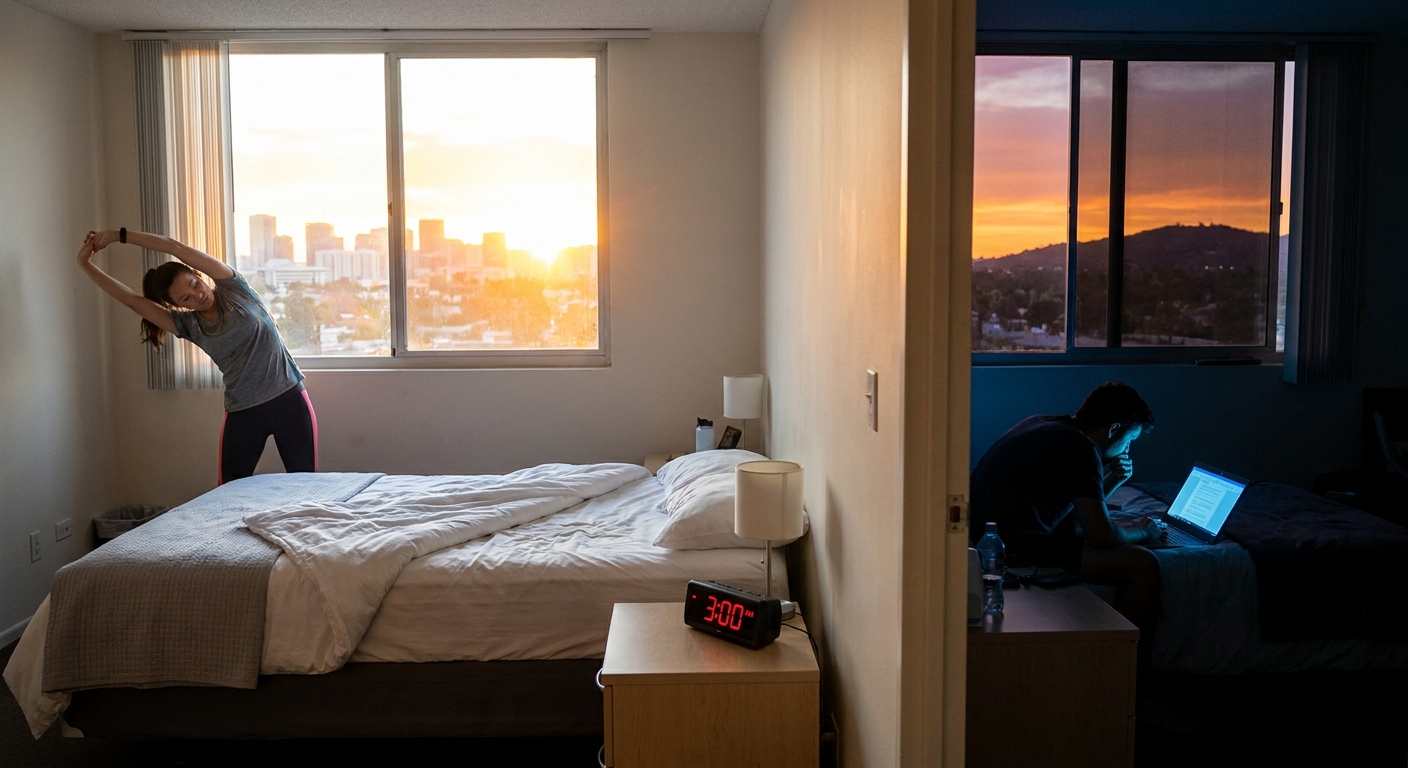
Sleeping in on weekends can feel delicious if you’re sleep-deprived. But big differences between weekday and weekend sleep/wake times (more than ~2 hours) are linked to social jet lag—a chronic mismatch between your biological and social clocks.[^9]
This misalignment is associated with metabolic and mood issues.
Sleep hygiene implication:
- Aim to keep your wake time within about one hour on weekdays and weekends.
- If you’re recovering from debt, consider earlier bedtimes or brief naps rather than sleeping in excessively.
Myth 8: “Your bedroom doesn’t really matter as long as you’re tired.”
Reality: Environment strongly influences sleep onset and continuity.
Studies show that cooler temperatures, reduced noise, and less light are consistently associated with better sleep quality.[^10]
Core bedroom hygiene:
- Temperature: Cool (60–67°F / 15–19°C).[^11]
- Light: Dark, using blackout curtains or eye masks.
- Noise: Quiet or masked with white/brown noise.
- Comfort: Supportive mattress and pillows; minimal clutter around the bed.
Think of your bedroom as your nervous system’s “nest.” The safer and calmer it feels, the easier it is to let go.
Myth 9: “Good sleepers fall asleep the minute their head hits the pillow.”
Reality: Taking 10–20 minutes to fall asleep is normal.
Falling asleep instantly can sometimes signal sleep deprivation, not excellent sleep health. On the other hand, regularly taking more than 30 minutes may indicate insomnia or poor sleep hygiene.[^12]
Sleep hygiene implication:
- Give yourself a wind-down buffer so you’re entering bed already drowsy.
- Avoid expecting instantaneous sleep; that pressure itself can create anxiety.
Myth 10: “Sleep hygiene is enough to fix all sleep problems.”
Reality: Sleep hygiene is foundational, but some sleep disorders need targeted treatment.
Sleep hygiene—light, temperature, routines, and behavior—is a powerful foundation and often improves mild to moderate difficulties.[^13] But conditions like chronic insomnia, sleep apnea, restless legs syndrome, and circadian rhythm disorders may need more.
Signs to seek professional help:
- Loud snoring, gasping, or choking during sleep.
- Persistent insomnia (3 nights a week for 3+ months) despite good sleep hygiene.
- Severe daytime sleepiness or sudden sleep attacks.
- Strong urge to move your legs at night or uncomfortable sensations that ease with movement.
In many cases, cognitive-behavioral therapy for insomnia (CBT-I) or evaluation by a sleep specialist is recommended.[^14]
Bringing It All Together: Simple Truths from Sleep Science
When myths fall away, several simple, gentle truths remain:
- Regularity is powerful: Wake at roughly the same time daily; your body thrives on rhythm.
- Environment matters: A cool, dark, quiet bedroom invites sleep.
- Light is a strong cue: Bright in the morning, dim in the evening.
- Your chronotype is real: Work with your natural tendencies where possible; adjust gradually where necessary.
- The bed is a sanctuary: Use it mainly for sleep and intimacy to keep a strong sleep association.
Think of sleep hygiene not as a set of rigid rules, but as tending the conditions around a campfire. You can’t force the flames, but you can prepare dry wood, shelter it from wind, and give it time. Sleep, like fire, is a natural process that emerges when the ingredients are right.
You are not failing if sleep feels hard right now. You are simply learning the language your body speaks—light and darkness, warmth and coolness, stillness and rhythm. With patience, the fog of myths can lift, and your nights can become clearer, calmer, and more restorative.
[^1]: Irish, L. A. et al. (2015). The role of sleep hygiene in promoting public health. Sleep Medicine Reviews, 22, 23–36.
[^2]: Hirshkowitz, M. et al. (2015). National Sleep Foundation’s sleep time duration recommendations. Sleep Health, 1(1), 40–43.
[^3]: Itani, O. et al. (2017). Short sleep duration and health outcomes. Sleep Medicine, 32, 246–256.
[^4]: Bootzin, R. R., & Perlis, M. L. (1992). Stimulus control therapy for insomnia. In Case Studies in Insomnia.
[^5]: Carskadon, M. A., & Dement, W. C. (2011). Normal human sleep. In Principles and Practice of Sleep Medicine.
[^6]: Chang, A.-M. et al. (2015). Evening use of light-emitting eReaders negatively affects sleep. PNAS, 112(4), 1232–1237.
[^7]: Ebrahim, I. O. et al. (2013). Alcohol and sleep I. ACER, 37(4), 539–549.
[^8]: Faraut, B. et al. (2015). Napping: A public health issue. Sleep Medicine Reviews, 22, 23–30.
[^9]: Wittmann, M. et al. (2006). Social jetlag: Misalignment of biological and social time. Chronobiology International, 23(1–2), 497–509.
[^10]: Grander, M. A., & Fernandez-Mendoza, J. (2015). Sleep, insomnia, and health. Sleep Medicine Clinics, 10(1), 9–17.
[^11]: Okamoto-Mizuno, K., & Mizuno, K. (2012). Effects of thermal environment on sleep and circadian rhythm. Journal of Physiological Anthropology, 31(1), 14.
[^12]: American Academy of Sleep Medicine. (2014). International Classification of Sleep Disorders (3rd ed.).
[^13]: Irish, L. A. et al. (2015). The role of sleep hygiene in promoting public health. Sleep Medicine Reviews, 22, 23–36.
[^14]: Trauer, J. M. et al. (2015). Cognitive behavioral therapy for chronic insomnia. Annals of Internal Medicine, 163(3), 191–204.