Sleep is not a moral test you pass or fail. It is a biological rhythm, like the tide, shaped by light, temperature, habits, and timing. "Sleep hygiene" is simply the art of arranging your life so that sleep can arrive naturally.
Why Sleep Hygiene Matters More Than Willpower
Poor sleep is linked with higher risk of depression, anxiety, cardiovascular disease, diabetes, and impaired immune function.[^1][^2] The good news: small, consistent changes in your daily routine and bedroom environment can meaningfully improve sleep quality, even if you struggle with insomnia.[^3]
In this guide, we’ll build a gentle, research-based nighttime ritual tailored to your body clock—step by step, like dimming the lights in a theater before the main show.
Step 1: Understand Your Chronotype (Your Inner Clock)
Your chronotype is your natural tendency to be more alert in the morning or evening. It’s influenced by genetics and age.[^4]
- Morning types (larks): Wake early, peak earlier, get sleepy earlier.
- Evening types (owls): Wake later (if allowed), peak later, sleepy late.
- Intermediate types: Fall somewhere in between.
- When do you naturally wake up on free days (no alarm)?
- When do you feel most focused and creative?
- When do you reliably feel sleepy?
You can get a sense of your chronotype by asking:
Chronotype-Specific Tweaks
If you’re a morning type:
- Protect early bedtimes by dimming lights and screens 1–2 hours before your usual sleep time.
- Shift intense tasks to earlier in the day; avoid late-evening exercise or stimulating work.
- Morning light is your ally—get 20–30 minutes of outdoor light within an hour of waking.
- Gradually shift your schedule earlier by 15–20 minutes every few days (bed, wake, meals, light exposure). Sudden changes often fail.
- Use strong morning light exposure to help advance your clock; dim indoor lighting in the late evening.[^5]
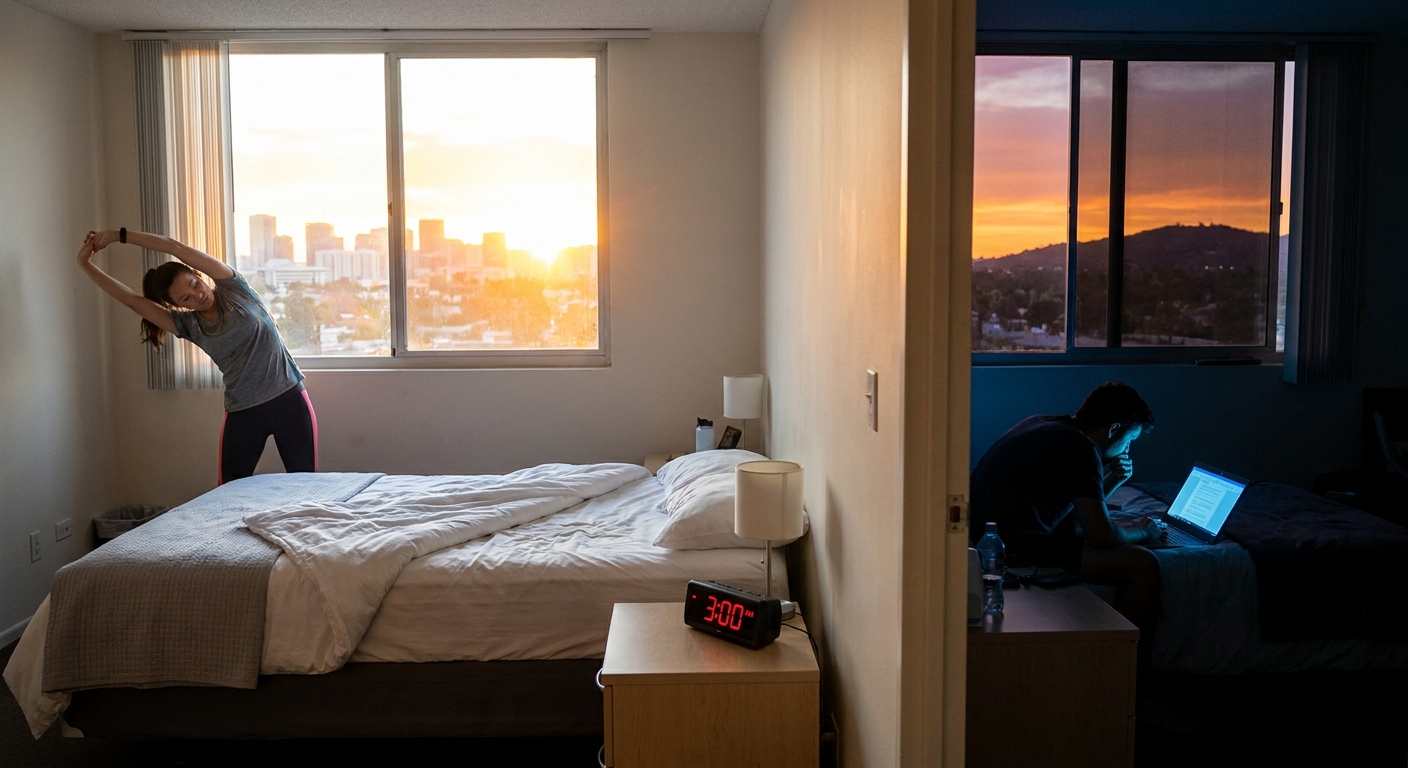
- Avoid high-stimulation activities after your “biological evening” (often around 10–11 p.m. for owls), even if you’re still awake.
- Aim for regularity: similar wake and sleep times every day (weekend variation under 1 hour).
- Place your most important tasks during your natural mental “peak,” then build routines around that.
If you’re an evening type:
If you’re in-between:
Step 2: Shape a Sleep-Friendly Bedroom
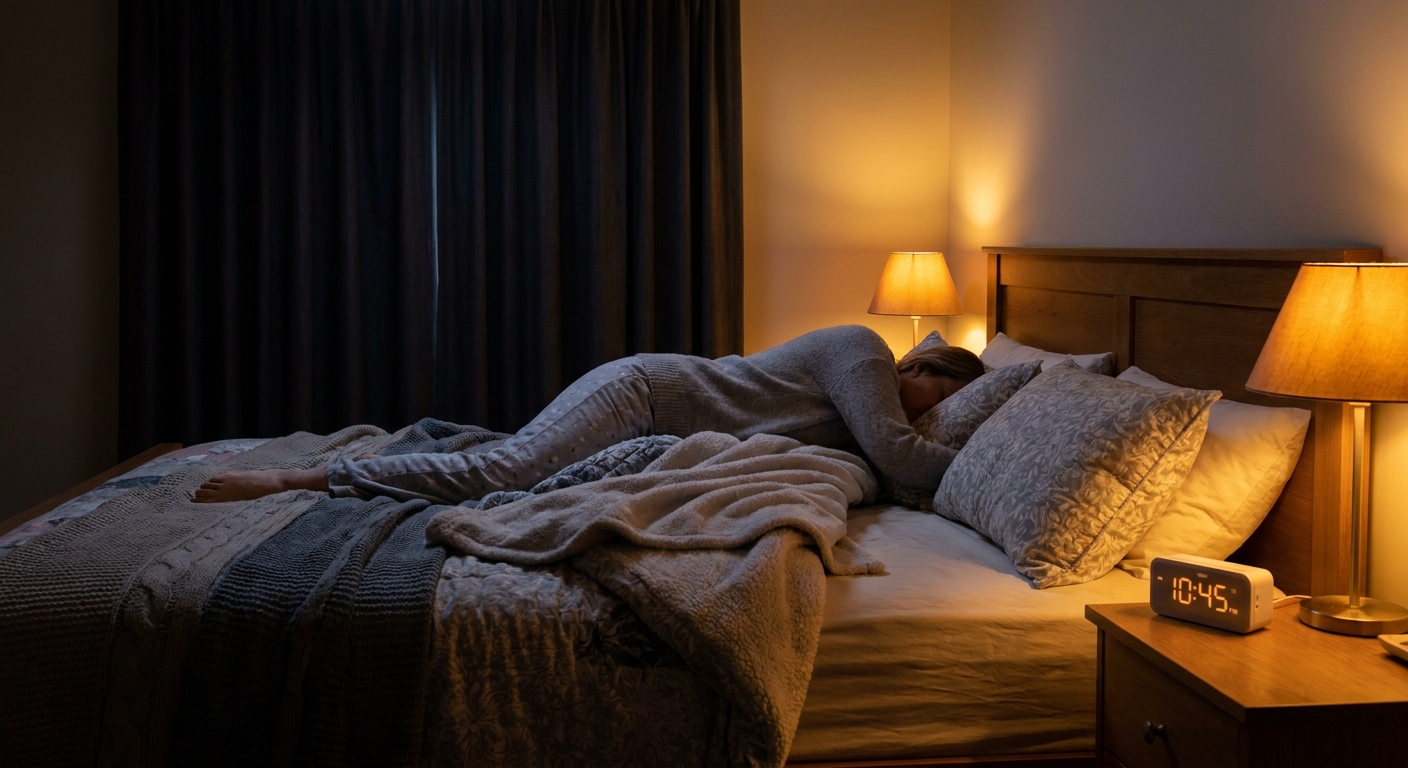
Think of your bedroom as a quiet cave: cool, dark, and safe. Your brain is highly responsive to environmental cues, especially at night.
1. Cool the Air
Your core body temperature needs to drop slightly for sleep to begin.[^6] Research suggests an ideal bedroom temperature of about 60–67°F (15–19°C) for most adults.[^7]
Practical tweaks:
- Use breathable bedding (cotton, linen, bamboo) and layers you can easily adjust.
- Consider a fan or open window; airflow often feels soothing.
- Take a warm shower 60–90 minutes before bed—the warm water dilates blood vessels, helping your body cool as you step out.[^8]
2. Darken the Room
Light is the main signal that sets your internal clock. Evening light, especially blue-enriched light, suppresses melatonin and delays sleep.[^9]
Practical tweaks:
- Use blackout curtains or an eye mask.
- Cover or dim LED indicators (chargers, clocks, electronics).
- Replace bright ceiling lights at night with warm, low-level lamps.
3. Quiet the Noise (or Shape It)
Unexpected noise fragments sleep, even if you don’t fully wake.[^10]
Practical tweaks:
- Use earplugs or a white/brown noise machine (or app) to mask traffic, voices, or neighbors.
- If you share a bed, discuss consistent sleeping arrangements (e.g., same mattress firmness, quiet alarms, pets on/off the bed).
- Consider soft rugs or curtains to absorb sound in echoey rooms.
4. Declutter Your Sleep Space
A visually busy bedroom can subtly signal “unfinished tasks” to the brain. While the research on clutter and sleep is emerging, stress and rumination are clearly linked with poor sleep quality.[^11]
Practical tweaks:
- Clear surfaces near the bed: one lamp, one book, water, and any sleep aids.
- Move work items (laptops, paperwork) out of sight.
- If that’s not possible, use a dedicated bin or drawer to “put the day away.”
Step 3: Create a Gentle 60-Minute Wind-Down
Sleep rarely arrives on command; it prefers a runway. A predictable pre-sleep routine conditions your brain to associate certain activities with rest, like a familiar lullaby.
Here is a structure you can adapt:
60–45 Minutes Before Bed: Transition
- Dim lights and silence nonessential notifications.
- Stop new tasks—no fresh emails, no major decisions.
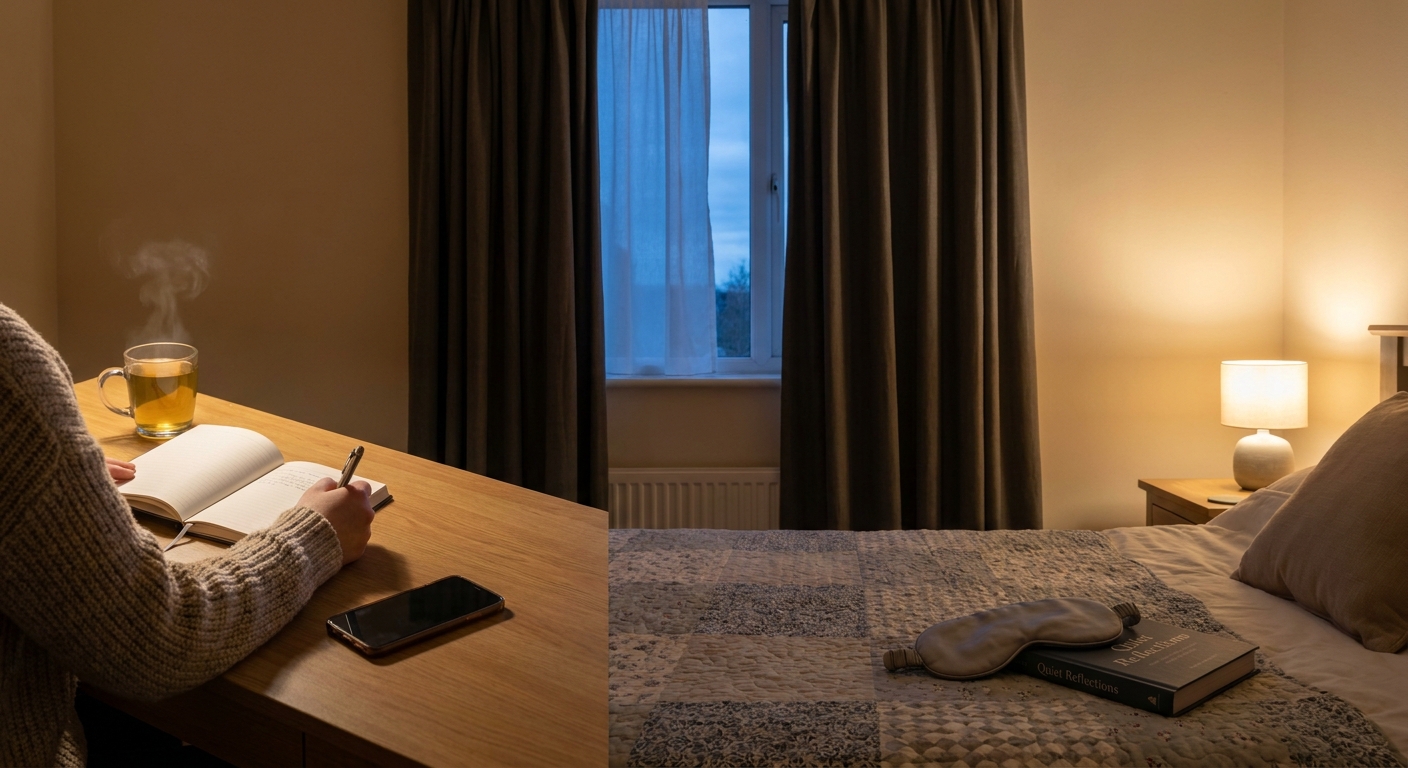
- If needed, make a short “tomorrow list”: 3–5 things you’ll handle the next day. This reduces bedtime rumination.[^12]
45–20 Minutes Before Bed: Downshift the Body
- Gentle stretching, yoga, or slow breathing can lower physical tension and heart rate.[^13]
- A warm shower or bath can support your natural temperature drop.
- Light reading (on paper or an e-reader with warm, dim light) is often more sleep-conducive than scrolling.
20 Minutes Before Bed: Soften the Mind
- Relaxation techniques such as progressive muscle relaxation, body scans, or guided imagery reduce arousal and improve sleep onset, even in insomnia.[^14]
- A short gratitude or reflection practice (3 things you appreciated today) nudges the mind toward closure rather than problem-solving.
Step 4: Support Sleep All Day Long
Sleep hygiene is not only about bedtime. Many of the most powerful changes happen earlier.
Light and Movement
- Morning light: 20–30 minutes outdoors soon after waking anchors your circadian rhythm.[^15]
- Daytime activity: Regular physical activity is linked with better sleep quality and shorter time to fall asleep.[^16] Aim for at least 150 minutes of moderate aerobic activity per week, but finish vigorous workouts at least 3 hours before bed.
Caffeine and Alcohol
- Caffeine has a half-life of about 5–6 hours, meaning an afternoon coffee can still be active at bedtime.[^17] Many sleep specialists suggest no caffeine after ~2 p.m., earlier if you’re sensitive.
- Alcohol may help you fall asleep faster, but it fragments sleep and suppresses REM, leading to less restorative rest.[^18] If you drink, keep it moderate and avoid drinking within 3 hours of bedtime.
Food and Timing
- Large, heavy meals close to bedtime can cause discomfort and reflux.
- A light snack can be helpful if you’re hungry—something with complex carbohydrates and a bit of protein (e.g., oatmeal, yogurt, a banana with nut butter).
Step 5: What to Do When Sleep Won’t Come
Everyone has restless nights. Fighting them often makes things harder.
The 20-Minute Gentle Rule
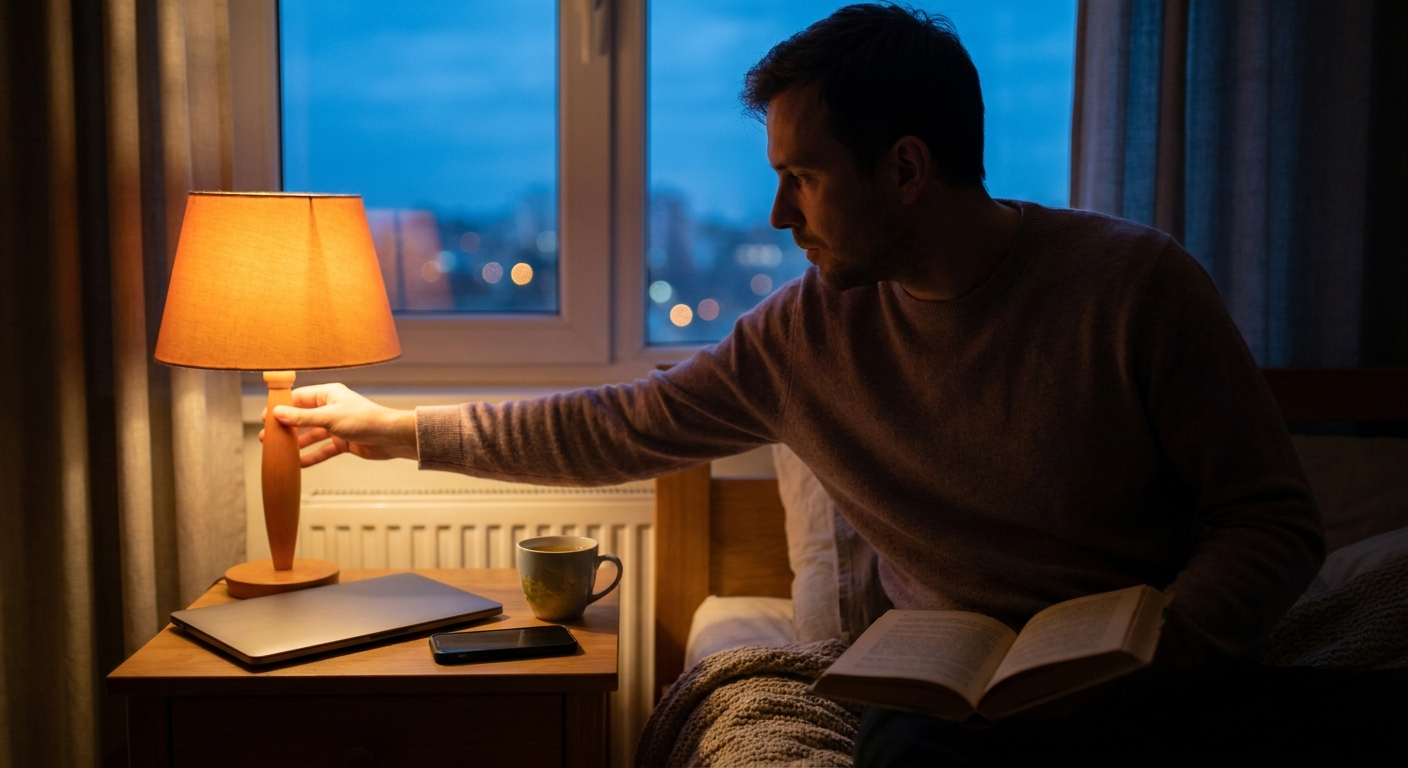
If you’re awake in bed for what feels like 20–30 minutes, get up calmly. Go to a dimly lit room and do something quiet and non-stimulating: light reading, gentle stretching, or listening to soft music.
When your eyes feel heavier and your thoughts slow down, return to bed. This technique, known as stimulus control, helps your brain re-learn that bed is for sleep, not for worrying.[^19]
Soothing Self-Talk
It’s easy to think, "I’ll never function tomorrow," or "Something is wrong with me." Instead, try phrases like:
- "My body knows how to sleep. I’m just giving it space."
- "Even if tonight is short, I have survived tired days before."
- "Resting quietly is still useful for my body."
Self-compassion is associated with less insomnia and fewer anxiety symptoms.[^20] Be the kind narrator of your own experience.
Step 6: Adjusting for Your Chronotype in Real Life
You can’t always live perfectly aligned with your inner clock. Work, family, and social life tug at your schedule. Aim for small shifts:
- Morning types forced into late schedules: Use bright light early in your shift and dim light toward the end. Keep weekend wake times close to workdays.
- Evening types with early obligations: Emphasize strict wake times, morning light, and consistent earlier bedtimes, even if sleep isn’t perfect at first. Progress is often gradual.
- All types: Prioritize wake time over bedtime. Regular wake time is a stronger anchor for your circadian rhythm than when you get into bed.
A Final Word: Progress, Not Perfection
Sleep hygiene is not about strict rules; it’s about creating conditions in which sleep can safely land. Think of each change as adjusting the sails rather than forcing the wind.
You do not need to implement everything at once. Choose one or two small changes this week—a consistent wake time, cooler room, or a gentle 20-minute wind-down—and observe how your nights respond.
Your brain and body are built for sleep. With patient, evidence-based care, you’re simply helping them remember the way home.
[^1]: Itani, O. et al. (2017). Short sleep duration and health outcomes. Sleep Medicine, 32, 246–256.
[^2]: Irwin, M. R. (2015). Why sleep is important for health. Psychosomatic Medicine, 77(8), 870–879.
[^3]: Irish, L. A. et al. (2015). The role of sleep hygiene in promoting public health. Sleep Medicine Reviews, 22, 23–36.
[^4]: Roenneberg, T. et al. (2007). Epidemiology of the human circadian clock. Current Biology, 17(22), R1038–R1043.
[^5]: Crowley, S. J. et al. (2015). A longitudinal assessment of sleep timing, circadian phase, and phase angle of entrainment. Journal of Biological Rhythms, 30(2), 123–131.
[^6]: Krauchi, K., & Deboer, T. (2010). The interrelationship between sleep regulation and thermoregulation. Frontiers in Bioscience, 15, 604–625.
[^7]: Okamoto-Mizuno, K., & Mizuno, K. (2012). Effects of thermal environment on sleep and circadian rhythm. Journal of Physiological Anthropology, 31(1), 14.
[^8]: Haghayegh, S. et al. (2019). The effects of a warm shower or bath before bedtime. Sleep Medicine Reviews, 46, 124–135.
[^9]: Chang, A.-M. et al. (2015). Evening use of light-emitting eReaders negatively affects sleep. PNAS, 112(4), 1232–1237.
[^10]: Basner, M., & McGuire, S. (2018). WHO environmental noise guidelines. International Journal of Environmental Research and Public Health, 15(9), 1854.
[^11]: Harvey, A. G. (2002). A cognitive model of insomnia. Behaviour Research and Therapy, 40(8), 869–893.
[^12]: Scullin, M. K. (2013). Sleep, memory, and aging. Perspectives on Psychological Science, 8(3), 242–256.
[^13]: Passos, G. S. et al. (2011). Aerobic exercise and chronic insomnia. Sleep Medicine, 12(10), 1018–1027.
[^14]: Edinger, J. D., & Means, M. K. (2005). Cognitive–behavioral therapy for primary insomnia. Clinical Psychology Review, 25(5), 539–558.
[^15]: Khalsa, S. B. S. et al. (2003). A phase response curve to single bright light pulses. Journal of Physiology, 549(3), 945–952.
[^16]: Kredlow, M. A. et al. (2015). The effects of physical activity on sleep. Journal of Behavioral Medicine, 38(3), 427–449.
[^17]: Drake, C. et al. (2013). Caffeine effects on sleep taken 0, 3, or 6 hours before bedtime. Journal of Clinical Sleep Medicine, 9(11), 1195–1200.
[^18]: Ebrahim, I. O. et al. (2013). Alcohol and sleep I: Effects on normal sleep. Alcoholism: Clinical and Experimental Research, 37(4), 539–549.
[^19]: Bootzin, R. R., & Perlis, M. L. (1992). Stimulus control therapy for insomnia. In Case Studies in Insomnia.
[^20]: Wong, C. C. Y. et al. (2016). Self-compassion and sleep disturbance. Mindfulness, 7, 1211–1220.