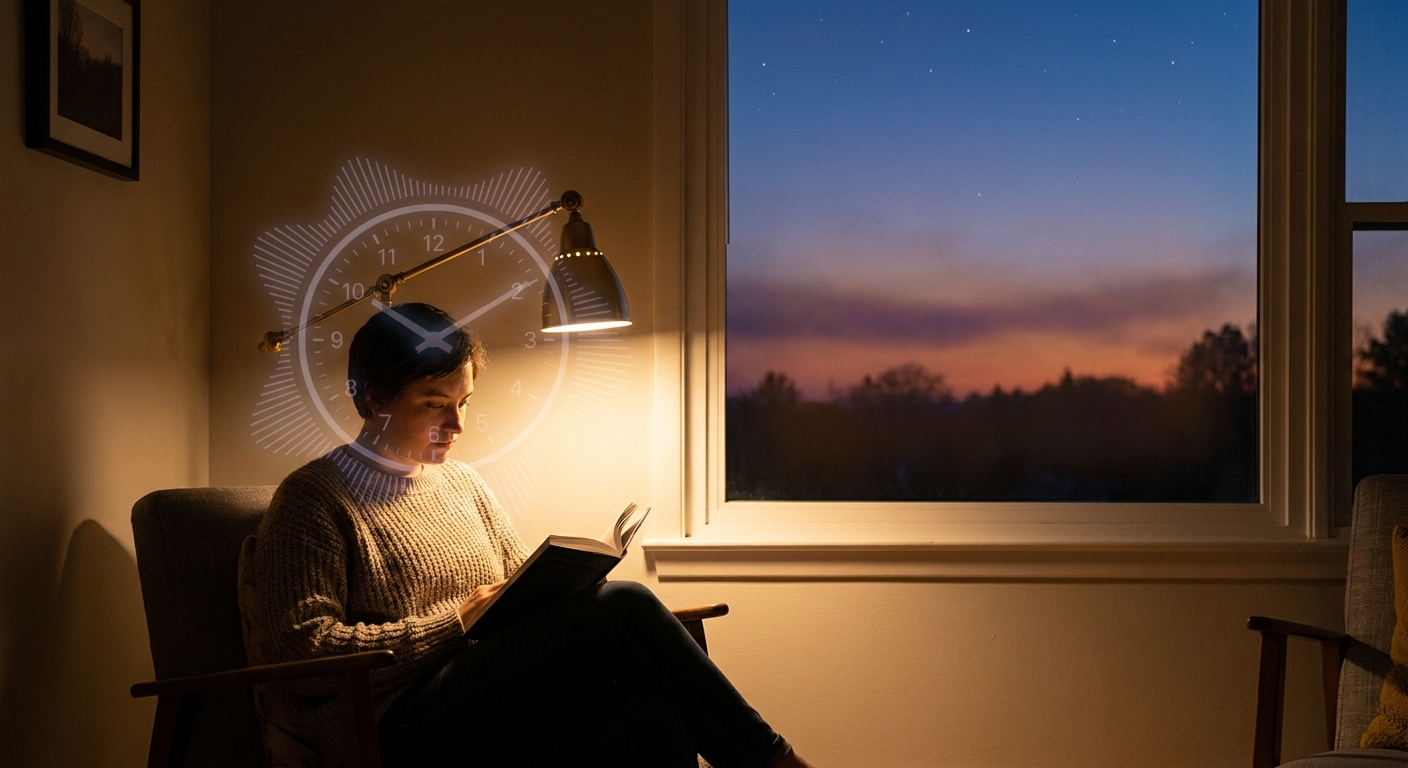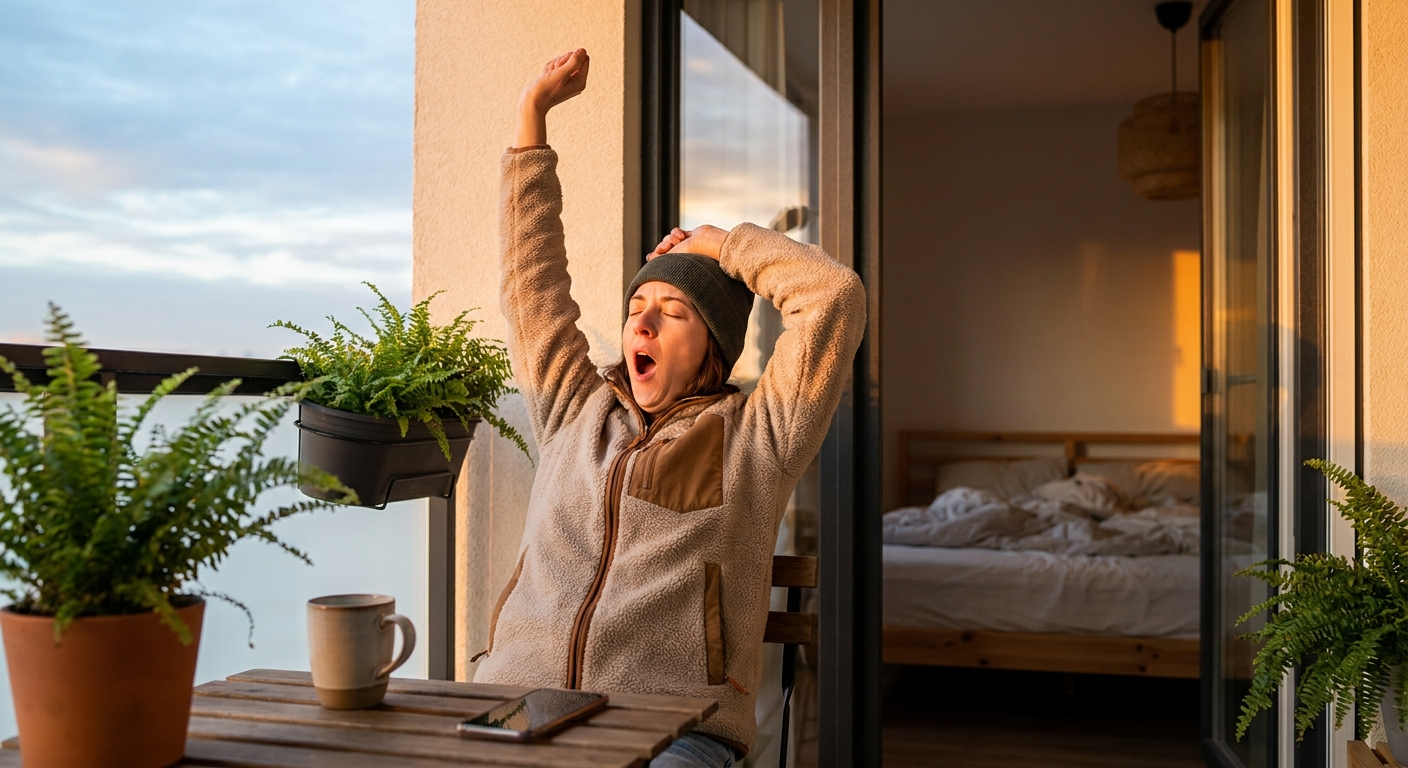
Some people wake as if the sun is tucked inside them, eager and clear-headed at dawn. Others come alive when the evening sky deepens, thoughts sharpening while the rest of the world winds down. These patterns are not mere habits or preferences—they are expressions of your chronotype, the circadian rhythm’s signature on your daily life.
Your Inner Dawn and Dusk
Understanding your chronotype can shift the narrative from self-blame ("I’m just not disciplined") to self-knowledge ("My internal clock runs a bit later"). In this explainer, we’ll explore the science of chronotypes, how they affect sleep, and gentle, research-backed ways to find harmony between your internal time and your obligations.
What Is a Chronotype?
A chronotype is your natural inclination toward earlier or later sleep and activity times. It’s the answer to the question: When does your body most want to sleep and be awake, if left to its own rhythm?
Chronotype arises from:
- Genetics – Certain clock genes influence whether your internal cycle tends to run slightly short or long.[^1]
- Age – Teenagers tend to shift later; many older adults shift earlier.[^2]
- Environment – Light exposure, work schedules, and social habits can nudge your clock earlier or later.
Researchers often group chronotypes into three broad categories:[^3]
- Morning types (larks) – Prefer earlier bed and wake times; best performance early.
- Intermediate types (hummingbirds) – Comfortable in the middle; flexible.
- Evening types (owls) – Prefer later sleep and wake times; peak alertness later.
Your chronotype isn’t a moral quality—it’s a timing preference shaped by your circadian system.
How Chronotype Affects Sleep, Mood, and Health
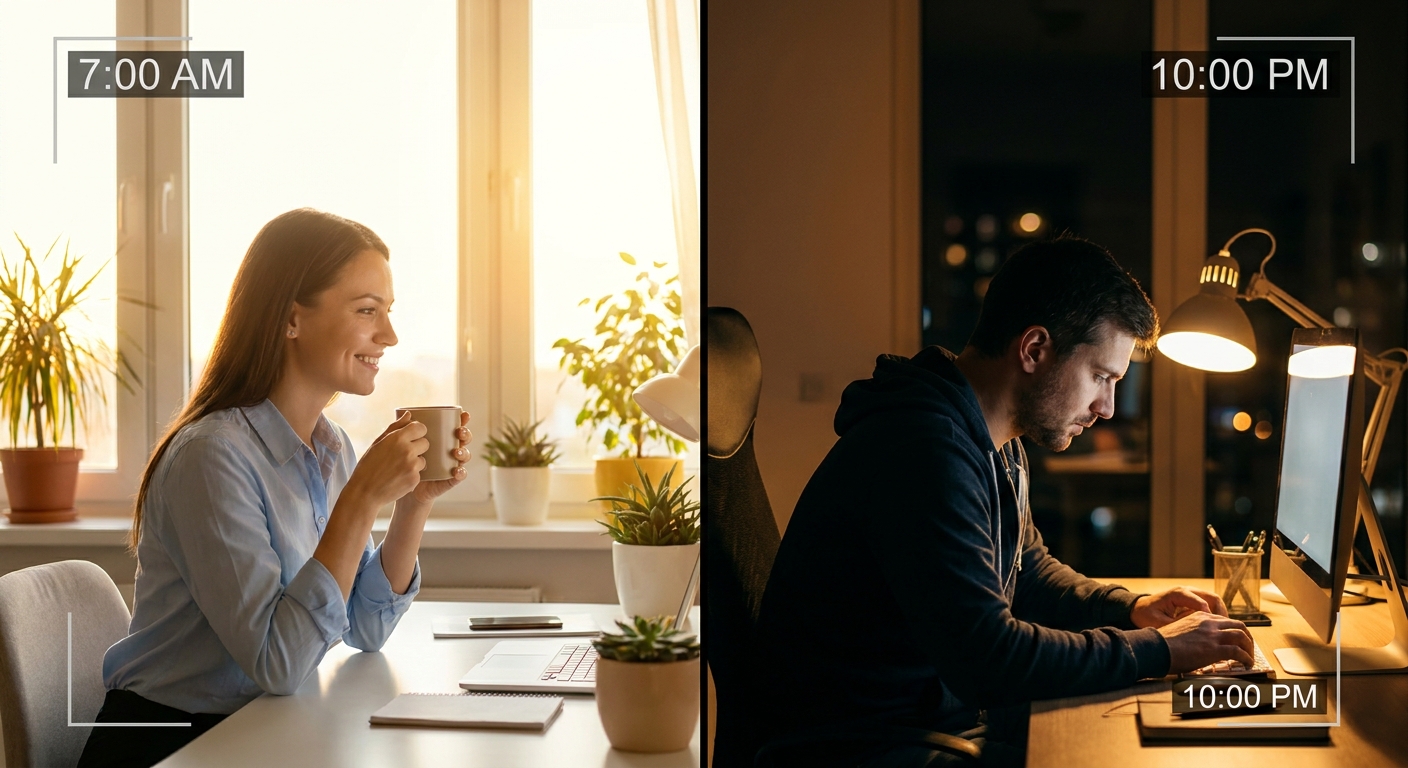
When your daily schedule and chronotype align, sleep often feels natural. When they clash—a state dubbed social jetlag—you may feel like you’re constantly flying between time zones.[^4]
Social Jetlag: Living in Two Time Zones at Once
Social jetlag occurs when there’s a large gap between:
- Your natural sleep–wake timing and
- The schedule imposed by work, school, or social life.
For example, an evening type required to wake at 5:30 a.m. may live as if they are perpetually jet-lagged.
Research links higher social jetlag with:[^4]
- Shorter sleep duration
- Increased fatigue
- Higher risk of metabolic issues and depressive symptoms
The good news: Even partial alignment—nudging your schedule closer to your natural rhythm—can bring relief.
Finding Your Chronotype: Clues From Daily Life
You don’t need a lab test to get a sense of your chronotype. Reflect for a moment:
- If you had no obligations, when would you naturally fall asleep and wake?
- At what time of day do you feel most mentally clear?
- When does sleepiness reliably begin to wash over you?
You can also explore structured questionnaires like the Munich Chronotype Questionnaire (MCTQ) or Morningness–Eveningness Questionnaire (MEQ), which have been used extensively in circadian research.[^3]
Your answers form a soft sketch of your inner clock.
Gentle Strategies for Each Chronotype
The goal is not to reshape yourself into a different chronotype, but to work with your natural timing while reducing misalignment.
If You’re a Morning Type (Lark)
Common experiences:
- Sleepiness arrives early in the evening
- Wake easily, often before the alarm
- Peak alertness in the morning; energy fades later in the day
Challenges:
- Social activities pushing bedtime later
- Early evening drowsiness making it hard to participate in late events
Circadian-friendly suggestions:
Extend Light in Early Evening (Gently)
- Use moderate, warm lighting in the early evening to help you stay comfortably awake until a reasonable bedtime. - Avoid extremely dim environments too early in the night, which may advance melatonin further.
Anchor Wake Time, Not Just Bedtime
- Keep your wake time steady; your body often sets bedtime according to when you wake.[^5]
Plan Demanding Tasks Early
- Schedule your most cognitively demanding work for the morning when your natural alertness peaks.
Respect Your Natural Wind-Down
- Begin a calming routine 60–90 minutes before bed—reading, stretching, or quiet conversation.
If You’re Intermediate (Hummingbird)
Common experiences:
- Comfortable with typical 10–11 p.m. sleep and 6–8 a.m. waking
- Can shift schedule slightly without too much distress
Challenges:
- Drifting later on weekends, leading to Monday fatigue
- Overcommitting to early and late activities because you’re relatively flexible
Circadian-friendly suggestions:
Limit Weekend Drift
- Keep weekend bedtimes and wake times within about 1 hour of weekday schedules to minimize social jetlag.[^4]
Use Light Strategically
- Morning outdoor light to consolidate your rhythm. - Dim lighting 1–2 hours before bed to support melatonin rise.
Create a Consistent Wind-Down Cue
- Choose one simple ritual (a specific tea, a brief journal entry, or a few pages of a calming book) that always marks the last 15–20 minutes before bed.
If You’re an Evening Type (Owl)
Common experiences:
- Difficulty falling asleep early, even when exhausted
- Struggle to wake for early obligations
- Peak alertness in the late afternoon or evening
Challenges:
- Pressure to fit early schedules designed for larks
- Being labeled as “lazy” or “undisciplined” when chronobiology is at work
Circadian-friendly suggestions:
Morning Bright Light
- Aim for 30–60 minutes of outdoor light within 1–2 hours of waking.[^6] - If that’s not possible, consider a bright light device (discuss with a professional, especially if you have eye or mood conditions).
Gentle Schedule Shifts
- Move bedtime and wake time earlier in 15–30 minute steps every few days, rather than attempting a drastic, sudden change.
Evening Light Hygiene
- Avoid bright, blue-enriched light in the 1–2 hours before desired bedtime—dim lamps, use warm bulbs, enable screen filters. - Research shows that such interventions can meaningfully advance sleep timing and improve performance in self-identified night owls.[^7]
Earlier Anchors for Food and Activity
- Try to finish your main meal several hours before target bedtime. - Place more stimulating tasks earlier in the day when possible, reserving evenings for less arousing activities.
Practical Bedroom Tweaks by Chronotype
Your sleeping space can reinforce the kind of timing you’re aiming for.
For Larks
- Curtains: Consider slightly lighter curtains if you find yourself waking too early; you may not need a pitch-black room at dawn.
- Lighting: Use cozy, warm lamps in the evening, but avoid making the room cave-dark until closer to bedtime.
For Hummingbirds
- Consistency: Keep your bedroom lighting routine similar every night—same lamps, similar timing.
- Tech Boundaries: Decide on a consistent time to remove devices from the bed or switch them to very dim, warm-light modes.
For Owls
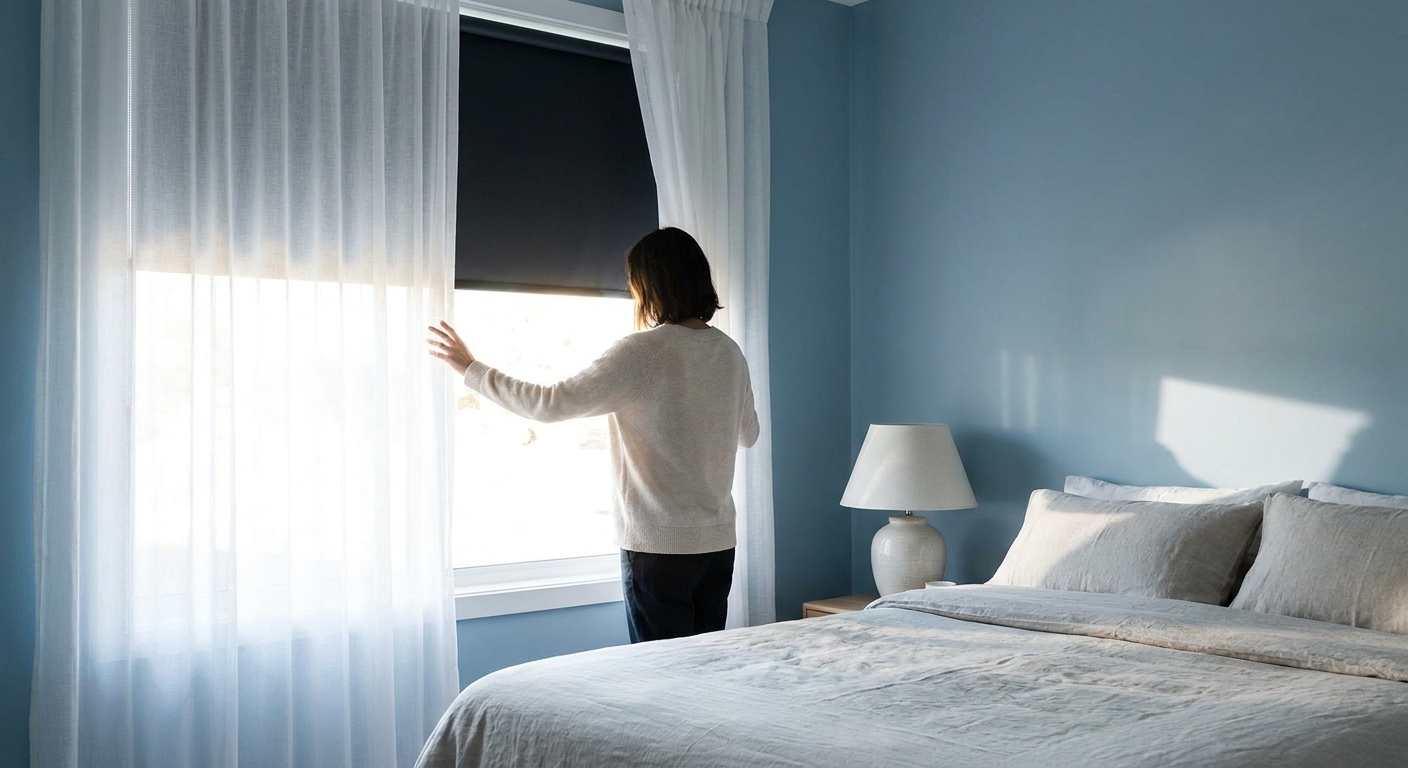
- Blackout Curtains + Morning Ritual: Use strong blackout at night, then create a light-flooding ritual in the morning—open curtains immediately, turn on bright lights.
- Screen-Free Wind-Down Zone: Make the bed itself a mostly screen-free space; use it for reading, audio stories, or quiet reflection to separate it from late-night digital stimulation.
A Kinder Perspective on Your Inner Clock
It’s easy to feel frustrated when your body doesn’t match the schedule the world expects. Circadian science offers a more compassionate lens: you are not broken; your clock is simply set to a different time.
With thoughtful adjustments—especially to light, timing, and bedroom environment—you can reduce the friction between your inner and outer worlds. Each small step, each slightly earlier dimming of the lights or more consistent wake time, is like gently turning the hands of a clock rather than forcing them.
Allow your chronotype to inform your choices, not define your worth. In listening carefully to your inner dawn and dusk, you may find that sleep, once a source of struggle, becomes a more familiar, welcoming rhythm.
References
[^1]: Jones SE et al. Genome-wide association analyses of chronotype in 697,828 individuals provides insights into circadian rhythms. Nat Commun. 2019.
[^2]: Roenneberg T et al. A marker for the end of adolescence. Curr Biol. 2004.
[^3]: Roenneberg T, Wirz-Justice A, Merrow M. Life between clocks: daily temporal patterns of human chronotypes. J Biol Rhythms. 2003.
[^4]: Wittmann M, Dinich J, Merrow M, Roenneberg T. Social jetlag: misalignment of biological and social time. Chronobiol Int. 2006.
[^5]: Czeisler CA et al. Stability, precision, and near-24-hour period of the human circadian pacemaker. Science. 1999.
[^6]: Khalsa SBS et al. A phase response curve to single bright light pulses in human subjects. J Physiol. 2003.
[^7]: Facer-Childs ER, Middleton B, Skene DJ, Bagshaw AP. Resetting the late timing of ‘night owls’ has a positive impact on mental health and performance. Sleep Med. 2019.