Your bedroom can be more than a place where you simply “try to sleep.” With a few thoughtful shifts, it can become a quiet observatory, perfectly tuned to your internal day–night cycle. Circadian science offers clear, evidence-based principles for shaping this space so that your environment whispers the same message your body needs to hear: it’s safe to rest now.
Turning Your Bedroom into a Sanctuary for Your Body Clock
This guide walks you, step by step, through building a circadian-friendly bedroom—from light and temperature to layout and routine—along with chronotype-specific suggestions to personalize your sanctuary.
Step 1: Map the Light — Your Most Powerful Tool
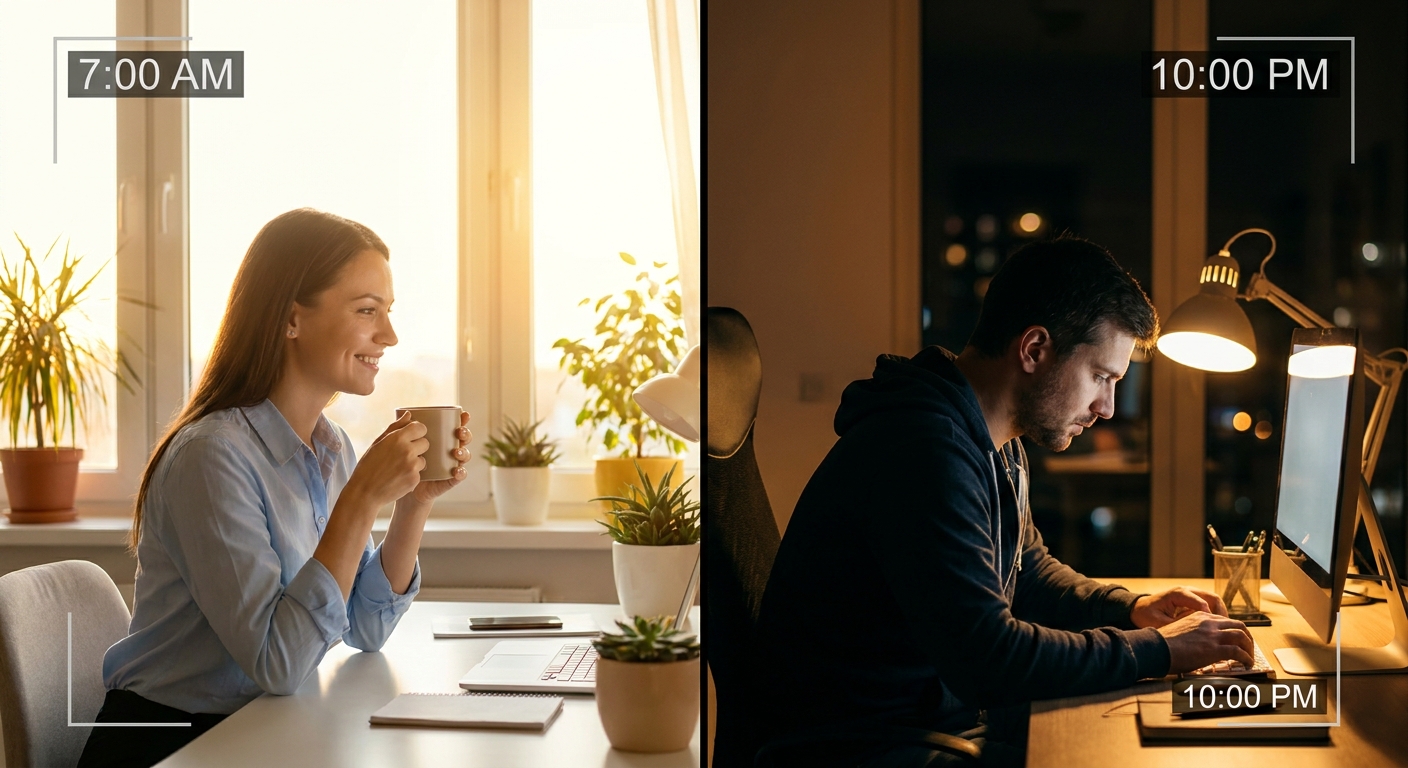
Light is the main signal your brain uses to decide whether it’s “day” or “night.” The goal is simple: bright and cool by day, dim and warm by night.
Daytime: Welcome the Sky Indoors
- Open curtains or blinds soon after waking.
- Work, read, or relax near windows when possible.
- If natural light is limited, consider a 10,000 lux light box used in the morning, especially if you’re a night owl or live at high latitudes (discuss with a clinician if you have mood disorders or eye conditions).[^1]
Morning bright light exposure has been shown to advance circadian phase, helping sleep occur earlier and improving mood.[^2]
Evening: Dim the Horizon
In the 1–2 hours before bed:
- Switch from bright ceiling lights to lamps with warm bulbs (≤2700K).
- Use dimmers where possible; think “candlelit café,” not “office at 10 a.m.”
- Enable night mode or blue-light filters on screens; ideally, reduce screen brightness and distance.
Studies show that exposure to blue-enriched light in the evening suppresses melatonin and delays sleep onset.[^3] Dim, warm light allows your internal night to begin on time.
Step 2: Shape the Darkness — Protecting Your Biological Night
Your brain expects deep darkness at night. Even modest light can confuse your circadian signals.
Blackout the Outside World
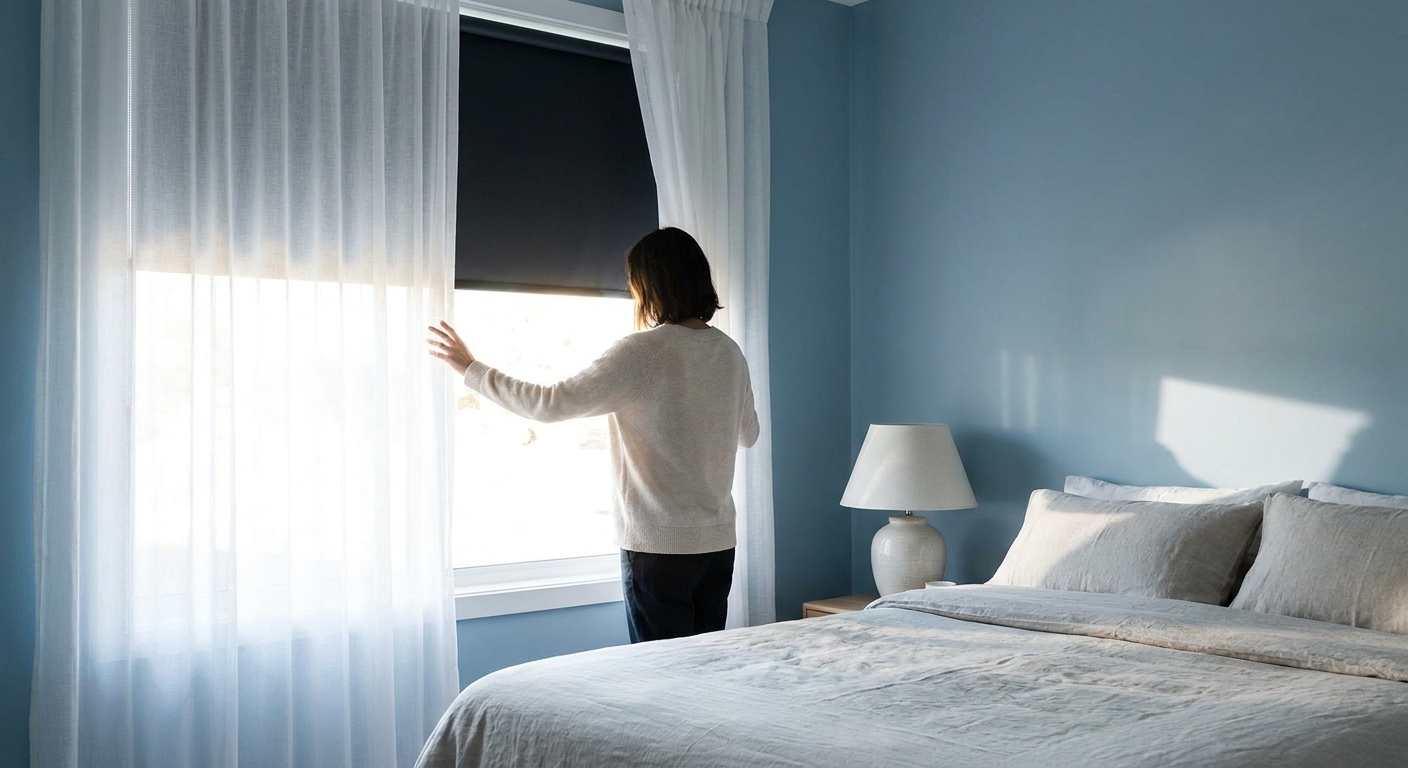
- Install blackout curtains or blinds, especially if you face streetlights or early sun.
- If that’s not feasible, a comfortable sleep mask can provide similar benefits.
Tame Indoor Glows
- Cover small LEDs from chargers, power strips, and electronics with opaque tape.
- Turn devices fully off or charge them outside the bedroom when possible.
Research suggests that light exposure during typical sleep hours can decrease melatonin and alter sleep architecture.[^4] Think of darkness as a soft blanket around your circadian system.
Step 3: Adjust the Temperature — Supporting Your Nighttime Cool-Down
As part of your circadian rhythm, your core body temperature naturally drops at night. A cooler room supports this gentle fall.
- Aim for 60–67°F (15–19°C) in the bedroom.[^5]
- Choose breathable bedding—cotton, linen, or bamboo.
- Consider a lighter duvet with a throw nearby if you tend to fluctuate.
Temperature regulation is closely intertwined with sleep onset and maintenance; a slightly cool environment can reduce awakenings and promote deeper sleep.[^5]
Step 4: Quiet the Soundscape — Soothing Rhythms for the Ears
Sudden noises can pull you up from deeper layers of sleep. Your bedroom should feel like a gentle, consistent sound environment.
- If you live in a noisy area, try white noise, nature sounds, or a fan to create an even acoustic backdrop.
- Soft earplugs may help if noise is unpredictable.
While sound isn’t a circadian cue, fragmented sleep can indirectly disrupt your rhythm by changing your sleep–wake patterns and increasing fatigue.
Step 5: Calm the Visual Field — Less Clutter, Less Cognitive Noise
Your bedroom’s appearance can affect how mentally “busy” you feel at night.
- Keep surfaces around the bed simple and uncluttered.
- Store work materials—laptops, notebooks, office supplies—out of view by evening.
- Choose a few calming elements (a plant, a soft artwork, a favorite book) rather than many stimulating objects.
A tidy, minimal space can make it easier for your mind to follow your body into rest.
Step 6: Align Habits with Your Chronotype
Your inner clock also reflects your natural preference for morning or evening activity. Use your bedroom to support that tendency without intensifying misalignment.
Morning Types (Larks)
Challenges: Getting sleepy too early, waking very early.
Bedroom adjustments:
- Avoid making the bedroom too dark in early evening. Moderate, warm light can help you stay comfortably awake until a socially practical bedtime.
- Use a sunrise alarm that gradually brightens the room toward your natural wake time to maintain a gentle, stable rhythm.
Routine cues:
- Begin dimming lights 60–90 minutes before your intended bedtime, not earlier.
- Keep screens low-brightness but not completely absent if you find you get sleepy too soon—balance is key.
Intermediate Types (Hummingbirds)
Challenges: Drifting later on weekends, inconsistent schedules.
Bedroom adjustments:
- Keep bedtime and wake time within about 1 hour across all days.[^6]
- Use curtains that allow a little morning light to seep in; this natural cue reinforces a steady wake-up.
Routine cues:
- Establish a consistent wind-down ritual (reading, stretching, journaling) that starts at the same clock time each night.
- Pair the ritual with dim lighting so your body begins to anticipate sleep.
Evening Types (Owls)
Challenges: Trouble falling asleep early enough, difficulty waking.
Bedroom adjustments:
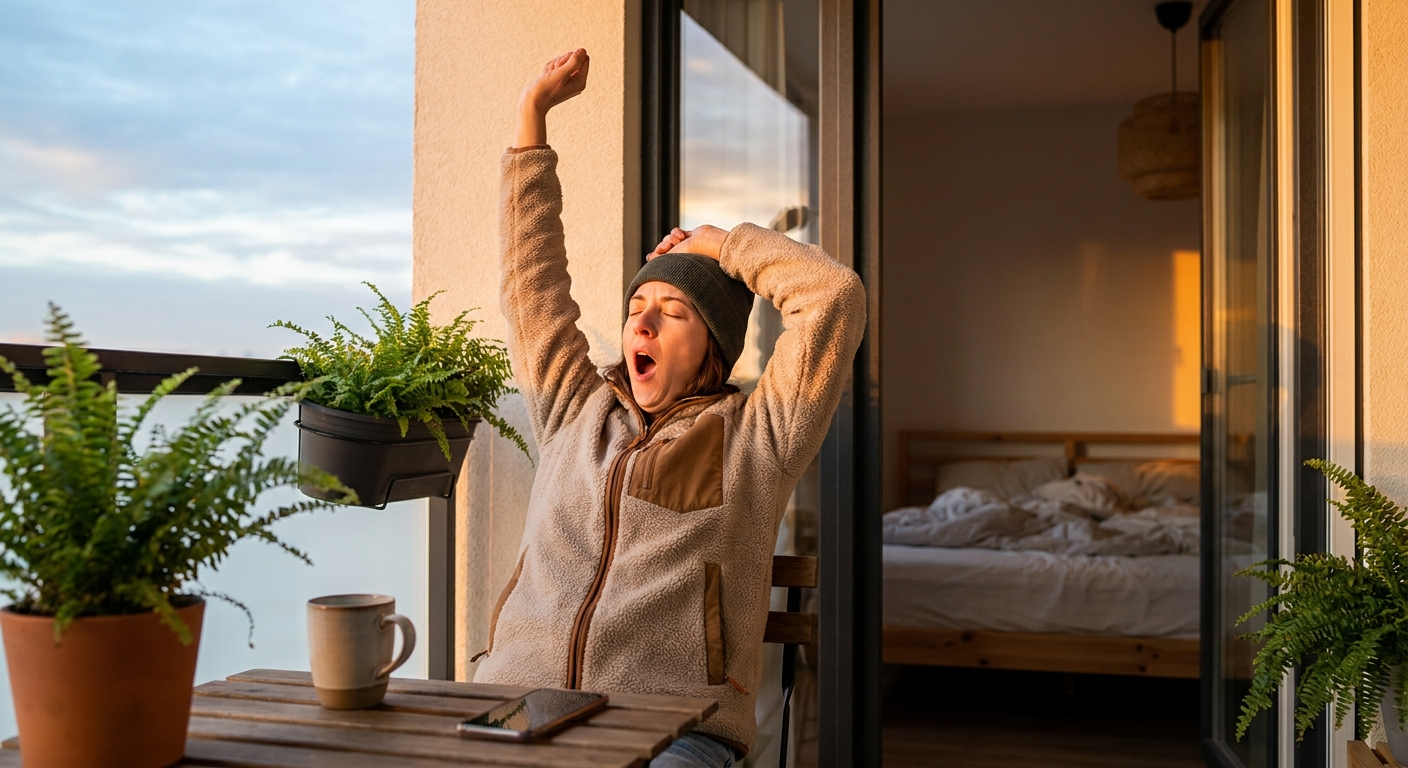
- Prioritize strong morning light in or near the bedroom—pull open curtains fully, consider a bright light device used shortly after waking.[^2]
- Make the bedroom particularly dark and free of screens late at night.
Routine cues:
- Start dimming lights 2 hours before your target bedtime (not your current one) to nudge melatonin earlier.
- Keep stimulating activities (gaming, intense shows, problem-solving work) out of the bed and, ideally, out of the bedroom.
Evidence suggests that structured light exposure and stable schedules can meaningfully advance the internal clock of evening types.[^7]
Step 7: Gentle Rituals to Signal “Nightfall” to Your Brain
Your bedroom can host small rituals that act as reliable internal sunset cues.
Soothing options include:
- Breathwork: 5–10 minutes of slow, diaphragmatic breathing.
- Light stretching or yoga: Focusing on release rather than achievement.
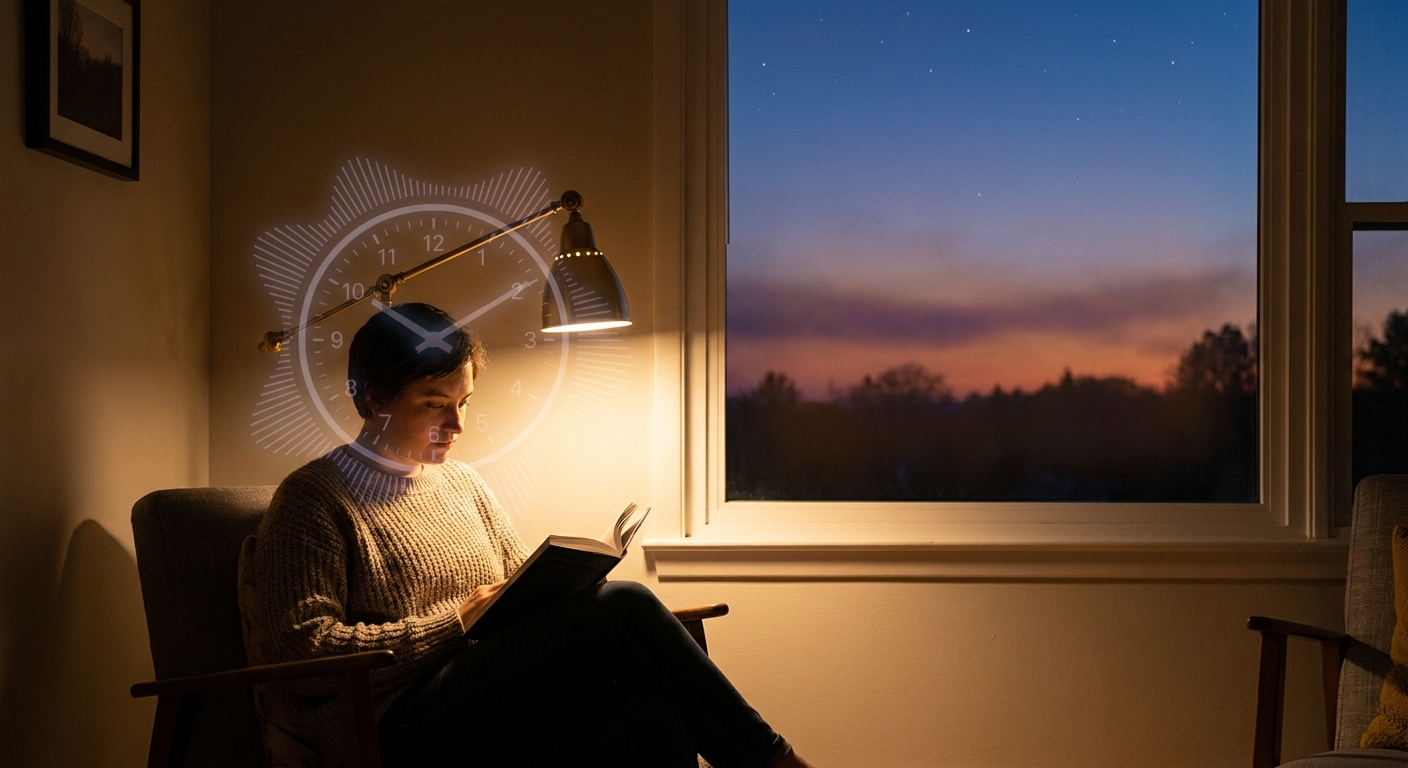
- Low-light reading: A paper book or e-reader with warm, dim light.
- Gratitude or reflection journal: A brief note of closure to the day.
These practices don’t just relax you in the moment; repeated at the same time each evening, they become psychological zeitgebers—gentle hints that your inner night is beginning.
A Soft Reminder: Small Tweaks, Big Rhythms
Redesigning your bedroom for circadian health doesn’t require perfection. Each step you take—one LED covered, one lamp swapped, one habit shifted—adds up.
The goal is not to create a flawless space, but a coherent message: light that brightens by day, softens by evening, disappears at night; a temperature that falls with the dark; a room that says, with its objects and its calm, this is where the day gently ends.
Your circadian system is remarkably responsive and forgiving. With patience and consistency, your bedroom can become a lighthouse, guiding your inner clock back to tranquil, predictable shores of sleep.
References
[^1]: Golden RN et al. The efficacy of light therapy in the treatment of mood disorders: a review and meta-analysis. Am J Psychiatry. 2005.
[^2]: Khalsa SBS et al. A phase response curve to single bright light pulses in human subjects. J Physiol. 2003.
[^3]: Chang AM et al. Evening use of light-emitting eReaders negatively affects sleep, circadian timing, and next-morning alertness. PNAS. 2015.
[^4]: Cho CH et al. Effects of artificial light at night on human health: A literature review of observational and experimental studies. Chronobiol Int. 2015.
[^5]: Okamoto-Mizuno K, Mizuno K. Effects of thermal environment on sleep and circadian rhythm. J Physiol Anthropol. 2012.
[^6]: Wittmann M, Dinich J, Merrow M, Roenneberg T. Social jetlag: misalignment of biological and social time. Chronobiol Int. 2006.
[^7]: Facer-Childs ER, Middleton B, Skene DJ, Bagshaw AP. Resetting the late timing of ‘night owls’ has a positive impact on mental health and performance. Sleep Med. 2019.