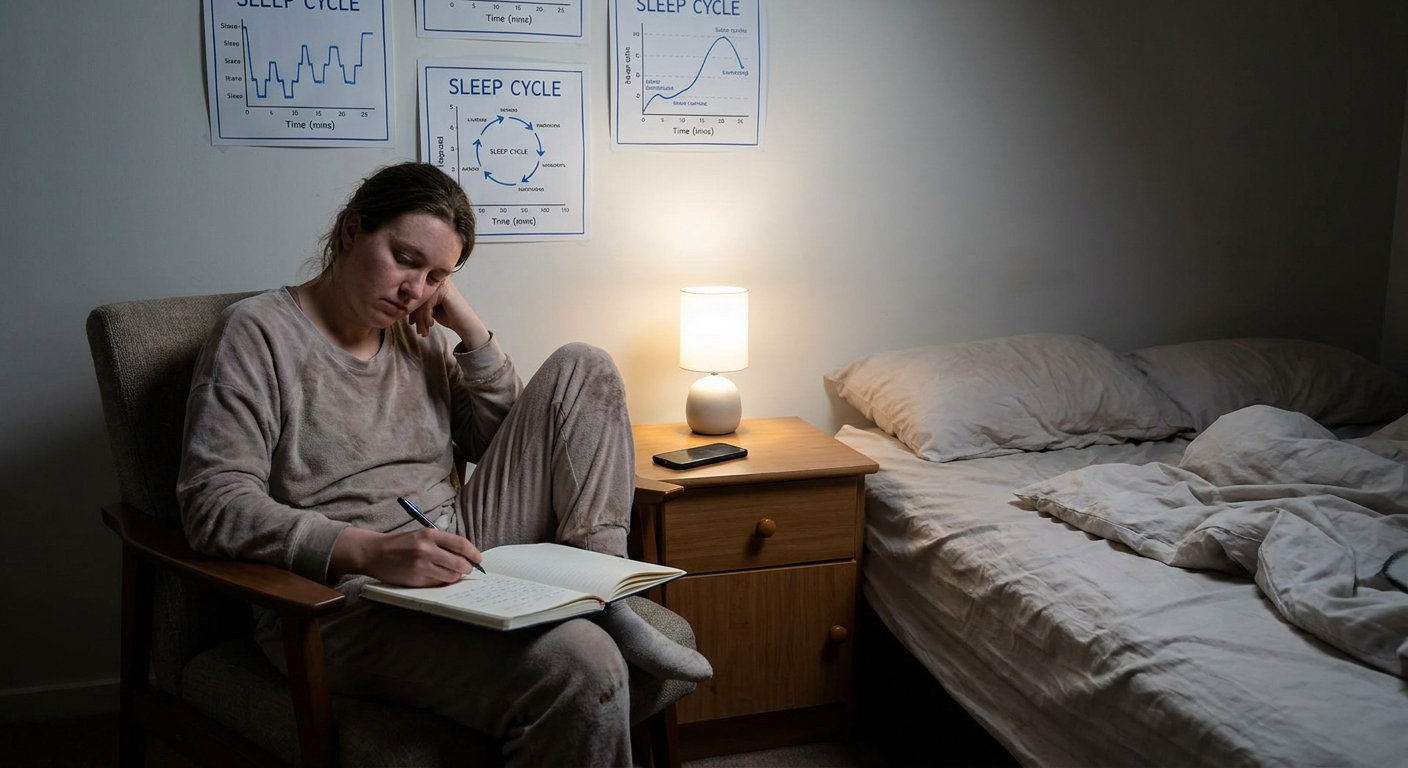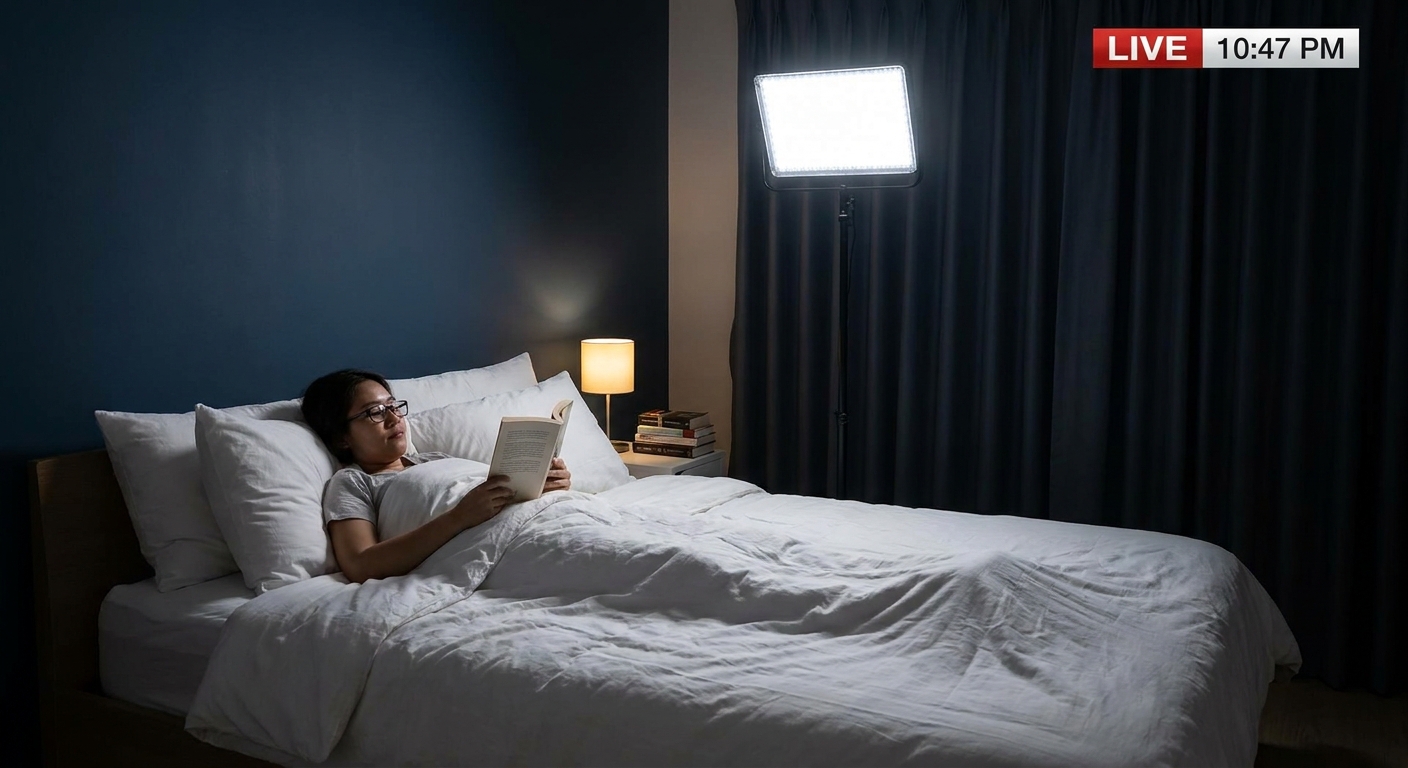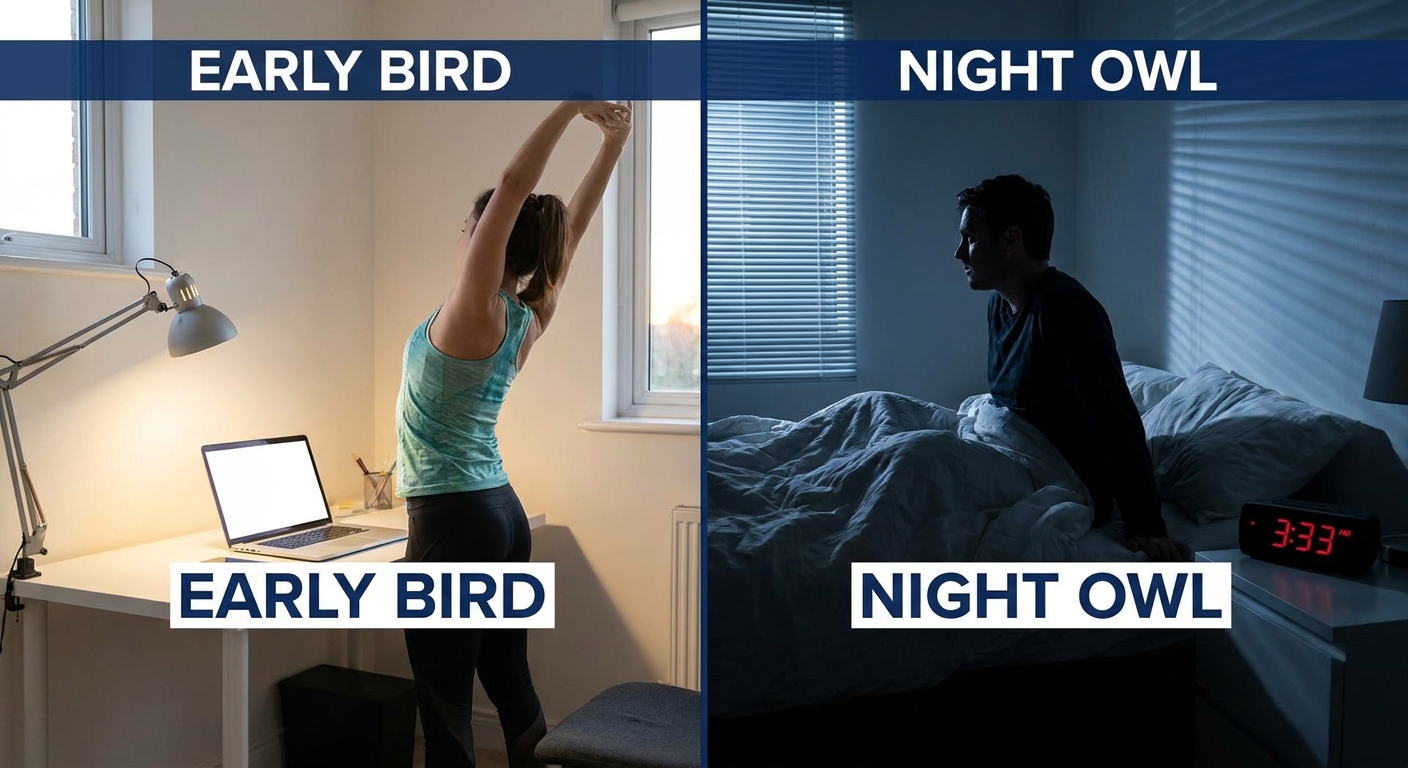
Two people can both struggle with insomnia but for very different reasons. One is in bed by 9:30 p.m., exhausted yet wired, waking at 3:00 a.m. with a racing mind. Another can’t even imagine sleep before 1:00 a.m., then lies awake frustrated because their alarm is set for 6:30.
Not All Sleepless Nights Are Alike
One key difference between these people may be chronotype—your inherent tendency to be a morning person, an evening person, or somewhere between. Insomnia help becomes more effective when it respects this built-in rhythm rather than fighting it.
In this explainer, we’ll explore how chronotype interacts with insomnia, and we’ll offer tailored, evidence-based steps you can take, including bedroom tweaks and daily timing shifts.
What Is Chronotype, Really?
Chronotype describes your preferred timing of sleep and wake—your internal “schedule setting.” It’s influenced by genetics, age, and environment.[^1]
Researchers often use questionnaires like the Morningness–Eveningness Questionnaire (MEQ) or Munich Chronotype Questionnaire (MCTQ) to classify people along a spectrum from very morning-type to very evening-type.[^2]
- Morning types (larks): Sleep and wake early; most alert in the morning.
- Evening types (owls): Sleep and wake late; more alert later in the day.
- Intermediate types: Fall somewhere in the middle.
Chronotype is not a moral trait. It’s not laziness or discipline—it’s biology interacting with light, work, and social demands.
How Chronotype and Insomnia Interact
When you routinely sleep out of sync with your internal clock, your brain and body receive mixed signals. This can contribute to insomnia symptoms and what researchers call social jetlag—the mismatch between biological time and social time.[^3]
Examples:
- A night owl forcing a 10:00 p.m. bedtime may lie awake for hours, creating a pattern of sleep-onset insomnia.
- A morning type working late shifts may experience early-morning awakenings and unrefreshing sleep.
Over time, these mismatches can increase stress, rumination at night, and inconsistent sleep schedules—all of which nurture insomnia.
The goal is not to change who you are at your core, but to reduce the friction between your chronotype and your reality, while layering in proven insomnia strategies.
Step 1: Sketch Your Chronotype
Without any formal tests, you can still get a sense of your natural rhythm.
Ask yourself:
On days off, when do you naturally get sleepy and wake up, without alarms?
At what time do you typically feel most alert and focused?
When you work or socialize late, do you:
- Struggle badly the next morning (morning type), or - Feel okay in the evening but pay the price waking up early (evening type)?
Roughly:
- If you tend to feel sleepy before 10:00 p.m. and wake before 6:00 a.m. on free days → likely morning type.
- If you feel sleepy after midnight and prefer waking after 8:30–9:00 a.m. → likely evening type.
- If you’re in between, you’re probably intermediate.
Insomnia Help for Morning Larks
Morning types often struggle with early-morning awakenings and difficulty maintaining sleep.
1. Protect Your Evenings
- Keep evenings gently stimulating but not arousing. Too little activity too early can lead to going to bed before your true biological sleep time, causing fragmented sleep.
- Aim for a consistent bedtime that still gives you 7–9 hours before your fixed wake time.
2. Light and Darkness
- Get bright morning light, but not the very intense blast that might push you even earlier. Gentle but consistent exposure is enough.
- Use light management in the very early morning:
- If you wake at 3–4 a.m. and can’t return to sleep, keep lights dim and avoid screens.
- Consider blackout curtains or an eye mask to block early dawn light.
3. Bedroom and Routine Suggestions
- Start your wind-down routine earlier (e.g., 8:30–9:00 p.m.) so you’re not nodding off on the couch and then waking fully when you move to bed.
- Use calming cues: warm bath earlier in the evening, stretching, soft lighting by 9:00 p.m.
4. Cognitive Soothing for Early Awakenings
If you wake too early:
- Avoid catastrophizing thoughts like “Now my whole day is ruined.”
- Stay in bed only if still physically drowsy. If you’re alert and awake, get up and do a low-light, quiet activity.
These methods align with CBT‑I principles tailored to early-morning insomnia.[^4]
Insomnia Help for Night Owls
Evening types more often battle difficulty falling asleep and feeling forced awake too early for work or school.
1. Shift Your Clock Gradually
Because chronotype has a strong biological component, large, sudden changes usually backfire. Instead:
- Shift bedtime and wake time earlier by 15–20 minutes every 3–4 days.
- Maintain the new wake time 7 days a week to stabilize the change.
This incremental approach is supported by chronobiology research on phase-shifting.[^5]
2. Use Light Strategically
- Maximize bright light exposure in the first 1–2 hours after waking (outdoors if possible).
- In the late evening, dim indoor lights and reduce blue light (screens, overhead LEDs) at least 60–90 minutes before your target bedtime.
- If needed and medically appropriate, discuss melatonin timing with a clinician; taken several hours before natural sleep onset, it can modestly shift circadian timing in some people.[^6]
3. Adjust Your Bedroom
- Invest in blackout curtains to prevent early dawn from cutting short your sleep.
- Reserve your bed strictly for sleep and intimacy; if you like to unwind with shows or scrolling, do it in another room.
- Keep a consistent wind-down ritual even if it starts at 11:30 p.m. rather than 9:30 p.m.
4. Taming the Midnight Mind
Night owls are often most mentally active in the late evening, which can bleed into bedtime.
- Schedule problem-solving and planning earlier, around late afternoon or early evening.
- Use scheduled worry time: 15–20 minutes to write about concerns and possible next steps, several hours before bed.[^7]
- In bed, practice gentle mindfulness: notice thoughts as “late-night stories,” then return attention to physical sensations.
Insomnia Help for Intermediate Types
If you’re in the middle, your challenge may be inconsistency—sliding between early and late nights depending on social plans, work, or mood.
1. Prioritize Regularity
- Choose a reasonable, stable wake time that works for most days.
- Let bedtime float slightly based on sleepiness, but keep it within a 60–90 minute window.
2. Support Your Natural Dips and Peaks
- Align cognitively demanding tasks with your natural peak alertness (often mid-morning or early afternoon).
- Use the evening dip in energy as a cue to begin your wind-down, before you “catch a second wind” with screens or stimulating activities.
3. Reset After Disruptions
After a late night:
- Avoid sleeping in more than 1 hour past your usual wake time.
- Use bright morning light and movement to realign.
- Consider a brief power nap (10–20 minutes) before mid-afternoon if needed, but avoid long or late naps that will delay the next night’s sleep.
Shared Core Strategies for All Chronotypes
Regardless of your natural timing, several evidence-based principles help nearly everyone with insomnia:
- Consistent wake time: Your non-negotiable anchor.
- Bed for sleep and intimacy only: Breaks the insomnia–bed link.
- Reduced time in bed awake: Through sleep scheduling or stimulus control.[^8]
- Calming pre-sleep routine: Ritual matters more than perfection.
- Thought work: Challenge catastrophic sleep beliefs and practice acceptance of occasional bad nights.[^9]
Layer these onto your chronotype-specific adjustments for a more personalized approach.
A Gentle Reframe: You’re Not Sleeping “Wrong”
If you’re a night owl in a 9–5 world, or a morning lark in a nightlife-focused culture, it can feel like your body is misaligned with the rest of life. Insomnia often grows in that gap between what your biology prefers and what your schedule demands.
You are not broken for being awake at the “wrong” time. Chronotype-aware insomnia help is about reducing friction, saving your energy for healing rather than fighting your own wiring.
By adjusting light, timing, bedroom environment, and how you respond to wakefulness, you create conditions where sleep can finally cooperate with the clock you live by.
Over weeks, not nights, your restless mind and your internal rhythm can learn to walk more closely in step.
[^1]: Jones SE, Lane JM, et al. Genome-wide association analyses of chronotype in 697,828 individuals. Nat Commun. 2019.
[^2]: Roenneberg T, Wirz-Justice A, Merrow M. Life between clocks: daily temporal patterns of human chronotypes. J Biol Rhythms. 2003.
[^3]: Roenneberg T, Allebrandt KV, et al. Social jetlag and obesity. Curr Biol. 2012.
[^4]: Riemann D, Perlis ML. The treatments of chronic insomnia: A review of benzodiazepine receptor agonists and psychological and behavioral therapies. Sleep Med Rev. 2009.
[^5]: Burgess HJ, Revell VL, et al. A three pulse phase response curve to three milligrams of melatonin in humans. J Physiol. 2008.
[^6]: Brzezinski A, Vangel MG, et al. Effects of exogenous melatonin on sleep: a meta-analysis. Sleep Med Rev. 2005.
[^7]: Harvey AG. A cognitive model of insomnia. Behav Res Ther. 2002.
[^8]: Trauer JM, Qian MY, et al. Cognitive behavioral therapy for chronic insomnia: A systematic review and meta-analysis. Ann Intern Med. 2015.
[^9]: Ong JC, Sholtes D. A mindfulness-based approach to the treatment of insomnia. J Clin Psychol. 2010.