Insomnia is not a personal failure or a weakness of will. It’s a pattern your brain has learned, often in response to stress, pain, or change. Over time, the bedroom that once meant rest can start to mean effort, frustration, and clock-watching.
Why Insomnia Feels So Hard – And Why It’s Not Your Fault
Research shows that chronic insomnia is maintained less by the original trigger (like a stressful event) and more by the habits and worries that form around sleep afterward.[^1] The encouraging truth: patterns that are learned can also be gently unlearned.
In this guide, we’ll walk calmly through evidence-based ways to help insomnia, like Cognitive Behavioral Therapy for Insomnia (CBT‑I), bedroom changes, and chronotype-aware routines. Think of this as a slow, steady untangling of a knot—one small strand at a time.
Step 1: Understand What Insomnia Really Is
Clinically, insomnia isn’t just “a bad night or two.” The American Academy of Sleep Medicine defines chronic insomnia as difficulty falling asleep, staying asleep, or waking too early at least 3 nights a week for 3+ months, with daytime distress or impairment.[^2]
Insomnia can look like:
- Lying awake for long stretches before sleep
- Waking up multiple times and struggling to return to sleep
- Waking in the early hours with an “alert” mind
- Feeling unrefreshed despite enough time in bed
Importantly, insomnia lives in the interaction between body, mind, and behavior. Thoughts like “I’ll be useless tomorrow” increase arousal; behaviors like scrolling in bed or going to bed too early can unintentionally reinforce wakefulness in the bedroom.
Step 2: Build a Sleep-Friendly Bedroom That Trains Your Brain
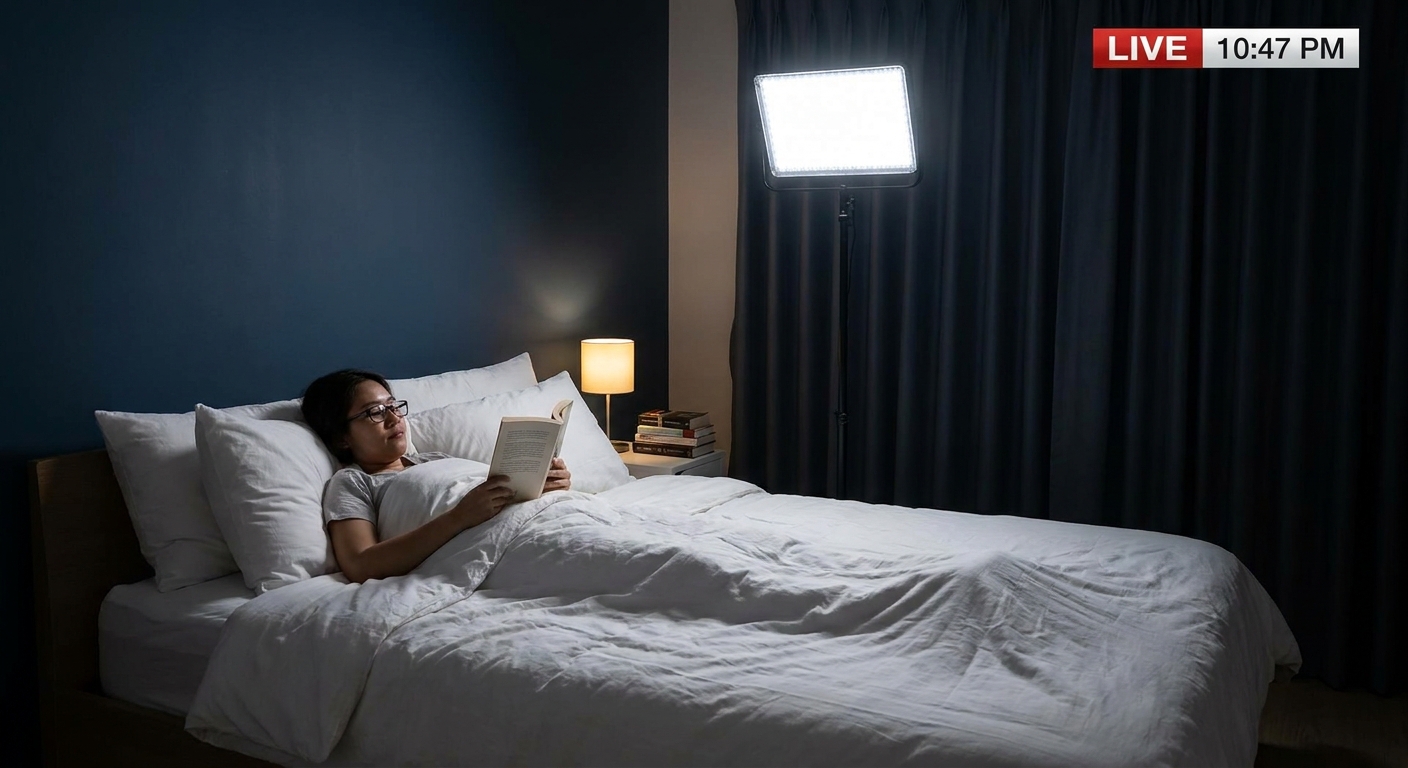
Your bedroom can become a strong cue for sleep again—but it needs to send a clear, consistent message.
1. Reserve the Bed for Sleep and Intimacy
In CBT‑I, one of the core strategies is stimulus control—re-teaching your brain that bed = sleep.[^3]
Try this for a few weeks:
- Only lie in bed when sleepy, not just tired or bored.
- If you’re awake in bed for ~20 minutes (no need to clock-watch), get up and go to a dim, quiet room.
- Do a calm, low-stimulation activity (e.g., reading a paper book, gentle stretching, listening to soft music) until you feel drowsy again.
- Return to bed only when sleepy, not just when the clock insists.
Yes, this can feel counterintuitive—but over time it breaks the association between bed and frustration.
2. Soften the Senses
Create an environment that whispers “rest” to your nervous system:
- Light: Use blackout curtains or an eye mask. Even modest light exposure at night can suppress melatonin and delay sleep onset.[^4]
- Sound: White noise or a fan helps mask inconsistent sounds (traffic, neighbors, pets).
- Temperature: Aim for a cool room, about 60–67°F (15–19°C). Cooler environments support the natural drop in core body temperature that helps initiate sleep.[^5]
- Clutter: Visual clutter can feel like unfinished business. A simplified nightstand and floor can make the room feel more like a sanctuary than a storage space.
Think of your bedroom as a forest clearing at dusk: quiet, dim, and predictably safe.
Step 3: Align Sleep Habits With Your Chronotype
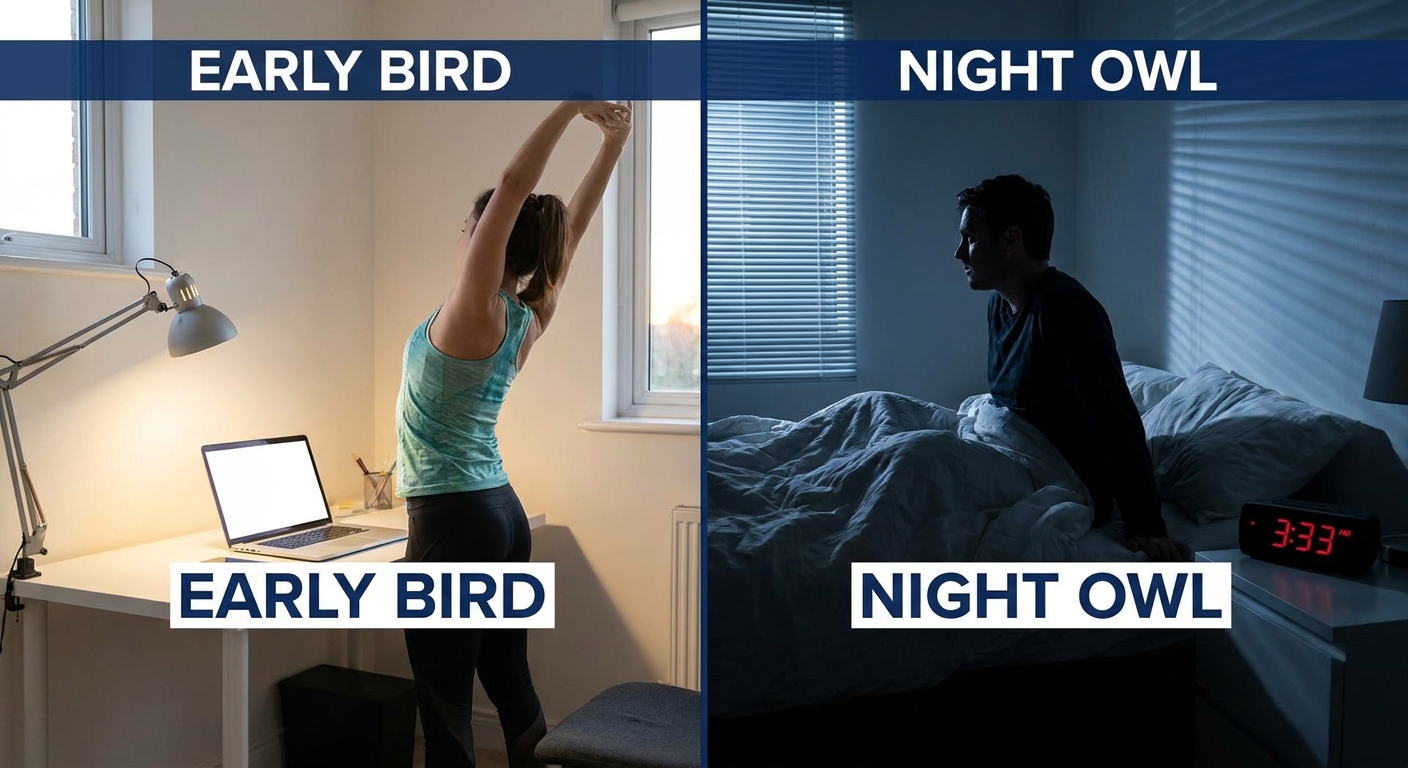
Not everyone is wired to get sleepy at the same time. Chronotype is your natural tendency toward being a “morning lark,” “night owl,” or somewhere in between.
How to Sense Your Chronotype
Ask yourself:
- On days with no obligations, when would you naturally fall asleep and wake up?
- Do you feel most alert early in the day, mid-day, or late at night?
You can also use questionnaires like the Morningness–Eveningness Questionnaire (MEQ) or Munich Chronotype Questionnaire (MCTQ), used in research settings.[^6]
Gentle Adjustments by Chronotype
You don’t need to force yourself into a different chronotype. Often, small realignments help:
Morning Larks
- Keep a consistent wake time, even on weekends, to stabilize your internal clock.
- Get bright light exposure in the first hour of the day—open blinds, go outside, or use a 10,000 lux light box if appropriate and cleared with a clinician.
- Wind down earlier: aim for screens off 60–90 minutes before your natural sleep time.
Night Owls
- Gradually shift earlier by 15–20 minutes every few days (bedtime and wake time), rather than attempting a big jump.
- Seek morning light to advance your body clock, and dim evening light, especially blue-rich screen light.
- Avoid long late-day naps; if needed, keep naps before 3 p.m. and 20–30 minutes.
In-Between Types
- Aim for regularity: similar bedtime and wake time every day (variation within about 1 hour).
- Align demanding tasks with your natural peak alertness window (often mid-morning to mid-afternoon) and keep evenings as your “descending slope” into rest.
Consistent timing is like the metronome of your internal orchestra; when it’s steady, the rest of the rhythms (hormones, temperature, digestion) can sync more easily.
Step 4: Evidence-Based Techniques for Racing Thoughts
Insomnia is often maintained by cognitive arousal—worry loops, planning, or self-criticism at bedtime.
1. Scheduled Worry Time (Earlier in the Day)
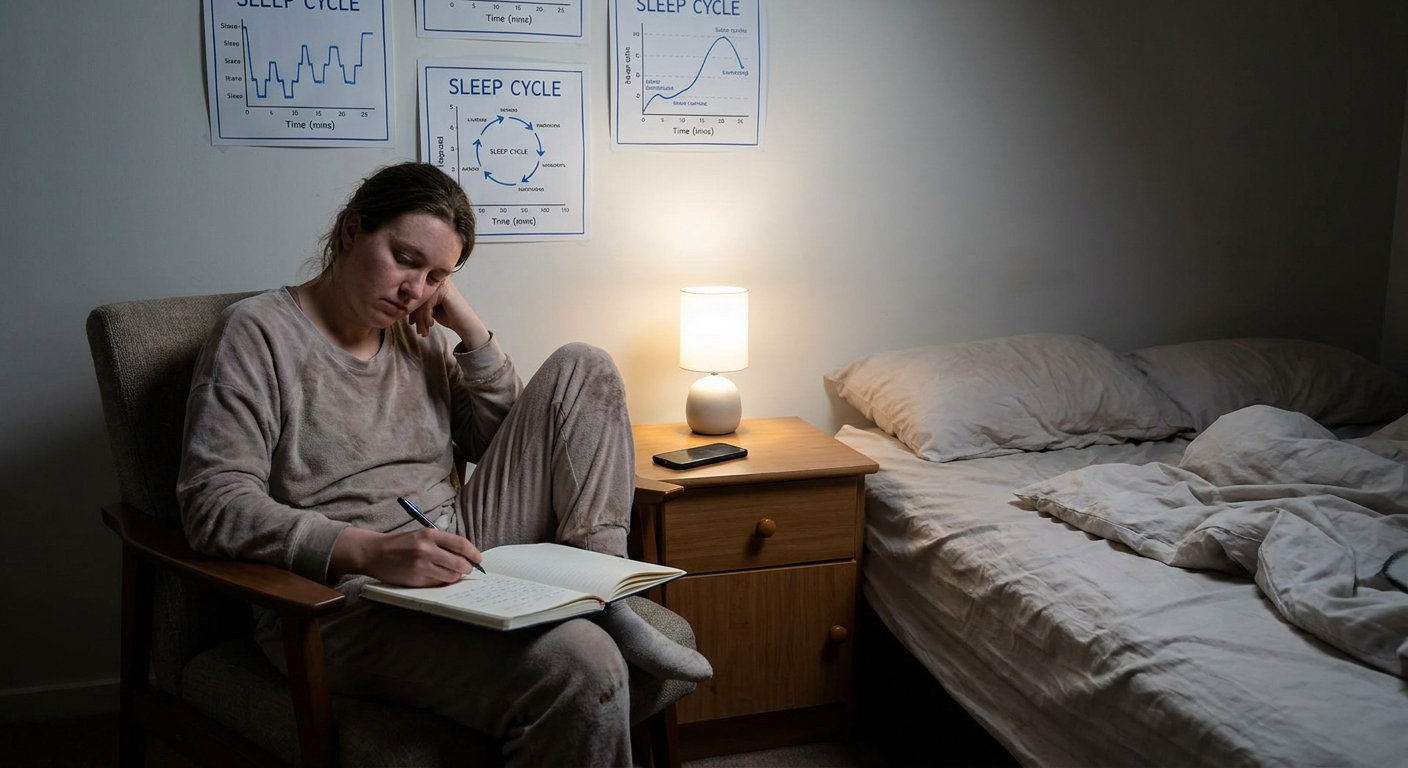
Designate a 15–20 minute “worry appointment” 3–6 hours before bed:
- Write down concerns and possible next steps.
- Keep the focus on problem-solving, not rumination.
This teaches your mind that there is a time and place for worries—and that time is not the pillow.
2. Cognitive Restructuring
CBT‑I helps you challenge unhelpful thoughts about sleep.[^3] Try rewriting these:
- From: “If I don’t sleep 8 hours, tomorrow is ruined.”
- From: “My body is broken; I’ll never sleep well.”
To: “I’ve had functional days after poor sleep. One night doesn’t define tomorrow.”
To: “Insomnia is common and treatable. I’m learning skills that can shift this over time.”
You’re not trying to force optimism—only to make space for more balanced, realistic perspectives.
3. Relaxation Practices That Support, But Don’t Force, Sleep
Relaxation does not “make” sleep happen, but it can lower physiological arousal so sleep is more likely to arise on its own.
Options with research support include:[^7][^8]
- Diaphragmatic breathing: Slow breathing (e.g., 4-second inhale, 6-second exhale) signals the body that the emergency is over.
- Progressive muscle relaxation: Gently tense and release muscle groups from feet to face.
- Mindfulness meditation: Noticing thoughts and sensations without chasing or pushing them away.
Choose one practice and do it at the same time nightly, so it becomes a familiar pre-sleep ritual.
Step 5: Use Time in Bed Wisely – The Sleep Efficiency Principle
Paradoxically, spending too much time in bed awake can deepen insomnia. CBT‑I often uses sleep restriction therapy (more accurately, sleep scheduling):
- Track your sleep for 1–2 weeks (e.g., you’re in bed 8 hours, but sleep ~5.5 hours).
- Temporarily limit time in bed to about your average sleep time (e.g., 5.5–6 hours), never below 5 hours, under professional guidance.
- Once your sleep efficiency (time asleep ÷ time in bed) improves (usually above ~85%), gradually increase time in bed by 15–20 minutes.
Studies consistently show CBT‑I, including these components, is as effective as or more effective than sleep medications in the long term for chronic insomnia.[^3][^9]
If you have bipolar disorder, epilepsy, untreated sleep apnea, or other medical conditions, consult a sleep professional before trying this method on your own.
When to Seek Professional Help
Self-guided strategies can be powerful, but it’s important to ask for help when needed. Consider seeing a clinician or sleep specialist if:
- Insomnia persists for 3 months or more despite your efforts
- You suspect sleep apnea (snoring, gasping, witnessed pauses in breathing)
- You experience significant anxiety, depression, or trauma symptoms
- You rely on alcohol, cannabis, or sedatives to sleep most nights
Look for providers trained in CBT‑I. Many offer telehealth, and digital CBT‑I programs have growing evidence for effectiveness.[^10]
A Gentle Closing Thought
Sleep is not a task to accomplish; it’s a tide that arrives when conditions are right. By adjusting your bedroom, aligning with your chronotype, calming your thoughts, and keeping a steady rhythm, you’re not forcing the tide—you’re clearing a smooth shoreline for it to reach.
Progress with insomnia is often uneven: a better night, then a worse one, then two stable ones. Patterns shift slowly, like seasons. Each small, repeated choice—to get out of bed when you’re wide awake, to dim the lights, to speak more kindly to yourself—is a quiet vote for a new relationship with sleep.
You are not alone in this, and your brain is capable of relearning rest.
[^1]: Perlis ML, Vargas I, Ellis JG, et al. Etiology and pathophysiology of insomnia. Sleep Med Clin. 2013.
[^2]: Sateia MJ. International classification of sleep disorders–third edition. Chest. 2014.
[^3]: Trauer JM, Qian MY, Doyle JS, et al. Cognitive behavioral therapy for chronic insomnia: A systematic review and meta-analysis. Ann Intern Med. 2015.
[^4]: Cho JR, Joo EY, Koo DL, Hong SB. Let there be no light: the effect of bedside light on sleep quality and background electroencephalographic rhythms. Sleep Med. 2013.
[^5]: Raymann RJEM, Swaab DF, Van Someren EJW. Cutaneous warming promotes sleep onset. Am J Physiol Regul Integr Comp Physiol. 2005.
[^6]: Roenneberg T, Wirz-Justice A, Merrow M. Life between clocks: daily temporal patterns of human chronotypes. J Biol Rhythms. 2003.
[^7]: Morin CM, Benca R. Chronic insomnia. Lancet. 2012.
[^8]: Ong JC, Sholtes D. A mindfulness-based approach to the treatment of insomnia. J Clin Psychol. 2010.
[^9]: Sivertsen B, Omvik S, Pallesen S, et al. Cognitive behavioral therapy vs zopiclone for treatment of chronic primary insomnia in older adults. JAMA. 2006.
[^10]: Espie CA, Kyle SD, Williams C, et al. A randomized, placebo-controlled trial of online CBT for insomnia. Lancet Psychiatry. 2012.