Sleep apps promise to turn your nights into charts, scores, and timelines. These metrics can be helpful, like constellations that hint at your internal rhythm. But if you’re not careful, the stars can start to feel like surveillance.
When Rest Meets Numbers
This article explores how to use sleep apps and mobile-based sleep tech in a way that is grounded in research, friendly to your nervous system, and tailored to your chronotype—so the numbers inform your rest rather than dominate it.
What Sleep Apps Actually Do
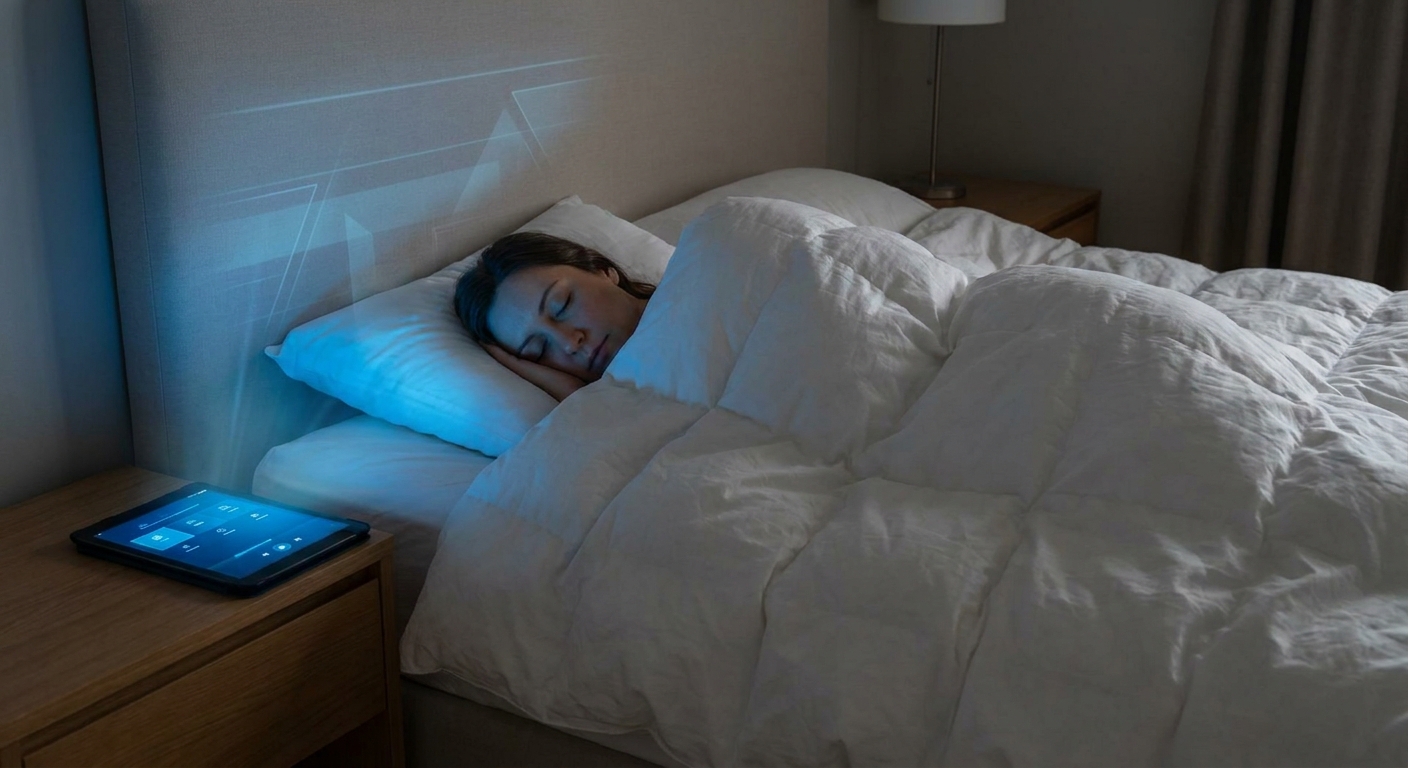
Most modern sleep apps use a phone’s sensors and sometimes external devices to infer what happens while you sleep.
Common features:
- Motion tracking using the accelerometer (when the phone is placed on the mattress or bedside).
- Audio tracking for snoring, talking, and environmental noise.
- Smart alarms that aim to wake you in lighter sleep phases within a chosen window.
- Sleep diaries for manual input of bedtime, wake time, and sleep quality.
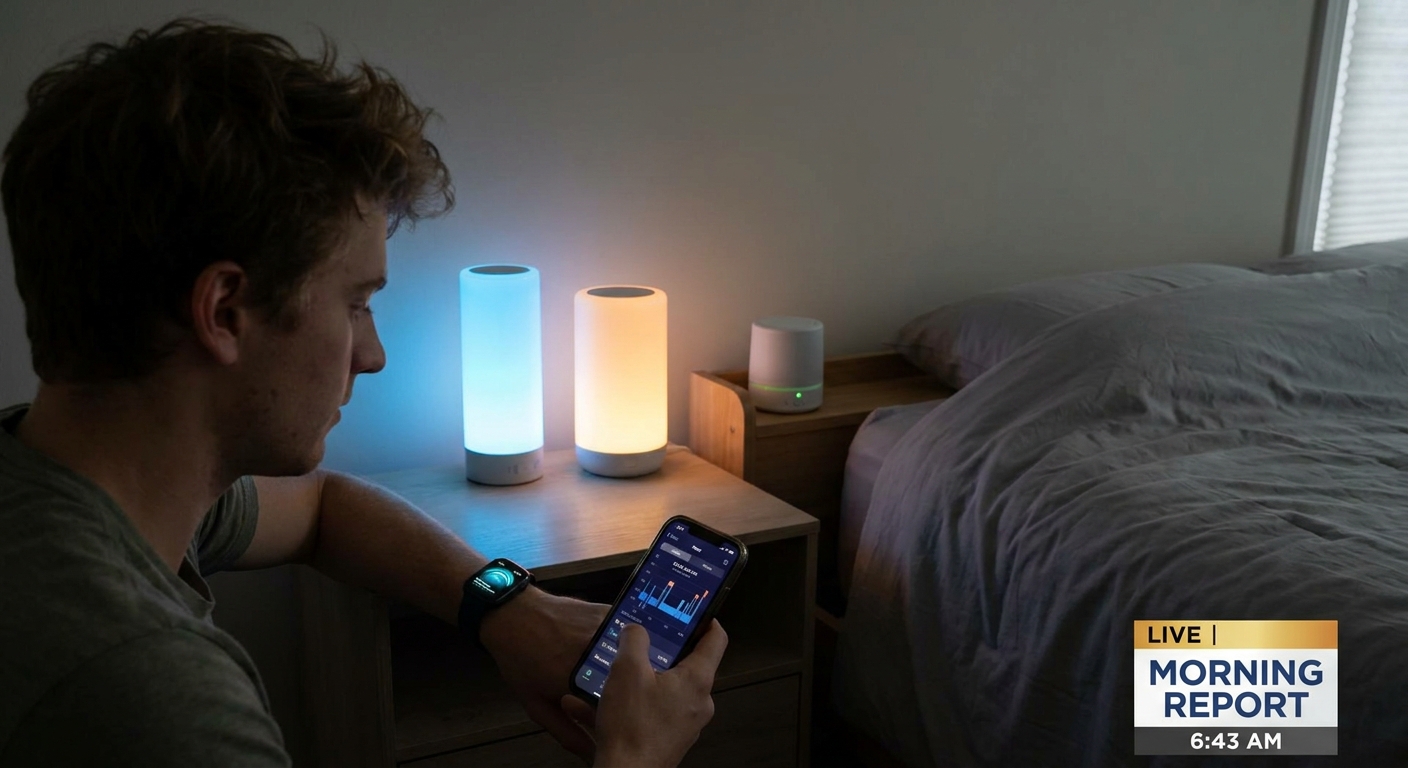
Some apps also integrate data from wearables or smart bedroom devices, becoming a single hub for your sleep information.
Research shows that while phone-based sleep tracking is generally less accurate than gold-standard polysomnography, it can still provide useful trend-level information for many users [1].
The Soft Science Behind Sleep Scores
Sleep apps often summarize your night with a score or grade. These are typically derived from:
- Estimated total sleep time.
- Time to fall asleep and time awake during the night.
- Consistency of sleep and wake times.
- Sometimes: estimated deep/REM sleep, resting heart rate (if paired with sensors).
While the specific formulas are proprietary, they broadly reflect clinical concepts like sleep efficiency (time asleep divided by time in bed). High efficiency is associated with better perceived sleep quality [2].
Use scores as summaries, not medical diagnoses. Think of them as the weather report of your night: informative, but never the whole story.
A Calming Framework for Using Sleep Apps
1. Decide Your Intention Before You Download
Ask yourself:
- "What question do I want answered?"
Examples: “Do I sleep differently after late dinners?” or “Am I keeping a regular schedule?”
- "How will I respond if I see a low score?"
Plan a gentle response, such as, “I’ll notice it, look for patterns over a week, then adjust one habit.”
Having clear intentions helps protect against aimless checking and anxiety.
2. Start with Tracking + Reflection, Not Immediate Change
For 1–2 weeks:
- Use the app to track your nights.
- Each morning, quickly record:
- How rested you feel (0–10).
- Mood upon waking.
- Any notable factors: late caffeine, alcohol, stress, big meals, workouts.
Linking subjective experience to app data builds trust in your own perception and protects you from over-relying on numbers [3].
3. Interpret Trends, Not Single Nights
Look for patterns over 7–14 nights:
- Do you sleep less on certain days of the week?
- Does late-night work or scrolling precede longer sleep onset?
- Are early alarms frequently cutting short your final hours of sleep?
Let individual “bad nights” float by; sleep is naturally variable.
Chronotype-Sensitive Use of Sleep Apps
Your chronotype shapes how you should interpret and act on app data.
Morning Larks
You prefer early bedtimes and wake-ups.
Use apps to:
- Monitor whether social obligations or late-night projects are compressing your sleep duration on certain nights.
- Confirm that an earlier wind-down (lights dimmed, screens off) helps preserve your natural schedule.
Practical adjustments:
- Set evening reminders in your app for wind-down, not just morning alarms.
- Use smart alarms with narrow windows, so you’re not pulled from deeper sleep too early.
Night Owls
You naturally want to sleep and rise later.
Use apps to:
- Estimate your true natural sleep window when you can sleep without alarms (weekends, vacations).
- Track whether gradual shifts—15 minutes earlier every few nights—are resulting in easier sleep onset and steady wake times.
Practical adjustments:
- Use light exposure prompts (some apps offer reminders to get morning light).
- See if turning off blue-light-heavy apps in the late evening shortens the time it takes you to fall asleep.
In-Between Types
You may be more sensitive to irregular schedules.
Use apps to:
- Identify your most stable, refreshing bedtime and wake time range.
- Notice if weekend drift (staying up and waking later) creates “social jetlag” that affects early-week sleep.
Practical adjustments:
- Set different alarm windows for weekdays and weekends that don’t differ by more than 60–90 minutes.
- Use bedtime reminders to signal a consistent wind-down overlapped with your sweet spot.
Protecting Your Nervous System from Score Anxiety
Research has identified orthosomnia—a preoccupation with achieving “perfect” sleep metrics—as a contributor to insomnia symptoms [4].
To keep peace around the numbers:
- Delay data checks. Don’t open your sleep app until you’ve been awake for at least 30–60 minutes.
- Use range goals, not perfection. For example, aim for “7–9 hours most nights” rather than a single magic number.
- Pair every app check with a body check. Ask yourself: “How do I actually feel?” Give that answer at least as much weight as the score.
If you notice your heart sink every time you see a number, take a break from tracking or switch the app to summary-only notifications for a while.
Practical Bedroom Changes Guided by App Insights
Once you’ve observed a few weeks of patterns, let your app gently steer targeted experiments.
Experiment 1: Light and Screens
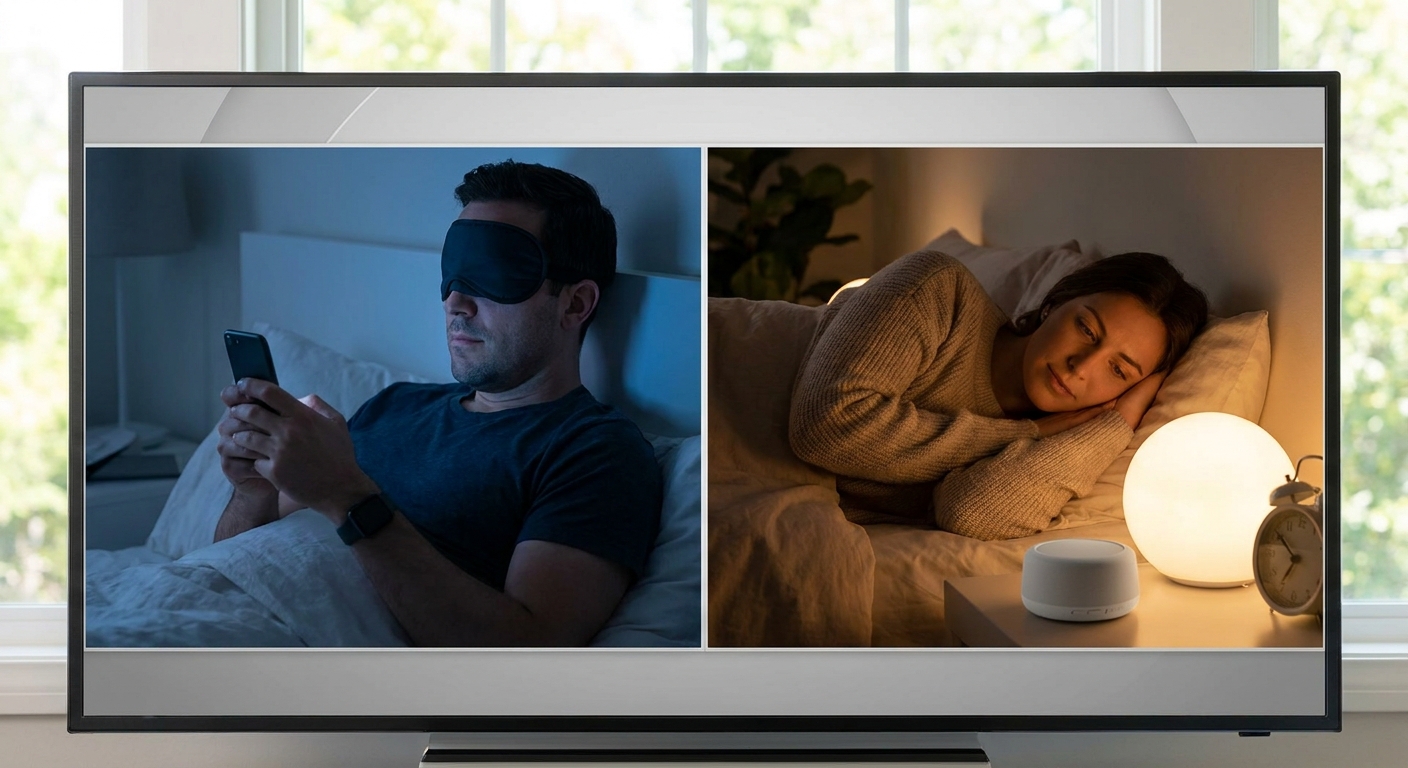
If your app shows prolonged sleep onset after screen-heavy evenings:
- Dim screens and enable warm filters 60–90 minutes before bed [[5]](https://pubmed.ncbi.nlm.nih.gov/25535358/).
- Move engaging content (social media, intense shows) earlier in the evening.
- Try paper books or low-stimulation apps near bedtime.
Track whether:
- Sleep onset latency decreases.
- Subjective restfulness improves.
Experiment 2: Evening Eating and Alcohol
If charts show restless or shortened sleep after late meals or drinks:
- Shift your last substantial meal to 3–4 hours before bedtime.
- Limit alcohol, especially within 3 hours of sleep, as it can lighten sleep and increase awakenings [[6]](https://pubmed.ncbi.nlm.nih.gov/28477769/).
Watch for:
- Fewer mid-night awakenings.
- Small improvements in your app’s sleep efficiency measures.
Experiment 3: Bedroom Environment
Apps that record sound or integrate with sensors can reveal:
- Frequent traffic or household noise.
- Your own snoring or sleep talking.
- Inconsistent room conditions.
Practical updates:
- Introduce white or pink noise to mask irregular sounds [[7]](https://pubmed.ncbi.nlm.nih.gov/26150703/).
- Use blackout curtains and a cooler room temperature for more consolidated sleep.
Knowing When to Step Beyond Apps
Sleep apps are companions, not clinicians. Seek professional guidance if, after several weeks of awareness and small changes, you still notice:
- Severe daytime sleepiness or dozing in quiet situations.
- Loud snoring, gasping, or suspected breathing pauses captured in recordings.
- Persistent unrefreshing sleep despite adequate time in bed.
A sleep specialist can interpret your history—subjective experiences plus app data—and may recommend formal testing or cognitive-behavioral therapy for insomnia (CBT‑I), a well-supported treatment [8].
Letting the Numbers Be Gentle Guides
Used with care, sleep apps can help you see your nights with a little more clarity and a lot more compassion. They are mirrors that catch patterns you might miss, not judges delivering verdicts.
As you watch your scores rise and fall like tides, remember that the true measure of your sleep is not a line on a graph but how your mornings feel, how your mood weathers the day, and how your body quietly thanks you when you lie down at night.
Let the numbers be lanterns along the path, not the path itself. Your job is not to perfect the chart, but to cultivate a life—and a bedroom—that makes rest feel safe, steady, and deeply your own.