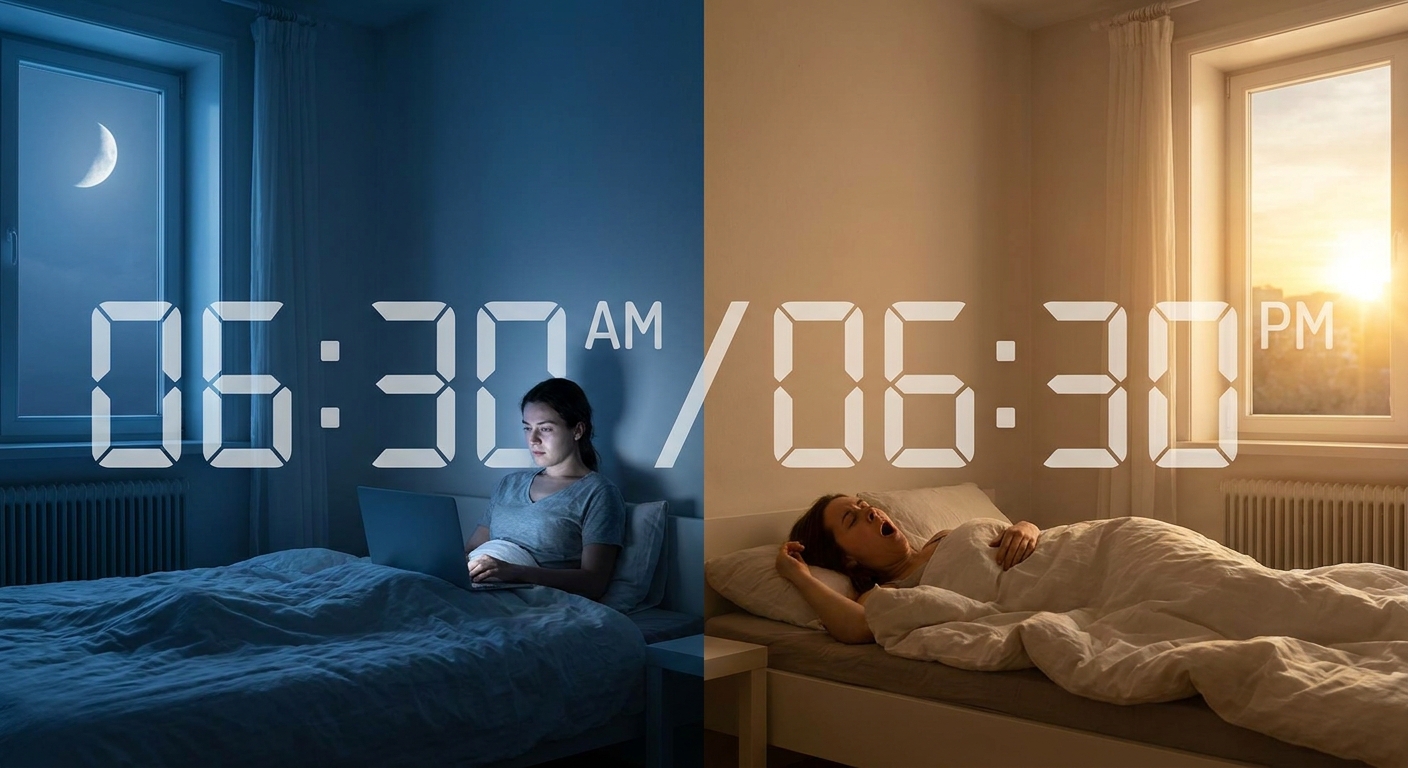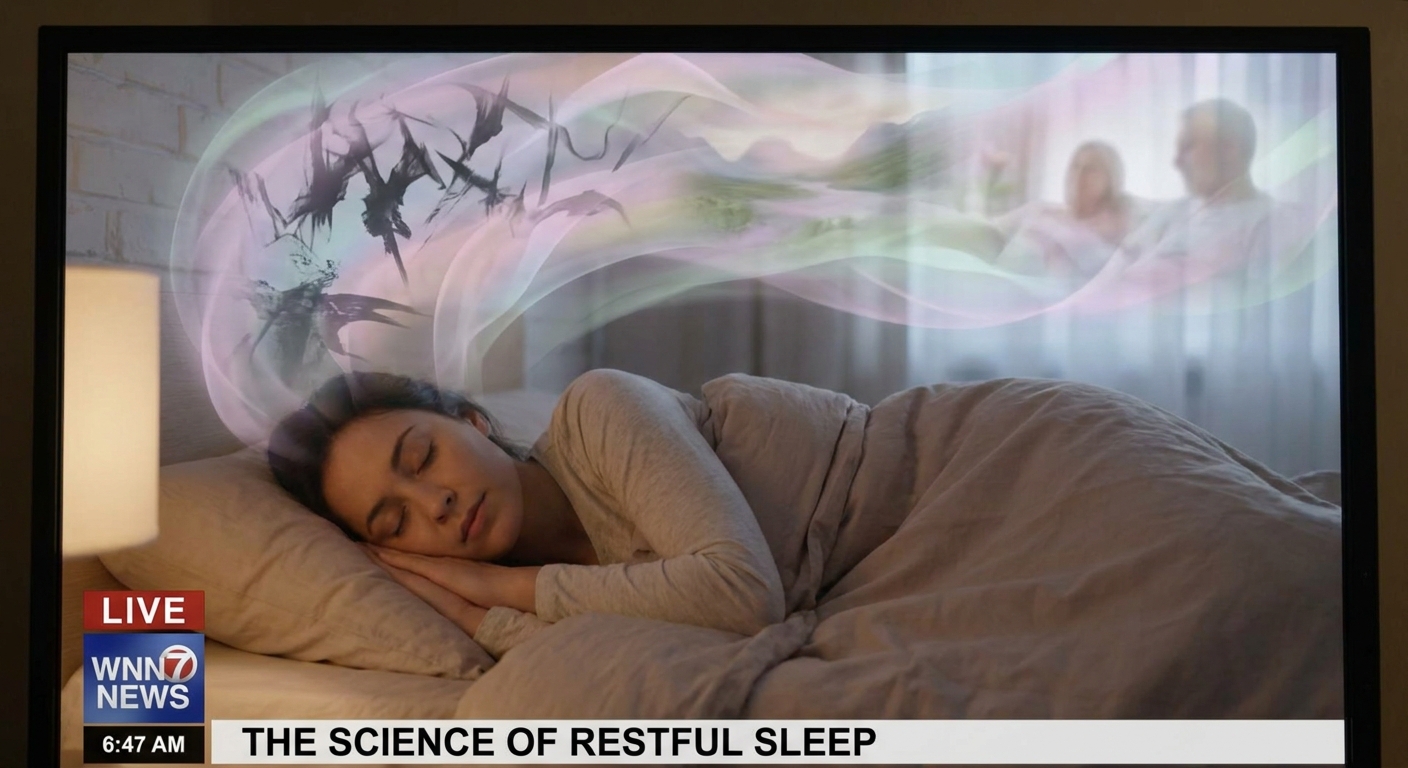
For many people, dreams are gentle background music to the night. For others, they can be loud, intrusive, or even frightening. If your nights feel crowded with intense dreams or nightmares, it can be reassuring to know that researchers have studied this carefully—and discovered ways to soften the edges.
When Dreams Feel Too Sharp
Think of your dreaming mind like a river carrying the day’s emotions downstream. Sometimes it flows calmly; sometimes it floods. You can’t control every wave, but you can gently shape the riverbank: your routines, your bedroom, and the way you respond to dreams.
This guide walks through what science says about nightmares, stress dreams, and vivid dreaming, and offers chronotype-aware, practical steps to help your nights feel safer.
What Counts as a Nightmare? The Research View
Researchers usually distinguish among:
- Bad dreams – Disturbing dreams that may be remembered but don’t fully wake you.
- Nightmares – Very distressing dreams that cause you to wake up, often with strong emotions or physical arousal (heart pounding, sweating).[^1]
- Recurrent nightmares – Similar or repeating themes over time, often linked to trauma, ongoing stress, or unprocessed emotions.
About 2–8% of adults have nightmares at least once a week.[^2] They are more common when:
- You’re under high stress
- You’ve experienced trauma
- Your sleep is fragmented
- You use certain medications or substances
Nightmares are not a sign of weakness. In many ways, they are the brain’s attempt to rehearse danger and process emotions overnight—just in a way that feels too intense.[^3]
Why the Brain Produces Fearful Dreams
Emotional Processing During REM
Most nightmares occur during REM sleep, when brain regions related to emotion and memory, such as the amygdala and hippocampus, are particularly active.[^4] During this time, your brain replays and reshapes memories, trying to make sense of them.
In healthy REM sleep:
- Emotional memories are revisited in a softened, less reactive state.
- Stress hormones like noradrenaline are typically lower, making it easier to process feelings safely.[^5]
In frequent nightmares, this process can become overcharged. The emotional centers are highly active, but the fear doesn’t fully settle. Repeated awakenings can prevent the brain from completing its natural “cooling” cycle for emotions.
The Role of Daytime Stress
Longitudinal studies show that higher levels of daily stress and anxiety predict more nightmares and bad dreams.[^6] Worries that feel unresolved by evening are more likely to echo in your sleep.
Rather than seeing nightmares as enemies, you can think of them as overheated emotional messages. The aim is not to erase them, but to turn down the temperature.
Evidence-Based Strategies to Soften Nightmares
1. Imagery Rehearsal Therapy (IRT)
IRT is one of the most researched psychological treatments for chronic nightmares, especially post-traumatic nightmares.[^7]
The basic steps:
- Choose a recurring nightmare (ideally one you can describe clearly but that feels tolerable to work with).
- Rewrite the ending so that it becomes safer, neutral, or even somewhat positive. You don’t need a happy ending—just one where you feel more in control or protected.
- Rehearse the new dream script while awake, once a day for 5–15 minutes, visualizing it like a short mental movie.
Multiple studies show that consistently practicing an altered version of a nightmare can reduce its frequency and intensity—and often improves overall sleep quality.[^7]
2. Reducing Sleep Fragmentation
Nightmares often appear when sleep is disrupted, creating more frequent entries into REM or more awakenings from REM.
To reduce fragmentation:
- Keep a consistent sleep–wake schedule (even on weekends) to stabilize your sleep cycles.[^8]
- Limit caffeine after mid-afternoon; it can linger in your system for 6–8 hours and lighten sleep.[^9]
- Reduce alcohol close to bedtime; it may help you fall asleep faster but increases awakenings and REM rebound later in the night.[^10]
3. Calming the Nervous System Before Bed
Gentle pre-sleep practices can lower baseline arousal, making nightmares less likely to flare:
- Slow breathing (e.g., 4–6 breaths per minute) for 5–10 minutes.
- Progressive muscle relaxation: tensing and releasing muscle groups from toes to forehead.[^11]
- Brief journaling: Write down worries and one small step you’ll take tomorrow, signalling to your brain that the problem has a container.
These don’t need to be elaborate. Think of them as nightly signals to your inner alarm system: "You can stand down for now."
Chronotype-Specific Guidance for Intense Dreams
Your internal clock affects when REM—and therefore most nightmares—tends to cluster.
If You’re a Morning Type (Lark)
- Your most REM-heavy periods often occur in the second half of the night, but because you go to bed early, this still might be well before dawn.
- Staying up very late increases the odds that REM-rich hours get pushed closer to your usual wake time, potentially making nightmares more noticeable as you wake abruptly from them.
Helpful adjustments:
- Guard your bedtime from late-night obligations when possible.
- Avoid very bright light and intense mental work (e.g., heavy news, work emails) in the last hour before bed.
- If you must stay up late, plan a slightly later wake time the next morning when possible to allow your REM cycles to complete.
If You’re an Evening Type (Owl)
- Your REM peaks can drift into the early morning, especially if you sleep in.
- Early alarms for work or school may yank you out of REM at its most vivid point, increasing dream recall and perceived nightmare frequency.
Helpful adjustments:
- Gradually shift your schedule earlier by 15–20 minutes at a time if early wake times are non-negotiable.
- Use bright morning light to cue your clock, and keep evenings dim.
- Consider a brief, early afternoon nap (20 minutes) if you’re short on sleep—but avoid long or late naps that reduce pressure for nighttime sleep.
If You’re Somewhere in the Middle
- Aim for a stable 7–9 hour sleep window that matches when you naturally feel sleepy.
- Notice when nightmares tend to occur (early night vs. early morning) and adjust wind-down routines accordingly.
Shaping a Bedroom That Feels Safe
For anyone with intense dreams or nightmares, the bedroom should feel like a protected cove.
Light and Color
- Use warm, soft lighting in the evening.
- Choose calming, darker tones for curtains and decor if possible—colors that make you exhale a little when you see them.
- Blackout shades or a good eye mask help keep your brain from sensing early-morning light that might jolt you from REM.
Sound and Security
- A white noise machine, fan, or gentle nature sounds can create a consistent audio blanket that reduces startling awakenings.
- If outside noises often disturb you, consider earplugs that are comfortable for side-sleeping.
- Make small, visible gestures of safety: a cleared floor, a familiar object by the bed, a tidied nightstand. These can send subtle signals of calm to the brain.
Bed Comfort and Orientation
- Ensure your mattress and pillows support a posture that feels grounded and non-straining.
- Some people feel safer when they can see the bedroom door from the bed; if possible, choose a layout that supports this sense of oversight.
Gentle Practices for Meeting Your Dreams With Less Fear
You cannot always choose what you dream, but you can choose how you relate to your dreams.
1. Rename the Experience
Rather than thinking, "My sleep is broken," try, "My brain is working hard to process something." This small reframe can reduce the extra layer of anxiety that often follows nightmares.
2. A Simple Morning Check-In
On waking from a nightmare:
- Sit up slowly and ground yourself by feeling the bed beneath you.
- Name three things you can see, two things you can feel, and one sound you can hear.
- Remind yourself: "That was a dream. I am in my room now."
3. Decide What to Keep and What to Let Go
If a dream lingers, ask:
- "Is there a message here I want to gently note?" (e.g., "I might be more stressed about work than I realized.")
- "Is there any part of this I can release?" (e.g., exaggerated danger or self-criticism.)
Jot one small line in a journal, then close it, physically and mentally.
When to Seek Professional Help
It’s wise to talk with a clinician if:
- Nightmares occur at least once a week and cause significant distress
- You avoid sleep for fear of nightmares
- You suspect sleep apnea (loud snoring, gasping, unrefreshing sleep)
- Nightmares are directly tied to trauma and are worsening your mood or daily functioning
Treatments such as Imagery Rehearsal Therapy, trauma-focused therapies, or medication (in some cases) can significantly reduce nightmare severity.[^7]
A Calmer Night Is Possible
Even if your dreams have been harsh or intimidating, research offers a comforting message: the dreaming system is plastic. With supportive routines, a safer-feeling bedroom, and—in some cases—structured therapies, the volume of nightmares can turn down, and nights can feel more like rest than battle.
You don’t need to fix everything at once. Choose one small change: dimmer evening light, a short breathing practice, or a rewritten dream ending. Each gentle adjustment is like placing one smooth stone along the riverbank, guiding the night’s currents in a softer direction.
[^1]: American Academy of Sleep Medicine. (2014). International Classification of Sleep Disorders (3rd ed.).
[^2]: Ohayon, M. M. et al. (1997). Prevalence of nightmares and sleep terrors in the general population. Journal of Psychosomatic Research, 43(6), 667–676.
[^3]: Nielsen, T., & Levin, R. (2007). Nightmares: a new neurocognitive model. Sleep Medicine Reviews, 11(4), 295–310.
[^4]: Maquet, P. (2000). Functional neuroimaging of normal human sleep. Journal of Sleep Research, 9(3), 207–231.
[^5]: Walker, M. P. (2009). The role of sleep in cognition and emotion. Annals of the NY Academy of Sciences, 1156, 168–197.
[^6]: Sandman, N. et al. (2015). Nightmares: risk factors among adolescent girls. Sleep Medicine, 16(2), 251–259.
[^7]: Krakow, B. et al. (2001). Imagery rehearsal therapy for chronic nightmares. JAMA, 286(5), 537–545.
[^8]: Stepanski, E. J., & Wyatt, J. K. (2003). Use of sleep hygiene in the treatment of insomnia. Sleep Medicine Reviews, 7(3), 215–225.
[^9]: Drake, C. et al. (2013). Caffeine effects on sleep taken 0, 3, or 6 hours before bedtime. Journal of Clinical Sleep Medicine, 9(11), 1195–1200.
[^10]: Roehrs, T., & Roth, T. (2001). Sleep, sleepiness, and alcohol use. Alcohol Research & Health, 25(2), 101–109.
[^11]: Morin, C. M. et al. (2006). Psychological and behavioral treatment of insomnia. Sleep, 29(11), 1398–1414.