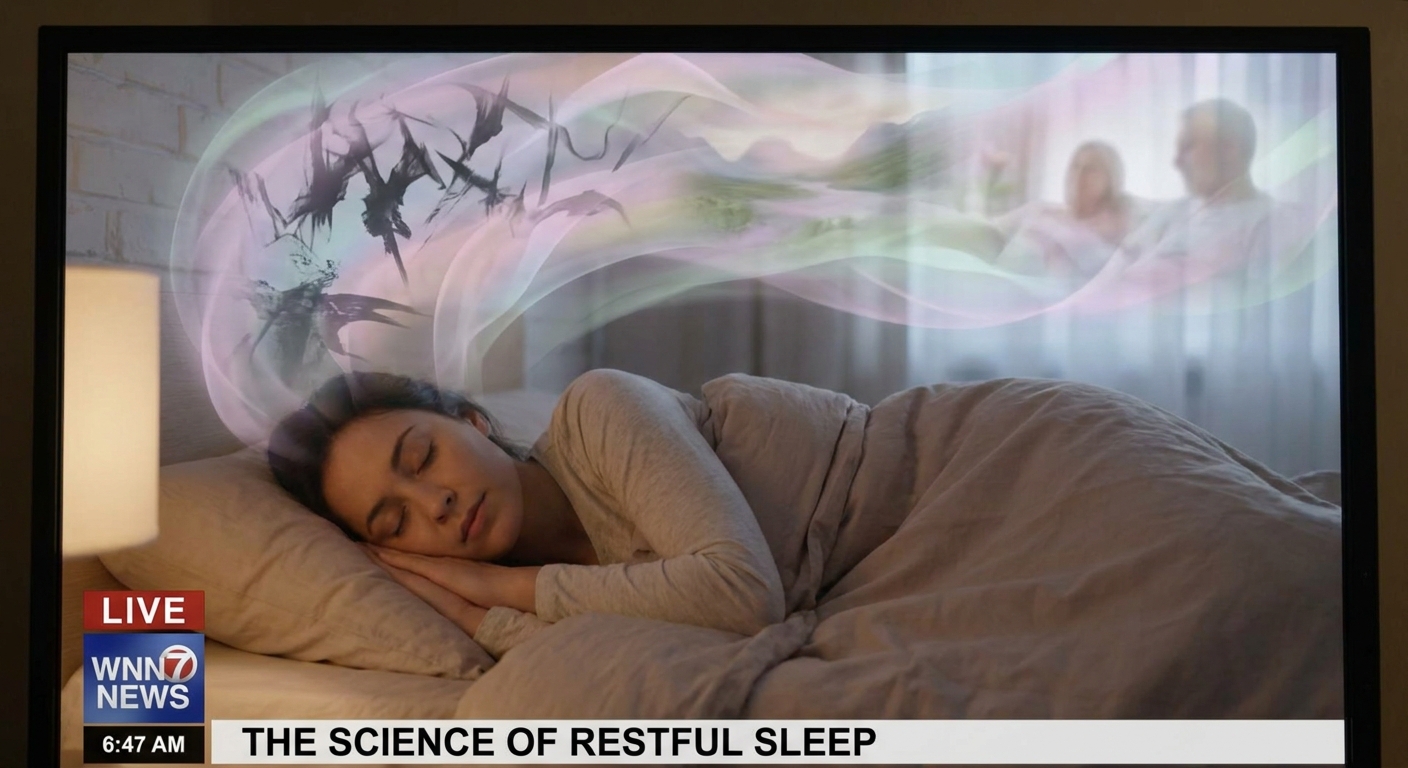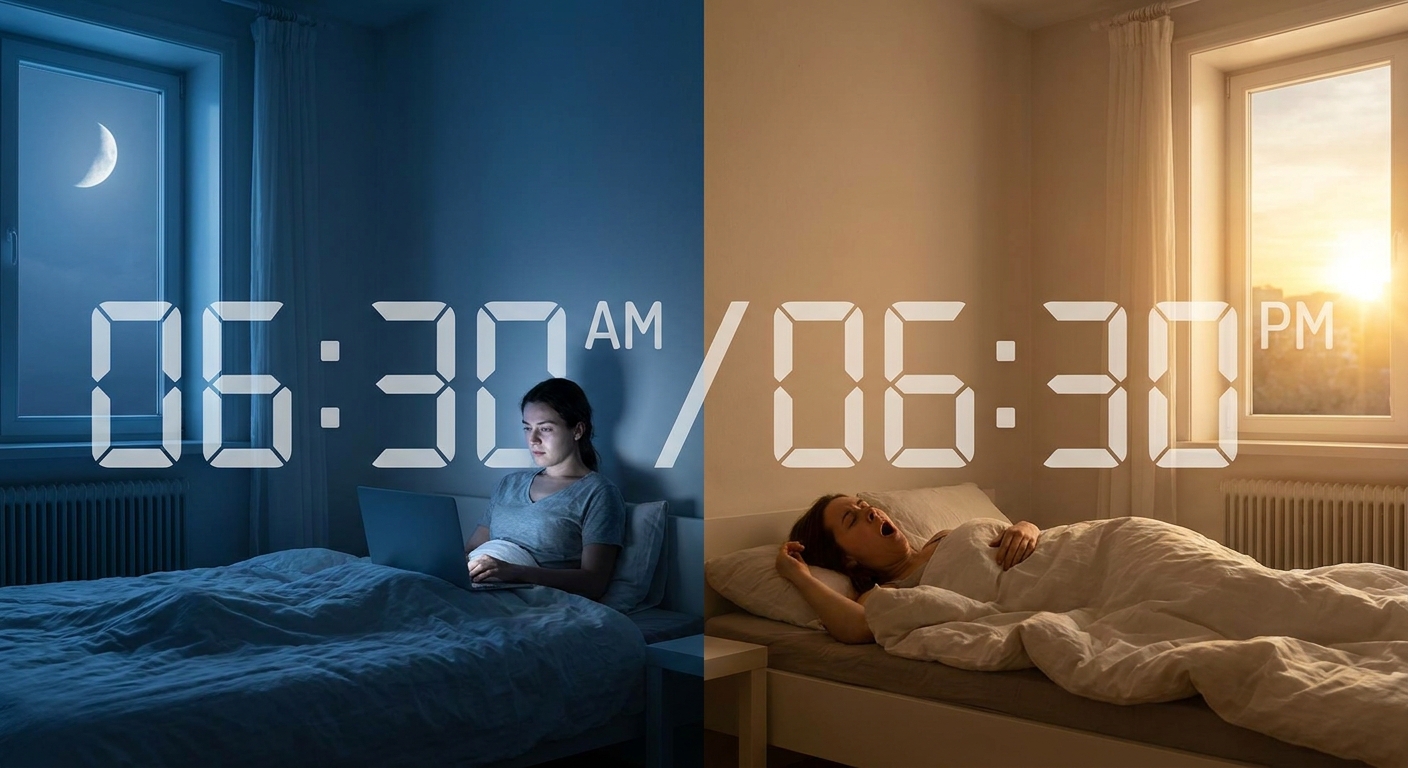
Everyone carries an inner clock, quietly ticking in the background. It tells your body when to feel sleepy, when to wake, when to feel hungry—and when to enter the dream-rich stages of sleep.
Your Inner Clock and the Landscape of Your Dreams
Dream research has begun to show that chronotype—whether you’re a morning lark, night owl, or somewhere in between—does more than influence when you like to wake up. It also shapes how your sleep stages are distributed through the night, which in turn colors how you dream, how much you remember, and how rested you feel.
Think of your chronotype as the contour of your personal night sky. The stars—your dreams—are there for everyone, but where and when they cluster is unique.
A Quick Tour of Sleep and Dream Stages
Each night, your brain cycles through repeating 90–110 minute loops of:
- Non-REM sleep (N1, N2, N3) – from light dozing to deep, slow-wave sleep
- REM sleep – a more active stage strongly associated with vivid dreams
Over the course of the night:
- Deep sleep (N3) is richest in the first third of the night.
- REM sleep intensifies in the final third, near morning.[^1]
Researchers can see these patterns using EEG and other polysomnography tools. The timing of these stages shifts depending on your internal clock—and your external schedule.
What Is Chronotype, Exactly?
Chronotype describes your natural tendency to sleep and wake at certain times:
- Morning types (larks): Prefer earlier bed and wake times; feel alert in the morning.
- Evening types (owls): Prefer later bed and wake times; feel most alert in the evening.
- Intermediate types: Fall somewhere in the middle.
Chronotype is influenced by genetics, age, and light exposure.[^2] Teenagers drift later; many older adults shift earlier.
When your daily schedule clashes with your chronotype (for example, a night owl working early shifts), scientists call this social jetlag.[^3] It can fragment your sleep, compress REM, and leave you feeling like you’ve flown across time zones without leaving home.
How Chronotype Affects Dreaming
Research comparing morning and evening types shows:
- Night owls often report more dream recall and more emotionally intense dreams. They tend to wake abruptly from REM due to early alarms, which increases dream memories.[^4]
- Morning types may have steadier, less disrupted REM if they can maintain their preferred early schedule.
- Intermediate types tend toward a balanced pattern but can be pulled in either direction by work and social demands.
A large study in young adults found that evening types had higher scores on measures of nightmare frequency and negative dream content, possibly due to higher stress, irregular sleep, and more REM disruption.[^5]
Dreaming itself is not worse or better for any chronotype; the key question is whether your schedule respects your internal timing enough to allow full, smooth sleep cycles.
Matching Your Bedroom and Routine to Your Chronotype
Here’s how you can apply dream research in a very practical way: shape your environment so that your natural REM windows are protected, rather than constantly interrupted.
For Morning Larks
Typical pattern: Sleep 9–10 pm to 5–6 am, with dense deep sleep early and important REM in the later half of the night.
Risks: Late-night work, social events, or bright-light exposure in the evening can push your bedtime later, reducing early-night deep sleep and compressing REM.
Supportive bedroom and habit changes:
- Dim sooner: Start dimming lights 90 minutes before bed. Use warm lamps instead of overhead lighting.
- Create an "early cocoon": Make your bedroom especially inviting in the evening—soft bedding, tidy space, maybe a pre-bed reading nook—to make it easier to choose rest over late activities.
- Morning light reinforcement: Open curtains or step outside within 30 minutes of waking; natural light keeps your clock reliably early and stable.[^6]
- Keep devices away from the pillow: If you wake early and check your phone in bed, bright light and mental stimulation can pull you out of the remaining REM-rich sleep.
For Night Owls
Typical pattern: Sleep midnight–2 am to 8–10 am, with heavier REM late in the morning.
Risks: Early work or school schedules cut into the last portion of the night, often the most REM-dense. This leads to less restorative dreaming and more abrupt awakenings.
Supportive bedroom and habit changes:
- Strategic evening dimming: You may not get sleepy early, but start reducing brightness 1–2 hours before your target bedtime to let melatonin rise.
- Gentle pre-bed wind-down: Use calming rituals—stretching, reading, or soft music—to signal night, even if you don’t feel fully sleepy yet.
- Morning light and movement: When you wake, expose yourself to bright light (sun if available, or a medically-approved light box) and add light movement; both help gradually advance your internal clock.[^7]
- Stabilize weekends: Resist dramatic weekend sleep-ins. Aim to keep wake time within 1–2 hours of your weekday schedule to avoid Monday "dream jetlag."[^3]
For In-Between Types
Typical pattern: Around 11 pm–7 am or similar, with relatively balanced sleep stages.
Risks: Frequent schedule shifts or late-weekend nights can bounce your REM timing around, leading to inconsistent dream recall and variable sleep quality.
Supportive bedroom and habit changes:
- Protect the middle hours: Whatever your typical sleep window, treat the middle of it—when your cycles are deepest—as sacred quiet time.
- Use the 1-hour rule: Keep a 1-hour wind-down where lights are low, screens are limited, and your activities are predictably calm.
- Let your body lead: Notice when you consistently start feeling sleepy; adjust your official bedtime to meet these cues rather than ignoring them.
Dream-Friendly Bedroom Tweaks Backed by Research
No matter your chronotype, certain environmental changes tend to support smoother sleep cycles and healthier dreaming.
1. Cool, Consistent Temperature
- Aim for 60–67°F (15–19°C). Slight coolness supports sleep onset and stability.[^8]
- Use layered bedding so you can adjust warmth without fully waking.
2. Darkness and Light Control
- Use blackout curtains or a sleep mask to block outside light, especially if your sleep runs into the early morning.
- If you need to use the bathroom at night, keep lights low and warm-toned.
3. Calming Visuals and Clutter Reduction
- A visually calm room (less clutter, softer colors) can lower pre-sleep arousal.[^9]
- Keep work materials out of sight from bed when possible, signaling to your mind that this space is for rest.
4. Gentle Soundscape
- If noise is unpredictable, use white noise, a fan, or nature sounds to fill the auditory space with gentle consistency.
- Silence notifications overnight; each interruption risks cutting through a dream cycle.
Simple Dream-Aware Habits to Try
1. Track Your Sleep and Dream Timing
For one or two weeks, note:
- Bedtime and wake time
- How many awakenings you remember
- Whether you recall dreams on waking, and their rough tone (neutral, pleasant, stressful)
Patterns often emerge: early alarms that slice through REM, late-night work that delays sleep, or specific days with more stressful dream content.
2. Build a Bedtime "Bridge"
Instead of falling straight from activity into sleep, create a 15–30 minute bridge:
- Light stretching or yoga
- Breathing exercises (4-second inhale, 6–8-second exhale)
- Reading something non-stimulating under warm light
This bridge helps your brain transition gently into the first cycle, laying the groundwork for smoother REM later.
3. Invite, Don’t Force, Dream Recall
If you’re curious about your dreams:
- Place a small notebook or app by your bed.
- On waking, write a few words about any fragments you remember.
- Avoid straining—if nothing comes, simply note "no recall" and move on.
Over time, this respectful attention often increases dream awareness without making sleep feel like a performance.
A Soothing Closing Thought
Your chronotype is not a flaw to fix; it is a pattern to understand. Once you see how your internal dream clock tends to run, you can adjust your environment and routines so that your nights unfold more naturally.
You don’t need to remake your entire schedule overnight. Begin with small, quiet steps: dimmer lights at the right time, a consistent wake-up, a bedroom that feels like a safe harbor. Each adjustment is like gently turning the hands of your inner clock toward a rhythm that lets your dreams do their healing work.
The research suggests that when your sleep aligns more closely with your biology, dreaming becomes less chaotic and more like what it’s meant to be: a soft, nightly workshop where your brain tends to your memories and emotions while you rest.
[^1]: Carskadon, M. A., & Dement, W. C. (2011). Normal human sleep: an overview. In Principles and Practice of Sleep Medicine (5th ed.).
[^2]: Roenneberg, T. et al. (2007). Epidemiology of the human circadian clock. Sleep Medicine Reviews, 11(6), 429–438.
[^3]: Wittmann, M. et al. (2006). Social jetlag: misalignment of biological and social time. Chronobiology International, 23(1–2), 497–509.
[^4]: Schredl, M. (2010). Morningness–eveningness and dream recall. Dreaming, 20(3), 157–163.
[^5]: Schredl, M. et al. (2016). Chronotype and nightmares. Chronobiology International, 33(1), 44–51.
[^6]: Khalsa, S. B. S. et al. (2003). A phase response curve to single bright light pulses in human subjects. Journal of Physiology, 549(3), 945–952.
[^7]: Sharkey, K. M. et al. (2011). Effects of an advanced sleep schedule and morning short wavelength light exposure on circadian phase. Journal of Sleep Research, 20(1pt2), 35–45.
[^8]: Okamoto-Mizuno, K., & Mizuno, K. (2012). Effects of thermal environment on sleep and circadian rhythm. Journal of Physiological Anthropology, 31(1), 14.
[^9]: Tsemberis, S. et al. (2003). Housing first, consumer choice, and harm reduction. While not sleep-specific, environmental predictability and safety strongly influence subjective rest.