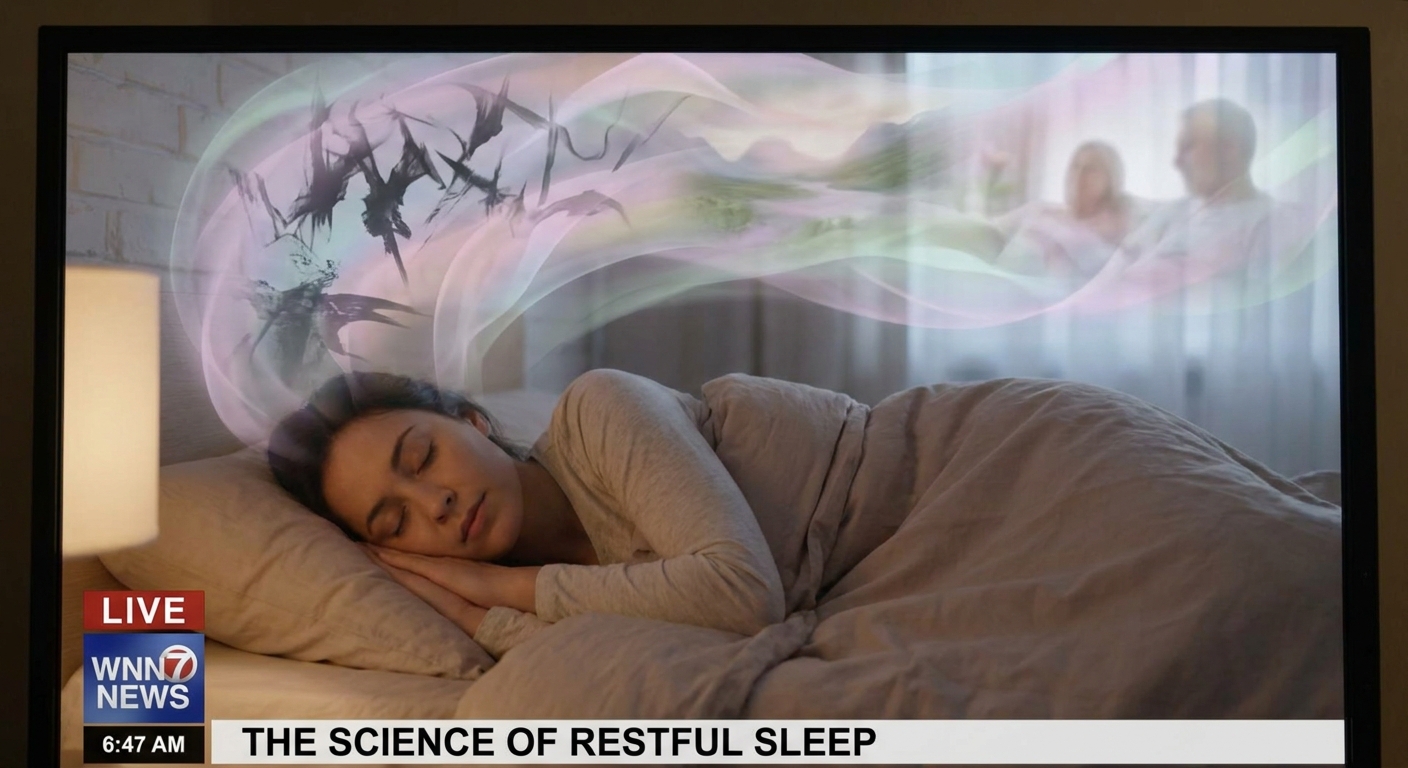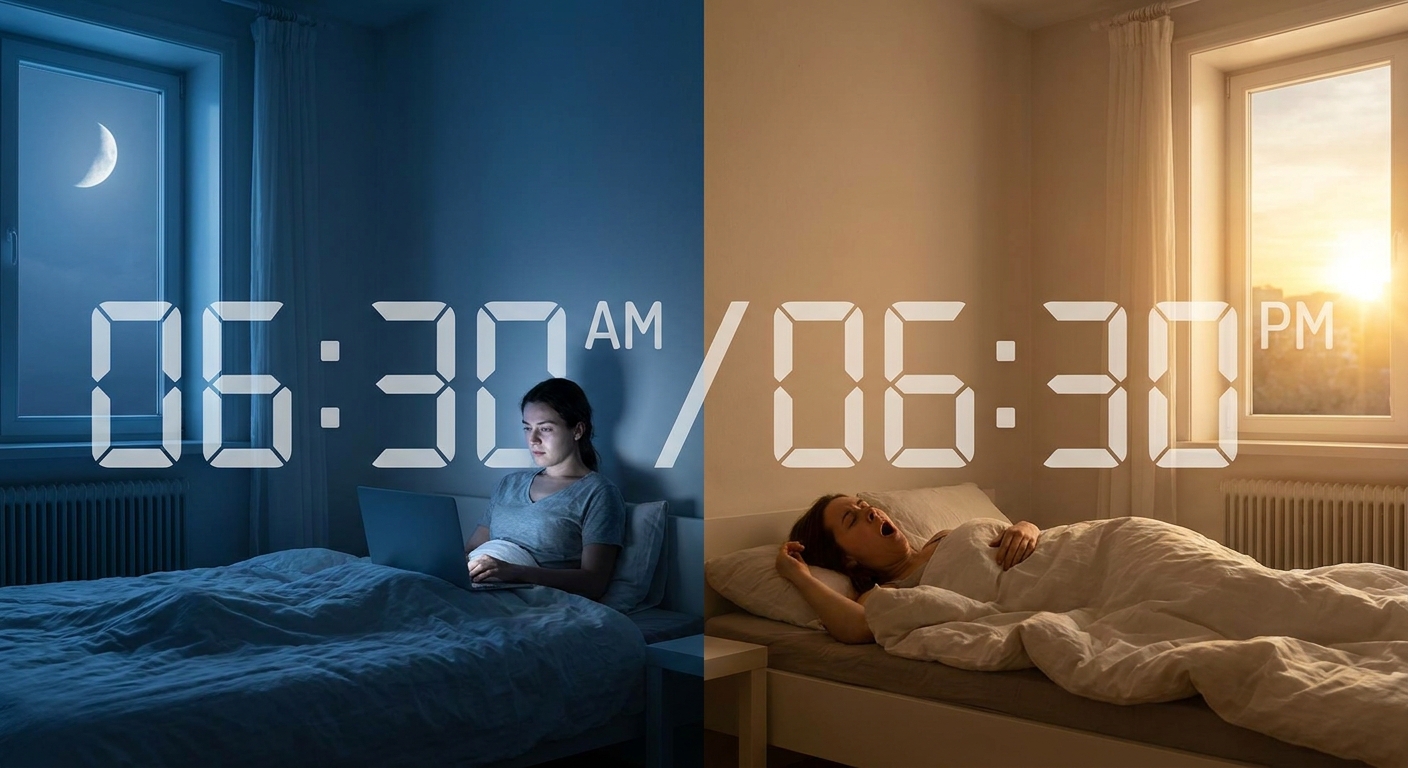
For as long as humans have slept, we’ve wondered why our minds create stories in the dark. Modern dream research has not settled on a single answer, but it has assembled several strong, overlapping theories.
Why Do We Dream at All?
You can imagine them as different lamps illuminating the same room. Each highlights a piece of what dreams may be doing: processing emotions, organizing memories, rehearsing threats, or simply reflecting brain activity. Understanding these theories doesn’t just satisfy curiosity; it can gently guide how you care for your sleep.
This explainer compares major scientific theories of dreaming and translates them into practical ways to improve your nights.
The Emotional Processing Theory: Dreams as Nightly Therapy
Core idea: Dreaming—especially in REM sleep—helps us process emotions and reduce their intensity.
Research shows that during REM sleep:
- Brain regions involving emotion (amygdala) and memory (hippocampus) are active.[^1]
- Levels of noradrenaline, a stress-related neurotransmitter, are reduced compared to wakefulness.[^2]
This combination may allow the brain to revisit emotional memories in a calmer context, smoothing their sharpness while preserving the facts.
Studies find that adequate REM sleep is associated with:
- Reduced next-day emotional reactivity
- Better regulation of mood after stressful experiences
- Lower risk of depression when sleep is stable over time[^3]
What this means for you:
Treat REM-rich sleep as a nightly emotional reset. Protecting enough sleep time—especially the later part of the night when REM is densest—gives your mind more opportunities to gently work through feelings.
The Memory Consolidation Theory: Dreams as Filing and Linking
Core idea: Sleep supports memory consolidation, and dreaming may reflect the brain’s attempts to integrate new information with existing networks.
During sleep:
- The brain “replays” patterns of neural activity related to recent learning, particularly in the hippocampus and neocortex.[^4]
- REM and non-REM stages contribute differently: deep slow-wave sleep stabilizes memories; REM may help integrate them, fostering creativity and flexible problem solving.[^5]
Experiments show that:
- People allowed to sleep after learning new material remember it better.[^6]
- REM-rich sleep can improve performance on tasks requiring creativity or remote associations.[^7]
What this means for you:
Your brain is still learning while you sleep. Going to bed with an overloaded or highly stimulated mind can feel like dumping a disorganized stack of papers on your night-shift librarian.
- Give your brain short breaks in the evening from screens and intense information.
- For important learning, aim for consistent 7–9 hour sleep windows instead of late-night cramming.
The Threat Simulation Theory: Dreams as Safe Rehearsals
Core idea: Dreams, particularly nightmares, may simulate threatening situations so we can practice responding to them in a safe environment.
This theory, proposed by Antti Revonsuo, suggests that in our evolutionary past, dreams helped us rehearse responses to dangers—predators, conflicts, or environmental threats.[^8]
Supportive findings:
- Many dreams contain social or physical threats.
- People who have experienced real-life trauma often report more frequent and vivid threat-related dreams.[^9]
What this means for you:
If you have stress or anxiety dreams, it may help to view them as over-eager rehearsals. They can feel intense, but they’re also a sign that your brain is actively trying to prepare you.
- Gentle reframing: "My brain is practicing, even if it’s clumsy about it."
- Techniques like Imagery Rehearsal Therapy can work with, rather than against, this simulation process by guiding the dream toward safer outcomes.
The Activation-Synthesis Perspective: Dreams as Patterns in Noise
Core idea: Dreams are the brain’s attempt to make sense of random neural firing during sleep.
The original activation-synthesis hypothesis (Hobson & McCarley) proposed that:
- Brainstem structures generate bursts of activity during REM.
- The cortex tries to weave this activity into a coherent narrative—your dream story.[^10]
Over time, this view has evolved into more nuanced models, but the basic idea remains: some aspects of dreaming may be about the brain imposing order on internal noise.
What this means for you:
Not every dream is a coded message. Some are likely the brain’s way of stitching together fragments of memory, sensation, and emotion into the simplest possible story.
A calming takeaway: you don’t have to decipher everything. Focus more on how you sleep and how you feel on waking than on decoding every image.
Do We Dream to Heal? A Gentle Comparison
Here’s a simple comparison of key theories and what they emphasize:
| Theory | Main Function | Key Evidence | Practical Implication |
|-------|---------------|-------------|------------------------|
| Emotional Processing | Soften emotional charge | REM activity in emotional circuits; mood changes after sleep[^1][^3] | Protect sufficient REM by allowing enough sleep time |
| Memory Consolidation | Stabilize + integrate memories | Learning studies; replay in hippocampus during sleep[^4][^6] | Avoid sleep loss after major learning or experiences |
| Threat Simulation | Rehearse dangers safely | High threat content in dreams; more in trauma[^8][^9] | Reframe stress dreams as practice, and guide them via imagery |
| Activation-Synthesis | Make sense of noise | REM activation patterns[^10] | Don’t over-interpret; some dreams are just narrative static |
Most dream researchers now see these theories as overlapping, not competing. Dreams may:
- Process emotions
- File memories
- Rehearse responses
- Fill gaps in random activity with stories
All at once.
Applying Dream Research: How to Support These Nightly Processes
Whether we dream to heal emotionally, remember better, rehearse threats, or all of the above, the practical goal is similar: create conditions where your brain can move through sleep cycles smoothly.
1. Give Your Night Enough Time
Most adults need 7–9 hours of sleep to pass through enough complete sleep cycles.[^11] Since REM becomes more abundant in the last third of the night, routinely cutting sleep short can:
- Reduce emotional processing
- Impair memory integration
- Increase emotional reactivity
Chronotype tip:
- Larks: Guard your early bedtime; late nights steal your first deep sleep.
- Owls: Protect your morning hours when REM is thickest; very early alarms often cut into your most restorative dreaming.
2. Shape a Bedroom That Encourages Continuity
Smooth sleep cycles depend on minimal fragmentation.
Practical changes:
- Keep the room dark and cool (around 60–67°F / 15–19°C).[^12]
- Reduce noise with white noise machines, fans, or earplugs if needed.
- Use comfortable, supportive bedding to reduce awakenings from discomfort.
- Remove visual reminders of unfinished tasks from view when you go to bed.
Each of these choices is like padding the pathway your brain uses to travel between sleep stages.
3. Give Your Brain Time to Wind Down
Since dreams likely draw on recent experiences, flooding your mind with intense content just before bed can agitate the night.
Instead of ending the day with bright screens or emotional news, experiment with a 30–60 minute wind-down:
- Dim lights
- Light reading
- Gentle stretching or a warm bath (ending 60–90 minutes before sleep)
- Slow breathing exercises
This creates a buffer zone, giving the day’s experiences a first round of processing before your brain takes them into sleep.
4. Work With Dreams, Not Against Them
You don’t need to extract hidden symbols, but a kind, curious attitude toward dreams can be helpful.
- If a dream feels meaningful, jot it down and notice how it relates to your current stress, hopes, or challenges.
- If a dream is distressing, consider whether it’s highlighting an area of life that might need gentle attention.
- For recurring nightmares, talk with a clinician about Imagery Rehearsal Therapy or related approaches.
Chronotype-Specific Evening Routines, Grounded in Dream Research
Because REM timing depends on your internal clock, bedtime habits can be tailored.
For Morning Types
- Start wind-down rituals earlier (e.g., 8–9 pm).
- Keep bedroom lighting very soft after sunset; your melatonin rhythm tends to rise earlier.[^13]
- If possible, avoid stimulating tasks (emails, high-stakes decisions) after dinner.
For Evening Types
- Aim to pull stimulation earlier rather than eliminating it: if you naturally work late, try stopping screens 60–90 minutes before your target bedtime.
- Dim lights at least an hour pre-bed; use warm-temperature bulbs.
- Avoid large meals right before sleep, which can disturb later-night REM.
For Intermediate Types
- Choose a regular, realistic bedtime and wake time and keep it consistent.
- If evening worries tend to translate into restless dreams, consider a 5–10 minute "worry list" where you write concerns and a small next step for each.
A Gentle Conclusion: Trusting the Night Shift
Dream science has not reached a single, tidy answer to why we dream, but the emerging picture is soothing in its own way: your sleeping brain is not idle. It is working quietly on your behalf—sifting, sorting, softening—and dreams are the lanterns that show this work in motion.
The most compassionate thing you can do is not to chase perfect understanding of every dream, but to offer your brain the stable, dark, cool, unhurried nights it needs. With time, your dreams often become less chaotic and more like a background current, carrying the day gently away.
[^1]: Maquet, P. (2000). Functional neuroimaging of normal human sleep. Journal of Sleep Research, 9(3), 207–231.
[^2]: Walker, M. P., & van der Helm, E. (2009). Overnight therapy? The role of sleep in emotional brain processing. Psychological Bulletin, 135(5), 731–748.
[^3]: Goldstein, A. N., & Walker, M. P. (2014). The role of sleep in emotional brain function. Annual Review of Clinical Psychology, 10, 679–708.
[^4]: Wilson, M. A., & McNaughton, B. L. (1994). Reactivation of hippocampal ensemble memories during sleep. Science, 265(5172), 676–679.
[^5]: Rasch, B., & Born, J. (2013). About sleep's role in memory. Physiological Reviews, 93(2), 681–766.
[^6]: Diekelmann, S., & Born, J. (2010). The memory function of sleep. Nature Reviews Neuroscience, 11(2), 114–126.
[^7]: Cai, D. J. et al. (2009). REM, not incubation, improves creativity by priming associative networks. PNAS, 106(25), 10130–10134.
[^8]: Revonsuo, A. (2000). The reinterpretation of dreams: An evolutionary hypothesis. Behavioral and Brain Sciences, 23(6), 877–901.
[^9]: Levin, R., & Nielsen, T. A. (2007). Disturbed dreaming, posttraumatic stress disorder, and affect distress. Sleep Medicine Reviews, 11(6), 463–485.
[^10]: Hobson, J. A., & McCarley, R. W. (1977). The brain as a dream state generator. American Journal of Psychiatry, 134(12), 1335–1348.
[^11]: Hirshkowitz, M. et al. (2015). National Sleep Foundation's sleep time duration recommendations. Sleep Health, 1(1), 40–43.
[^12]: Okamoto-Mizuno, K., & Mizuno, K. (2012). Effects of thermal environment on sleep and circadian rhythm. Journal of Physiological Anthropology, 31(1), 14.
[^13]: Roenneberg, T. et al. (2007). Epidemiology of the human circadian clock. Sleep Medicine Reviews, 11(6), 429–438.